UBUHANZI
UBWIZA N'UBUZIMA
UBUKORIKORI
UMUCO N'AMATEKA
IMYIDAGADURO
IBIDUKIKIJE
IBIRIBWA N'IBINYOBWA
UBWUBATSI BUSUBIRA INYUMA
UBUMENYI
SIPORO
IKORANABUHANGA
IBYAMBARWA



The Spiral Sausage Stuffer: Packing Meat Without Air
Sausage meat pushed into a skin by hand traps air, and air pockets spoil a cured sausage from the inside.
Penrose W. Brownback of Limerick Station, Pennsylvania, received US 142,897, dated 16 September 1873 (filed 29 March 1873), for a sausage-stuffer whose casing narrows into "a large funnel, which terminates horizontally in the discharge-pipe", with a shaft carrying "broad spiral wings, having a pitch equal to the length of the casing". The meat is packed "firmly, the air being kept back".
This rung works out how much sausage one crank turn fills, then grinds and stuffs a batch and checks it for air.
Hagati
About 3 hours
Amabwiriza
1
1
Sausage per turn of the crank
Sausage per turn of the crank
Gupakira ikaye ya Jupyter…
2
2
A spiral that carries its load forward
A spiral that carries its load forward
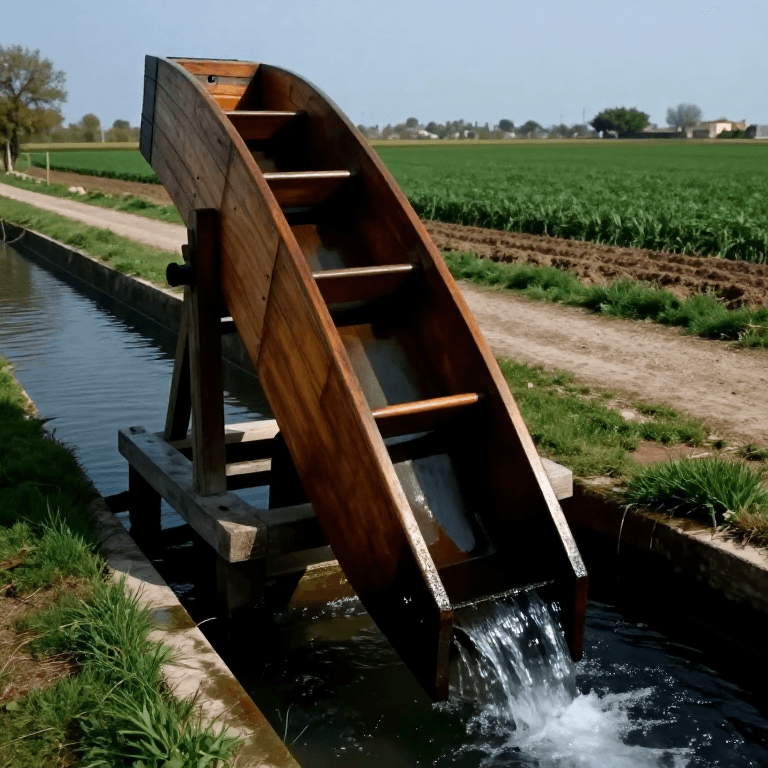
The embedded blueprint lifts water with a turning spiral. Brownback's wings push meat the same way.
3
3
Read US 142,897
Read US 142,897
"This invention has relation to means for filling sausage-skins; and it consists, mainly, in the construction and novel arrangement of the cylindrical or conical casing, having its side wall extended in the lower or body portion, and gradually contracted or brought together to form a large funnel, which terminates horizontally in the discharge-pipe".
The wings "besides their spiral twist, are usually designed to be curved transversely, or in the direction of their rotation, for the purpose of scooping the mass of meat forward." The meat is forced "into the funnel-recess k, where it is squeezed and packed together firmly, the air being kept back, and the mass passing in this compact form through the spout h into the skin."
4
4
Grind, stuff and check for air
Grind, stuff and check for air
Keep the meat and all metal parts cold. Grind the pork with salt by weight. Soak and rinse the hog casings, then slide one onto the stuffer's spout, leaving a tail.
Fill the stuffer, turn the crank steadily and let the casing fill as it slides off the spout. Count turns and measure the length filled; compare with the notebook.
Hold a length up to the light and look for air pockets. Prick any you find with a clean needle.
Ibikoresho by'iyi ntambwe:
 Urutugu rw'ingurube (rufite igufa)1000 g
 Amara kamere y'ingurube1 igice
 Umunyu w'inyanja munini18 g
Ibikoresho bikenewe:
 Imashini yuzuza sosisi
 Imashini yo gusya inyama
 Iminzani ya Digitale yo mu Gikoni
 Umugozi wo Gupima
 Inshinge zo kudoda n'intoki
5
5
Sausages with air, bursts or slack skins
Sausages with air, bursts or slack skins
Sausage stuffing troubleshooting.
Flow
Loading...
6
6
History and honest limits
History and honest limits
**Penrose W. Brownback** of Limerick Station, Montgomery County, Pennsylvania, filed US 142,897 on 29 March 1873; it is dated 16 September 1873. The casing is made in two sections hinged together and closed by a hasp.
**Honest limits.** The notebook assumes the meat moves one full pitch per turn. In practice it slips back and the fill fraction varies. Sizes and fill fractions are examples. Your turn count and sausage length are the measurement.
Ibikoresho
3- Umwanya
- 1 igiceUmwanya
- Umwanya
Ibikoresho bikenewe
5- Umwanya
- Umwanya
- 1 vendor sell this, none ship to you yetUmwanya
- Umwanya
Blueprint zijyanye
Izi blueprint zisangira ubumenyi — uburyo, ibikoresho cyangwa amahame
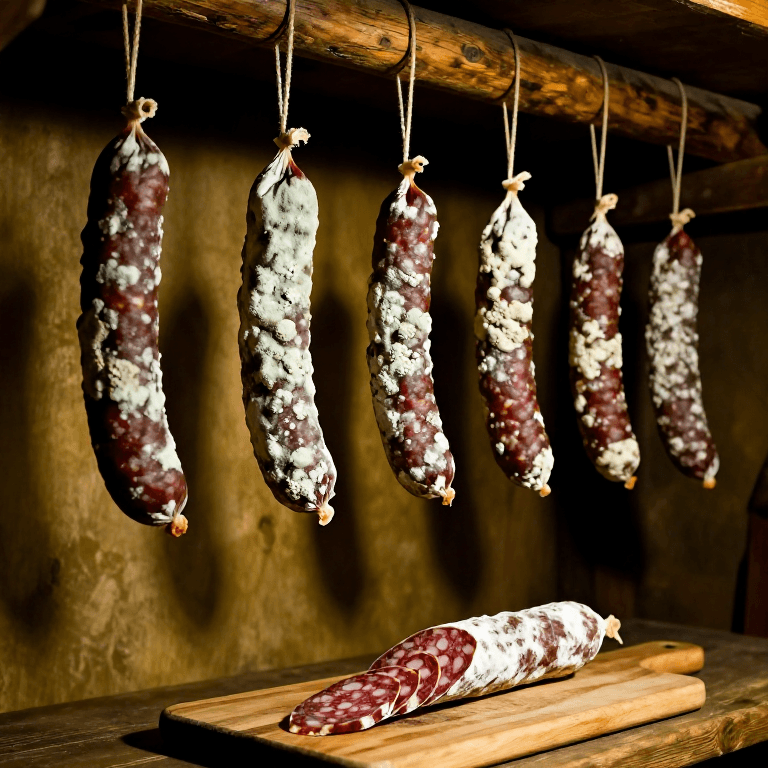

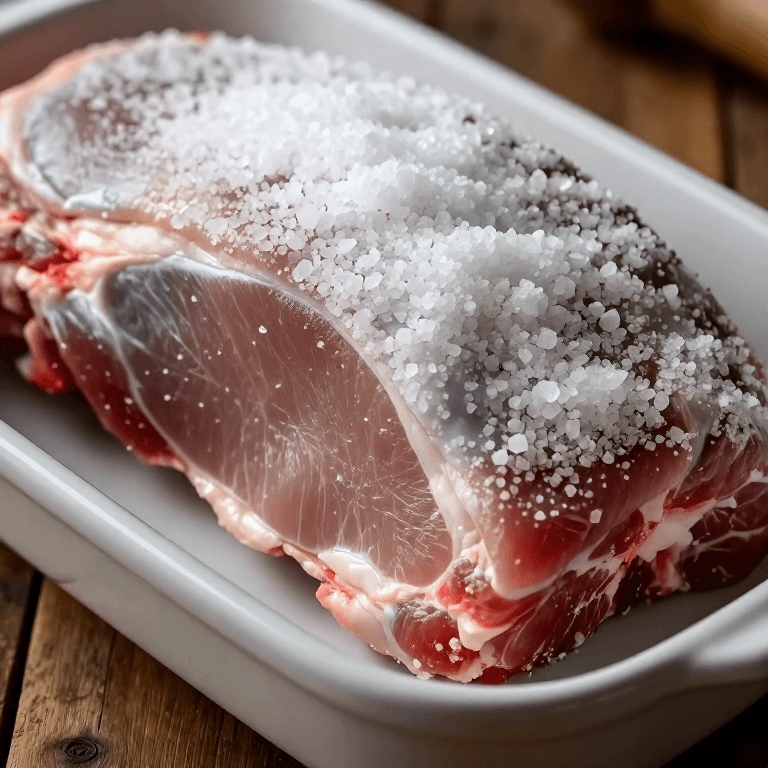

CC0 Umurenge rusange
Iyi blueprint yasohowe munsi ya CC0. Ushobora gukoporora, guhindura, gukwirakwiza no gukoresha nta kwemererwa.
Shyigikira Umuremyi ugura ibicuruzwa binyuze muri Blueprint ye Komisiyo y'Umuremyi byashyizweho n'Abacuruzi, cyangwa kora verisiyo nshya y'iyi Blueprint ukayinjiza nk'isano muri Blueprint yawe kugira ngo musangire inyungu.