Ubufatanye
UBUHANZI
UBWIZA N'UBUZIMA
UBUKORIKORI
UMUCO N'AMATEKA
IMYIDAGADURO
IBIDUKIKIJE
IBIRIBWA N'IBINYOBWA
UBWUBATSI BUSUBIRA INYUMA
UBUMENYI
SIPORO
IKORANABUHANGA
IBYAMBARWA
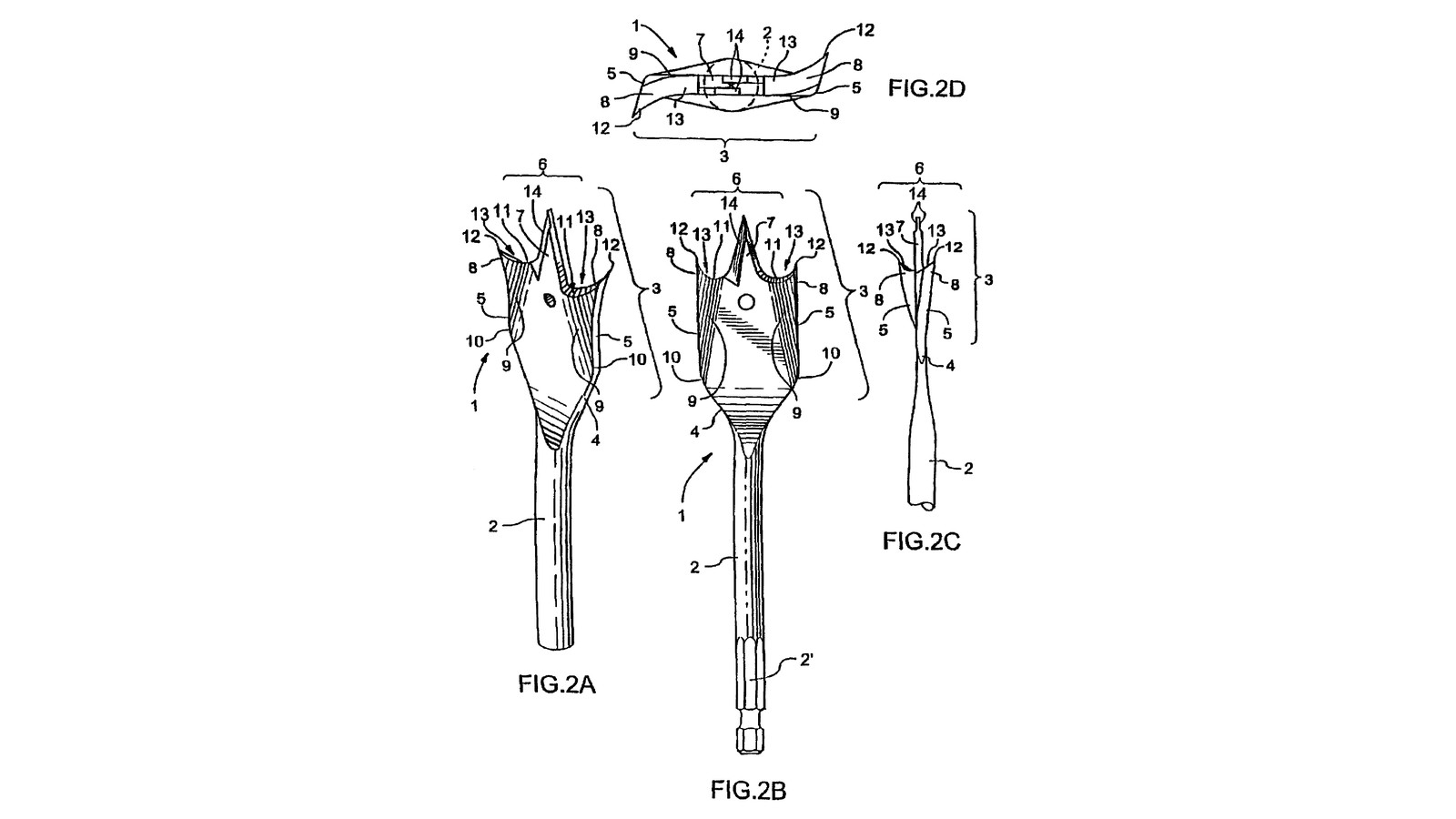


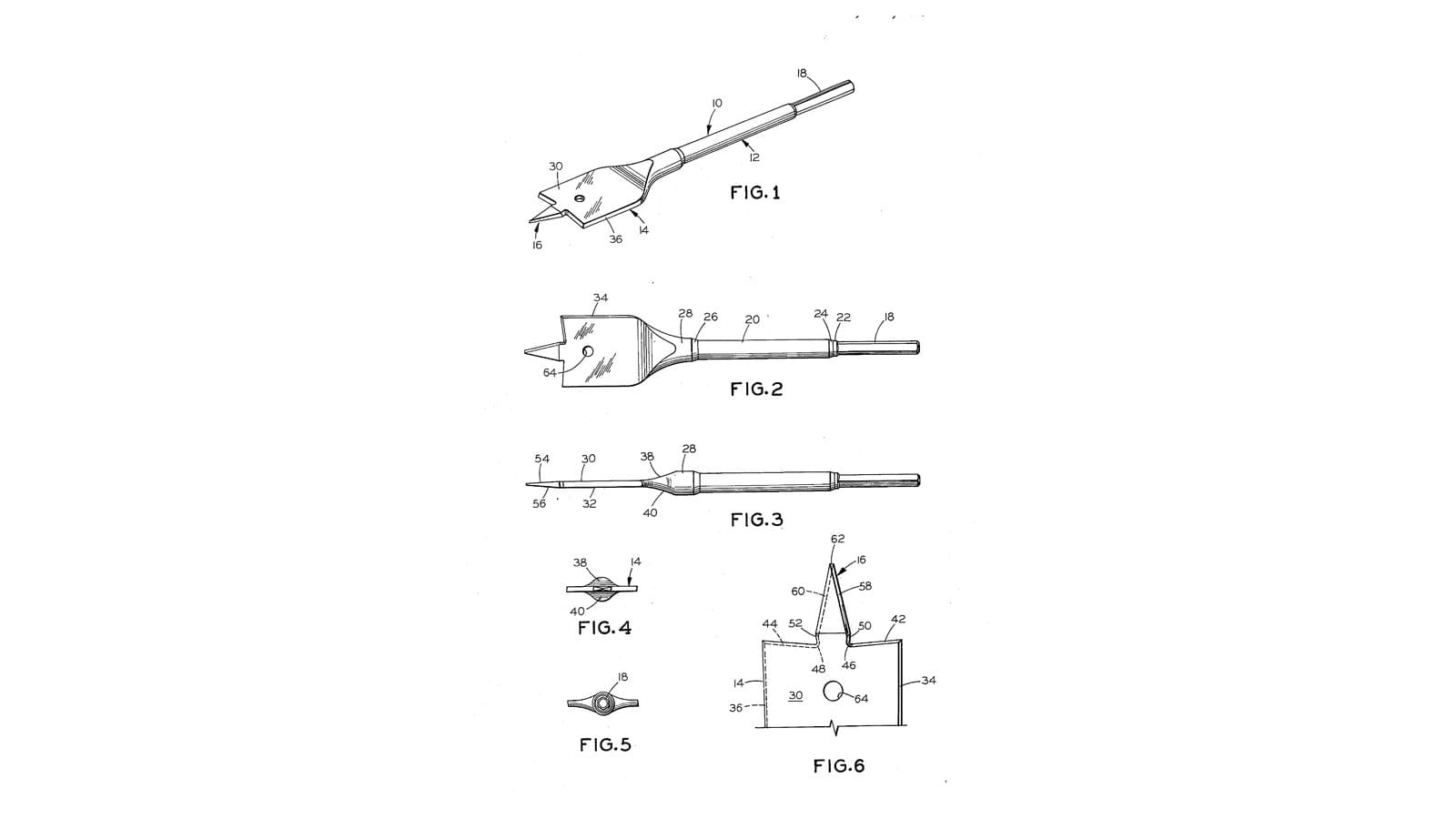
Angled-Side Spade Bits: Each Wing Bent Forwards Along a Diagonal Line, the Way the Bit Turns (Vasudeva, 2005)
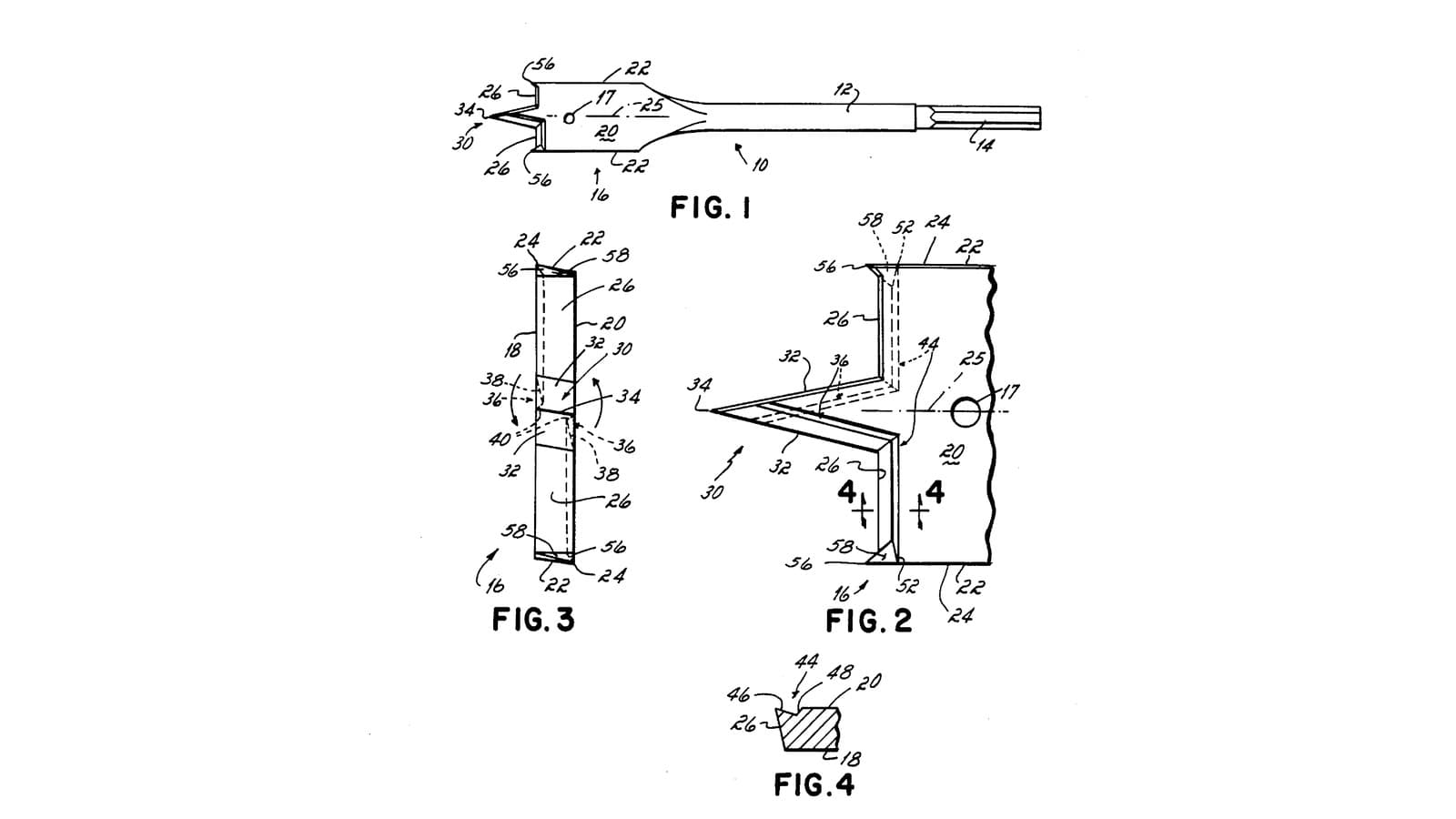
Kailash C. Vasudeva of Waterloo, Canada, received US 6,957,937, dated 25 October 2005, for Maxtech Manufacturing. Both outer wings of the blade are bent forwards, the way the bit turns. Each bends along a line from low on the side to a point on the cutting edge a little over halfway out. The outer ends of the cutting edge then lead, with a spur at each. The chips change direction where they cross the bend and break up, and come out of the hole more easily.
We forge 16, 20 and 25 mm bits and bend the wings hot. The patent gives no bend angle or sizes; ours are 10 degrees and the sizes shown.
Hejuru
About 1 day
Amabwiriza
1
1
How far the bend brings the corners forward
How far the bend brings the corners forward
Gupakira ikaye ya Jupyter…
2
2
Read US 6,957,937
Read US 6,957,937
"The longitudinal sides of the head portion are bent along a bend 9, in the direction of rotation of the spade drill bit during operation, so that the outer ends of the cutting edge are bent forwards in the rotating direction."
"The shorter the bend 9, the larger the angle with the longitudinal direction is going to be, and the more abrupt is the chip break-up. Larger angles require more power for drilling."
3
3
Forge the blades
Forge the blades
Cut three 170 mm lengths of 10 mm octagonal tool steel. Heat 50 mm of one end to a bright orange in the forge and flatten it on the anvil to about 3 mm thick, centred on the bar. Hammer across it with the peen to spread it wider than the bit, about 2 mm over its size: 18, 22 and 27 mm. Draw the neck down smoothly where the blade meets the bar and keep the blade in line with it. Reheat as soon as the colour fades to red. Finally heat each one to a cherry red and let it cool slowly in the air, to soften it for filing.
Ibikoresho by'iyi ntambwe:
 Inkoni ifite impande umunani y'icyuma cy'ibikoresho3 ibice
Ibikoresho bikenewe:
 Umucumita w'Ibyuma
 Ifatiro ry'Ameza
 Iziko ryo Gucura
 Ingoyi
 Inyundo yo Gucura
 Amakoro y'Umucuzi
 Uturindantoki two gukomeza ibyuma
 Amadarubindi y'umutekano
4
4
Print the template
Print the template
Full-size A4 template: the outlines of the 16, 20 and 25 mm bits with straight cutting edges and spurs, the two bend lines and the hanging hole. Print at 100 %; its 50 mm bar must measure 50 mm.
5
5
Grind the outline
Grind the outline
Glue each bit's outline from the template on its blade, centred on the bar. Grind to the lines on the bench grinder, dipping the steel in water often: the two sides parallel, the shoulders square across, the point in the middle. Grind the blade's two faces flat and parallel to 2.5 mm. Grind three flats on the end of the shank, a third of the way round from each other, 20 mm long, for the chuck's jaws. Leave a spur 2 mm wide and 2 mm high at each outer end of the cutting edges. Scribe the two bend lines through the paper onto both faces. Drill a 3 mm hole at the template's circle.
Ibikoresho bikenewe:
 Imashini icapa itera inki
 Igifatanya
 Imashini ihyeza yo ku meza
 Indobo yo gukonjesha
 Amazi
 Amakariso MenshiIfatiro ry'Ameza
 Ikigereranyo cya Digitale cy'Amasentimetero 6Amadarubindi y'umutekano
6
6
Bend the wings
Bend the wings
Heat the blade to a bright red. Grip it in the vice with one bend line exactly along the top of the jaws and the wing standing above them. With the face towards you and the point up, push the left wing towards you about 10 degrees with the flat-nose pliers or light hammer blows close to the jaws, so it bends on the line. Reheat, grip along the other line and push the right wing away from you the same amount. Look down the bit from the point: the two wings should lean opposite ways, like a shallow S, as in his Fig. 2D. Let it cool slowly in the air.
Ibikoresho bikenewe:
Iziko ryo GucuraAmakoro y'UmucuziIfatiro ry'AmezaInyundo yo Gucura Ipfundo Rifite Umunwa UringaniyeUturindantoki two gukomeza ibyumaAmadarubindi y'umutekano
7
7
Grind the cutting edges
Grind the cutting edges
Bevel each cutting edge and each side of the blade so the edge that leads as the bit turns is sharp and the face behind it clears the wood. Sharpen the spurs' outer edges and the point's two leading edges the same way.
Ibikoresho bikenewe:
Imashini ihyeza yo ku mezaIndobo yo gukonjeshaAmaziAmakariso MenshiIfatiro ry'Ameza8
8
Harden and temper
Harden and temper
Heat the blade and the neck evenly to a cherry red, until a magnet no longer sticks to it, and quench it straight down in water, moving it up and down. Rub the faces bright with a stone. Heat the shank gently 30 mm behind the blade and watch the colours run down; quench again as soon as a dark straw colour reaches the shoulders and the point. Do the other two.
Ibikoresho bikenewe:
Iziko ryo GucuraAmakoro y'Umucuzi Magineti ntoIndobo yo gukonjeshaAmazi
 Ibuye ryo gutyazaUturindantoki two gukomeza ibyumaAmadarubindi y'umutekano
9
9
Sharpen and test
Sharpen and test
Hone the cutting edges on the shoulders and the point with the stone, keeping their angles, and take the burr off. Chuck a bit by its flats and bore a scrap of hardwood: it should start on the point without wandering, cut two clean shavings from the shoulders and leave a round hole of its own size; check it with the caliper.
Ibikoresho bikenewe:
Ibuye ryo gutyaza Icyuma Cyivumbura Kidafite Insinga
 Ikibaho cy'Igiti GikomeyeIkigereranyo cya Digitale cy'Amasentimetero 6Amadarubindi y'umutekano
10
10
Troubleshooting
Troubleshooting
Spade bit troubleshooting.
Flow
Loading...
11
11
History and honest limits
History and honest limits
**Kailash C. Vasudeva** of Waterloo, Canada, assignor to Maxtech Manufacturing Inc., US 6,957,937 B2, dated 25 October 2005, filed 20 February 2002. His head's sides are "bent along a bend 9, in the direction of rotation", the bend running from a position on the side nearer the bottom of the head to a position on the cutting edge between its outer end and the tip. He shows arced and straight cutting edges, serrated sides, chip-breaking reliefs on the tip, and a head made separately by powder metallurgy. We build the straight-edged form of his Figs. 2E to 2G with spurs, forged in one piece, without the reliefs. He gives no bend angle or sizes; 10 degrees and our sizes are ours, the bend line placed as measured off his Fig. 2B.
Ibikoresho
1- Umwanya
Ibikoresho bikenewe
20- Umwanya
- Umwanya
- Umwanya
- Umwanya
- Umwanya
- Umwanya
- Umwanya
- Umwanya
- Umwanya
- Umwanya
- Umwanya
- Umwanya
- Umwanya
- Umwanya
- Umwanya
- 1 vendor sell this, none ship to you yetUmwanya
- Umwanya
Dosiye z'igishushanyo
1Iki gishushanyo gikora

Blueprint zijyanye
Izi blueprint zisangira ubumenyi — uburyo, ibikoresho cyangwa amahame
CC0 Umurenge rusange
Iyi blueprint yasohowe munsi ya CC0. Ushobora gukoporora, guhindura, gukwirakwiza no gukoresha nta kwemererwa.
Shyigikira Umuremyi ugura ibicuruzwa binyuze muri Blueprint ye Komisiyo y'Umuremyi byashyizweho n'Abacuruzi, cyangwa kora verisiyo nshya y'iyi Blueprint ukayinjiza nk'isano muri Blueprint yawe kugira ngo musangire inyungu.