Ubufatanye
UBUHANZI
UBWIZA N'UBUZIMA
UBUKORIKORI
UMUCO N'AMATEKA
IMYIDAGADURO
IBIDUKIKIJE
IBIRIBWA N'IBINYOBWA
UBWUBATSI BUSUBIRA INYUMA
UBUMENYI
SIPORO
IKORANABUHANGA
IBYAMBARWA
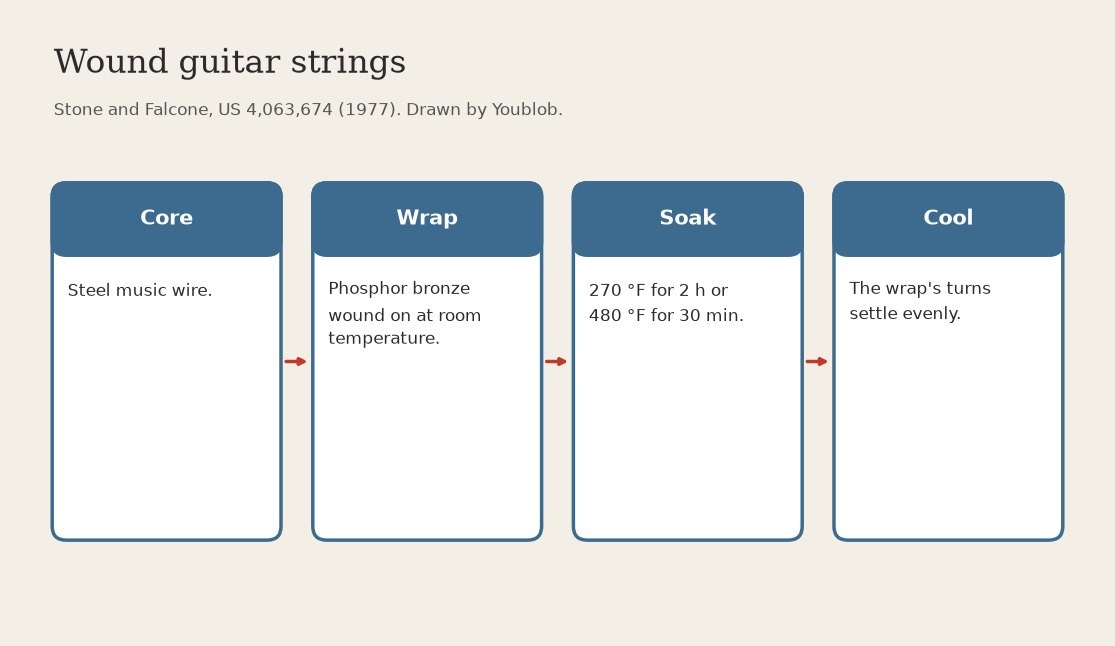


Guitar Strings: Bronze Wound on Steel, Then Heat-Soaked (Stone and Falcone 1977)
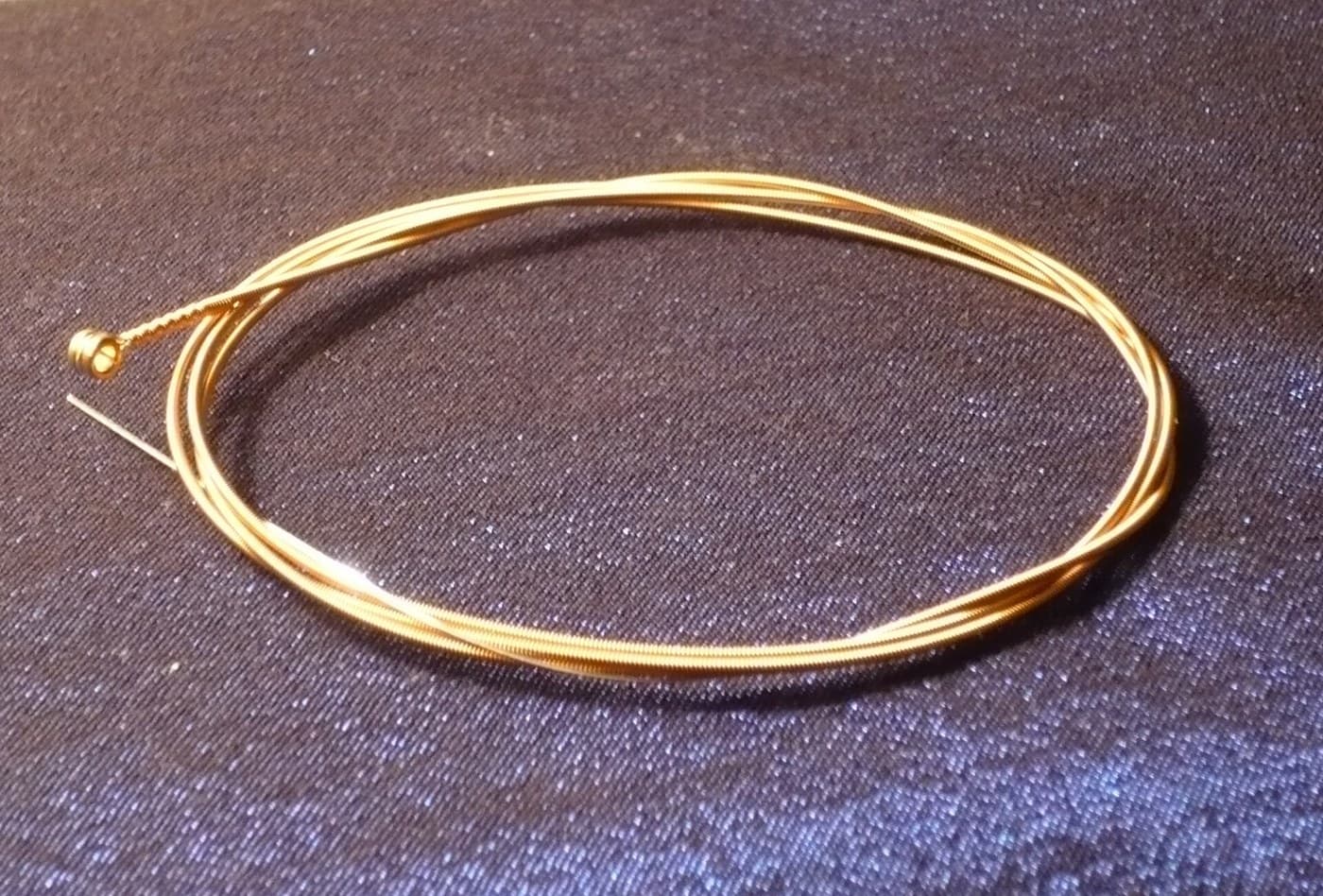
A wound string is a steel core with another wire wrapped round it. Stone and Falcone believed the wrap keeps stresses from the winding and slowly unwinds as the string is played, so the tone goes dead. Their fix: after winding, heat-soak the string, at least 2 hours at 270 °F or 30 minutes at 480 °F for a bronze wrap, then let it cool.
Source: W. N. Stone and A. S. Falcone (National Musical String Co.), US 4,063,674 (1977). Unknown: where phosphor bronze wire comes from, and the gauges. The winding, which the patent calls conventional, is ours, after Landtroop and Dykstra, US 6,256,872 (2001). These are linked to unknown heads. The plain strings of the set are steel music wire; that, the oven and the nitrogen are ours. Picture drawn by Youblob.
Hejuru
1 day
Amabwiriza
1
1
Cut the core and plain strings
Cut the core and plain strings
Cut steel music wire for the cores of the wound strings and for the plain strings of the set. Unknown: the gauges and lengths, and the ball ends.
Ibikoresho by'iyi ntambwe:
 Insinga y'icyuma y'ibikoresho by'umuziki inch 0.0321 as required
Ibikoresho bikenewe:
 Koleyo yo guca insinga y'ukwerekeza
 Ingano zitazwi
2
2
Wind the bronze wrap at room temperature
Wind the bronze wrap at room temperature
Wrap phosphor bronze wire helically round each core at room temperature. The patent prefers a wrap that expands more with heat than the core. The patent says only 'in a conventional manner'. Ours, after Landtroop and Dykstra, US 6,256,872 (2001): hook the core's ball end on the motor-driven headstock spindle, grip the other end in the tailstock chuck and stretch it with the tailstock tension cylinder; fix the end of the cover wire at the ball end, then spin the core while a carriage travels toward the tailstock, paying the cover wire out under tension from its spool; cut it off at the end.
Ibikoresho by'iyi ntambwe:
 Urutsinga rw’umuringa wa fosifore1 as required
Ibikoresho bikenewe:
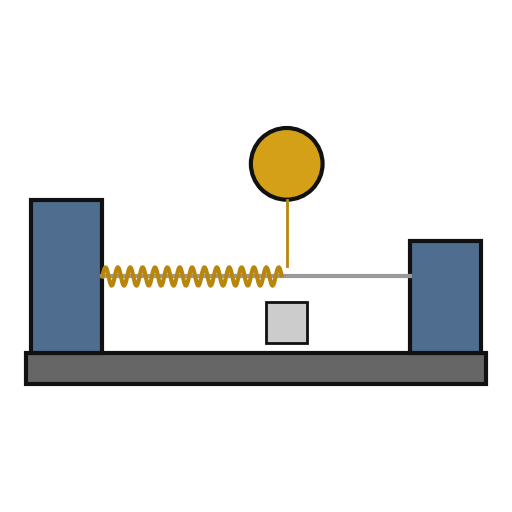 Imashini izingira insinga z'ibicurangishoIngano zitazwi
 Amadarubindi y'umutekano
3
3
Heat-soak the wound strings
Heat-soak the wound strings
Heat the wound strings for a bronze wrap at 270-480 °F (132-249 °C): at least 2 hours at 270 °F or at least 30 minutes at 480 °F, shorter the hotter. If the wire tarnishes in hot air, do it without air, in nitrogen or carbon dioxide. The wrap's turns settle into more even spacing.
Ibikoresho bikenewe:
 Itanura
 Igipima Ubushyuhe cy'Ubushakashatsi
 Silinderi ya azote
4
4
Cool and set up the set
Cool and set up the set
Let the strings cool back to room temperature. Make up the set with the plain steel strings.
Ibikoresho bikenewe:
Koleyo yo guca insinga y'ukwerekezaIbikoresho
2- 1 as requiredUmwanya
- 1 as requiredUmwanya
Ibikoresho bikenewe
7- Umwanya
- Umwanya
- Umwanya
- Umwanya
Iki gishushanyo gikora

Blueprint zijyanye
Izi blueprint zisangira ubumenyi — uburyo, ibikoresho cyangwa amahame

CC0 Umurenge rusange
Iyi blueprint yasohowe munsi ya CC0. Ushobora gukoporora, guhindura, gukwirakwiza no gukoresha nta kwemererwa.
Shyigikira Umuremyi ugura ibicuruzwa binyuze muri Blueprint ye Komisiyo y'Umuremyi byashyizweho n'Abacuruzi, cyangwa kora verisiyo nshya y'iyi Blueprint ukayinjiza nk'isano muri Blueprint yawe kugira ngo musangire inyungu.