فنون
الجمال والعناية
حِرَف
الثقافة والتاريخ
ترفيه
البيئة
الطعام والمشروبات
الهندسة العكسية
العلوم
رياضة
التقنية
الأجهزة القابلة للارتداء
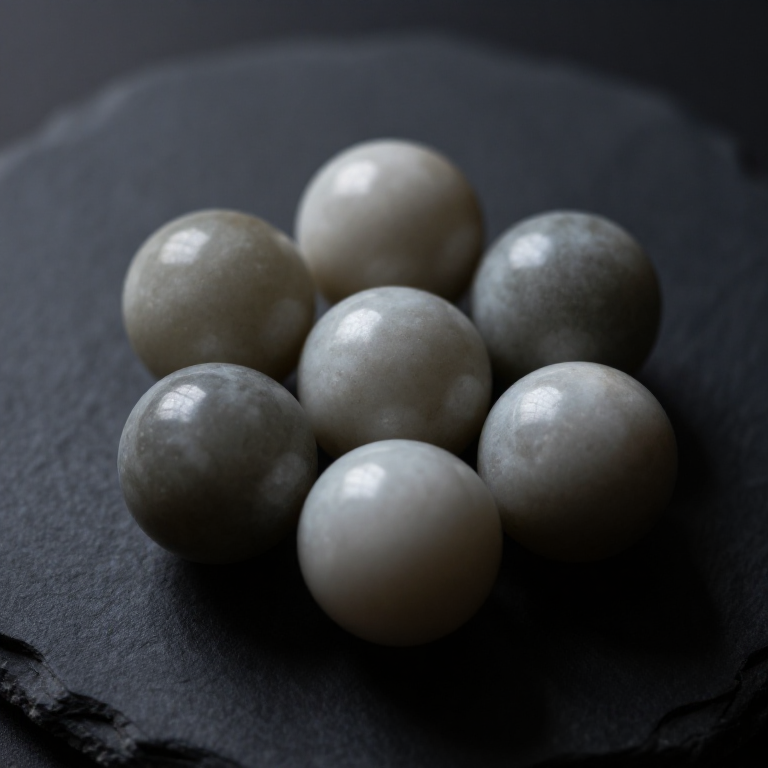


Perfect Numbers — Find the Numbers That Equal Their Own Parts
A hands-on maths project: take 6 counters, find every way to divide them into equal groups, and discover that the group-sizes add back up to 6 -- a 'perfect' number. A Python cell checks 6 and 28, and a compendium reaches a 2,300-year-old unsolved mystery.
مبتدئ
30 minutes
التعليمات
1
1
A number equal to its parts
A number equal to its parts
Some numbers have a magical property: add up all the smaller numbers that divide them, and you get the number back. The Greeks called these 'perfect'. You will find one with a handful of counters.
2
2
Lay out six counters
Lay out six counters
Take 6 counters (beads, buttons or coins). Find every way to divide them into equal groups: one group of 6, or 2 groups of 3, or 3 groups of 2, or 6 groups of 1. The group-SIZES that work (the divisors smaller than 6) are 1, 2 and 3.
المواد لهذه الخطوة:
 خرز زجاجي1 قطعة
3
3
Add up the parts
Add up the parts
Add those divisors: 1 + 2 + 3 = 6. The parts add back up to the number itself -- 6 is perfect! Now try 28 with 28 counters: its divisors are 1, 2, 4, 7 and 14, and they add to 28. Try 10 or 12 and you will find they do NOT work, which is why perfect numbers are so rare.
4
4
Check with the computer
Check with the computer
جارٍ تحميل دفتر Jupyter…
الأدوات المطلوبة:
 حاسوب مكتبي
5
5
Compendium: an unsolved mystery
Compendium: an unsolved mystery
What your counters lead to. (1) The perfect numbers are strikingly rare: 6, 28, 496, 8128, then none until 33,550,336. (2) Around 300 BC Euclid found a recipe: whenever 2-to-the-power-p minus 1 is prime, you can build a perfect number from it -- which links them to the famous 'Mersenne primes' that a worldwide computer project still hunts today. (3) Every perfect number ever found is EVEN. (4) After 2,300 years, two questions Euclid could have asked remain unanswered: are there infinitely many, and does an ODD perfect number exist? Nobody has ever found one -- or proved one cannot exist. You have just handled the front edge of an open problem in mathematics.
الأدوات المطلوبة
2- عنصر نائب
- عنصر نائب
المخططات ذات الصلة
هذه المخططات تشارك المعرفة مع هذا — التقنيات والمواد والمبادئ

CC0 ملكية عامة
هذا المخطط مُصدر بموجب CC0. يحق لك نسخه وتعديله وتوزيعه واستخدامه لأي غرض، دون طلب إذن.
ادعم الصانع بشراء منتجات عبر مخططه حيث يكسب عمولة الصانع يحددها البائعون، أو أنشئ نسخة جديدة من هذا المخطط وضمّنه كرابط في مخططك لمشاركة الإيرادات.