التعاون
فنون
الجمال والعناية
حِرَف
الثقافة والتاريخ
ترفيه
البيئة
الطعام والمشروبات
الهندسة العكسية
العلوم
رياضة
التقنية
الأجهزة القابلة للارتداء


Aviation Gasoline by Catalytic Cracking over Silica-Alumina Gel at 750 °F (Voorhies, US 2,230,552)
Oil vapour passed over a hot silica-alumina gel cracks into gasoline of relatively high octane number. Voorhies (Standard Oil Development, 1941) showed that a light feed cracked at a low temperature, about 750 °F, gives aviation gasoline that needs little or no further refining.
Best result in the patent (Ex. 1, a light crude cut boiling 336-540 °F): 25.9 % of the feed as aviation gasoline (the table says 25.0 %), ASTM octane 81.0 clear and 91.7 with 3 cc of tetraethyl lead per gallon.
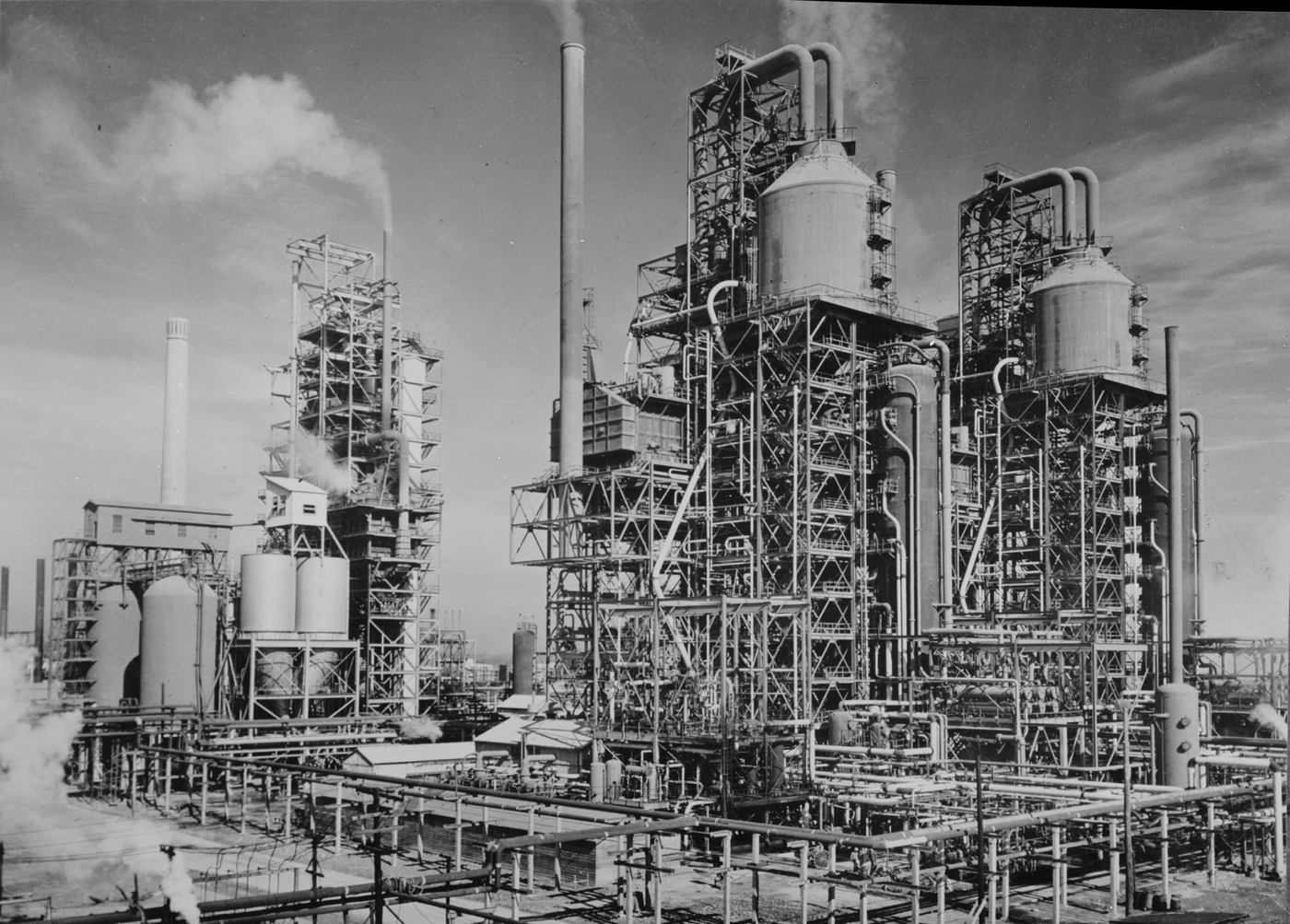
Variables: the feed, the temperature and the feed rate. Hotter and faster gives less gasoline and more unsaturates. Source: A. Voorhies Jr., US 2,230,552 (1941). Not given: reactor design, how the catalyst is regenerated, catalyst amounts. Highly flammable vapours. Picture: catalytic cracking units in Louisiana, about 1944 (FSA, public domain).
خبير
1 day
التعليمات
1
1
Fill the reactor with silica-alumina gel
Fill the reactor with silica-alumina gel
Pack the reaction zone with a synthetic gel of silica and alumina. Voorhies's gel was silica hydrogel soaked in aluminium nitrate solution, dried, and heated to break down the nitrate and activate it, with a silica to alumina molar ratio of about 12 to 1.
الأدوات المطلوبة:
 مفاعل أنبوبي بطبقة ثابتة
 حفاز هلام السيليكا والألومينا
2
2
Choose a light feed
Choose a light feed
The feed should have a mid-boiling point below 600 °F and an aniline point below 155 °F, better below 150 °F; the heavier the feed, the lower its aniline point must be. Kerosene of aniline point 145 °F (Ex. 6) qualifies. A gas oil of aniline point 173 °F (Ex. 5) gave a gasoline of acid heat 34 °F, against 12.5 °F in Ex. 1.
المواد لهذه الخطوة:
 الكيروسين0.6 volume per volume of catalyst per hour
الأدوات المطلوبة:
 خزان نفط
3
3
Crack at 750 °F in half-hour runs
Crack at 750 °F in half-hour runs
Hold the reaction zone at 750 °F (range 700-800 °F). Pass 0.6 volume of liquid feed per volume of catalyst per hour, in half-hour cracking periods with a regeneration of the catalyst between them. Voorhies does not say how he regenerated it.
الأدوات المطلوبة:
مفاعل أنبوبي بطبقة ثابتةحفاز هلام السيليكا والألومينا ميزان حرارة
4
4
Fractionate the cracked product
Fractionate the cracked product
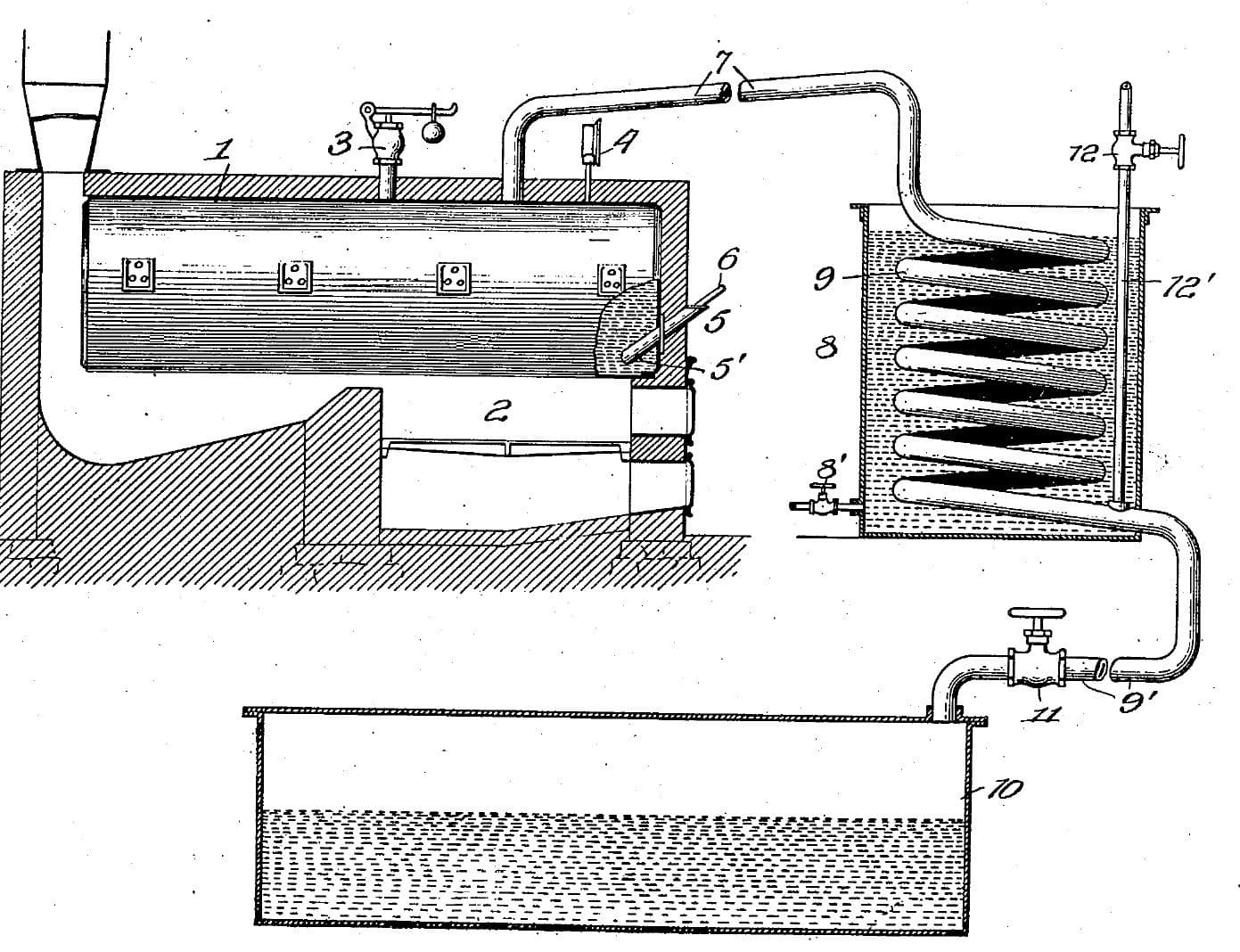
Condense and fractionate the cracked products. Take aviation gasoline up to an end point of about 290 to 310 °F. In Ex. 2 the rest split into 8.7 % gas, 37.5 % heavy naphtha boiling 300-400 °F (octane 75.8 clear, usable as a blending agent or solvent) and 25 % gas oil.
الأدوات المطلوبة:
 قَرْعة تقطير تجزيئي
 ملفّ المكثّف
 ماءخزان نفط
5
5
Variables: feed, temperature, rate
Variables: feed, temperature, rate
Ex. 1 (336-540 °F crude cut, 750 °F, 0.6): 25.9 %, octane 81.0 clear. Ex. 2 (244-507 °F cut, 725 °F, 0.3): 30.8 %, 79.2 clear, 89.5 with 3 cc lead. Ex. 6 (kerosene, 750 °F, 0.6): 20.1 %, acid heat 16 °F. Ex. 7 (gas oil, 850 °F, 1.2): 20.6 %, acid heat 70 °F against 20+ °F at 750 °F (Ex. 4).
الأدوات المطلوبة:
مفاعل أنبوبي بطبقة ثابتةهذا المخطط يصنع
المخططات ذات الصلة
هذه المخططات تشارك المعرفة مع هذا — التقنيات والمواد والمبادئ
CC0 ملكية عامة
هذا المخطط مُصدر بموجب CC0. يحق لك نسخه وتعديله وتوزيعه واستخدامه لأي غرض، دون طلب إذن.
ادعم الصانع بشراء منتجات عبر مخططه حيث يكسب عمولة الصانع يحددها البائعون، أو أنشئ نسخة جديدة من هذا المخطط وضمّنه كرابط في مخططك لمشاركة الإيرادات.