التعاون
فنون
الجمال والعناية
حِرَف
الثقافة والتاريخ
ترفيه
البيئة
الطعام والمشروبات
الهندسة العكسية
العلوم
رياضة
التقنية
الأجهزة القابلة للارتداء
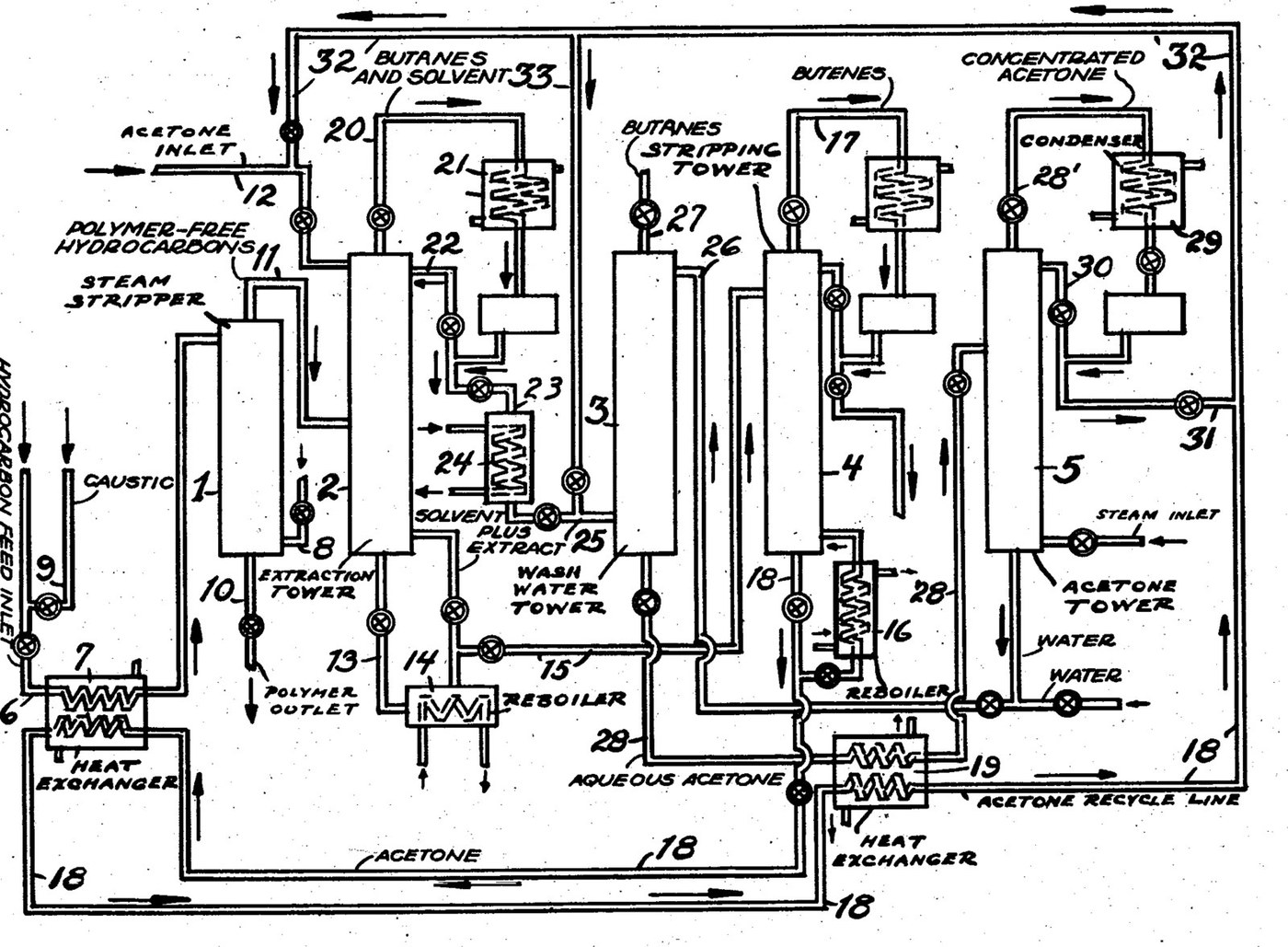


Normal Butylene Fraction: Cracked-Gas C4 Cut Extractively Distilled with Aqueous Acetone (Long, Standard Oil Development, US 2,449,610)
Butanes and butylenes boil too close together to part by plain distillation. Distil them through a stream of watery acetone, which holds back the butylenes, and the butanes go overhead while the butylenes come out at the bottom.
Result: a butylene fraction of 26.7 % butene-1 and 63.5 % butenes-2 (90.2 % normal butylenes), with 3.6 % isobutylene, 4.4 % normal butane and 1.8 % isobutane.
Source: Long, US 2,449,610 (1948). Not given: tower sizes and plates, water amounts, caustic strength. Long does not say how the acid-treated C4 cut is made; it is matched by kind to the Packie & Rupp blueprint. Extremely flammable gases under pressure. Picture: the patent drawing.
خبير
1 day
التعليمات
1
1
Start from the acid-treated C4 cut of cracked gas oil
Start from the acid-treated C4 cut of cracked gas oil
Use the four-carbon fraction from cracking a gas oil, with the bulk of its isobutylene removed by sulphuric acid. Long's, by volume: isobutane 42.4 %, normal butane 9.4, isobutylene 2.0, butene-1 15.0, butenes-2 30.2, high-boiling material 1.0.
المواد لهذه الخطوة:
 جزء البيوتان-البيوتيلين منزوع الأيزوبيوتيلين1 as required
الأدوات المطلوبة:
 أسطوانة غاز مضغوط
2
2
Steam-strip out the heavy material
Steam-strip out the heavy material
Strip the feed with steam in the first tower, adding caustic to neutralise any sulphuric acid esters left from the acid treatment. The heavy material leaves at the bottom; the hydrocarbons go overhead as vapour.
الأدوات المطلوبة:
 قَرْعة تقطير تجزيئي
 مرجل بخاري
 ماء
 محلول هيدروكسيد الصوديوم
3
3
Distil through aqueous acetone
Distil through aqueous acetone
Feed the vapour into the second tower and pass it up through aqueous acetone (14-17 % water) flowing down, at 120-200 °F and 50-150 lbs pressure. With 85 % solvent on the top plate and a cold reflux ratio of 6.5 to 1, the butanes go overhead and the butylenes leave in the acetone at the bottom.
الأدوات المطلوبة:
قَرْعة تقطير تجزيئي أسيتون
 مقياس ضغط
 ملفّ المكثّف
4
4
Strip the butylenes from the acetone
Strip the butylenes from the acetone
In a third tower, reboiled at the bottom and refluxed at the top with product butylenes, distil the butylenes off the acetone. They come over as 26.7 % butene-1 and 63.5 % butenes-2, with 3.6 % isobutylene and 6.2 % butanes.
الأدوات المطلوبة:
قَرْعة تقطير تجزيئيملفّ المكثّفأسطوانة غاز مضغوط5
5
Recover the acetone and keep it clean
Recover the acetone and keep it clean
Wash the acetone out of the overhead butanes with water, keeping it below 15 % in the water or the layers emulsify badly. Reconcentrate the dilute acetone to about 83 % acetone, 17 % water, and recycle it. Bleed part of the recycled acetone into the butanes before washing, so the heavy material building up in it leaves with them.
الأدوات المطلوبة:
قَرْعة تقطير تجزيئيماءأسيتونالمواد
1- 1 as requiredعنصر نائب
هذا المخطط يصنع
المخططات ذات الصلة
هذه المخططات تشارك المعرفة مع هذا — التقنيات والمواد والمبادئ
CC0 ملكية عامة
هذا المخطط مُصدر بموجب CC0. يحق لك نسخه وتعديله وتوزيعه واستخدامه لأي غرض، دون طلب إذن.
ادعم الصانع بشراء منتجات عبر مخططه حيث يكسب عمولة الصانع يحددها البائعون، أو أنشئ نسخة جديدة من هذا المخطط وضمّنه كرابط في مخططك لمشاركة الإيرادات.