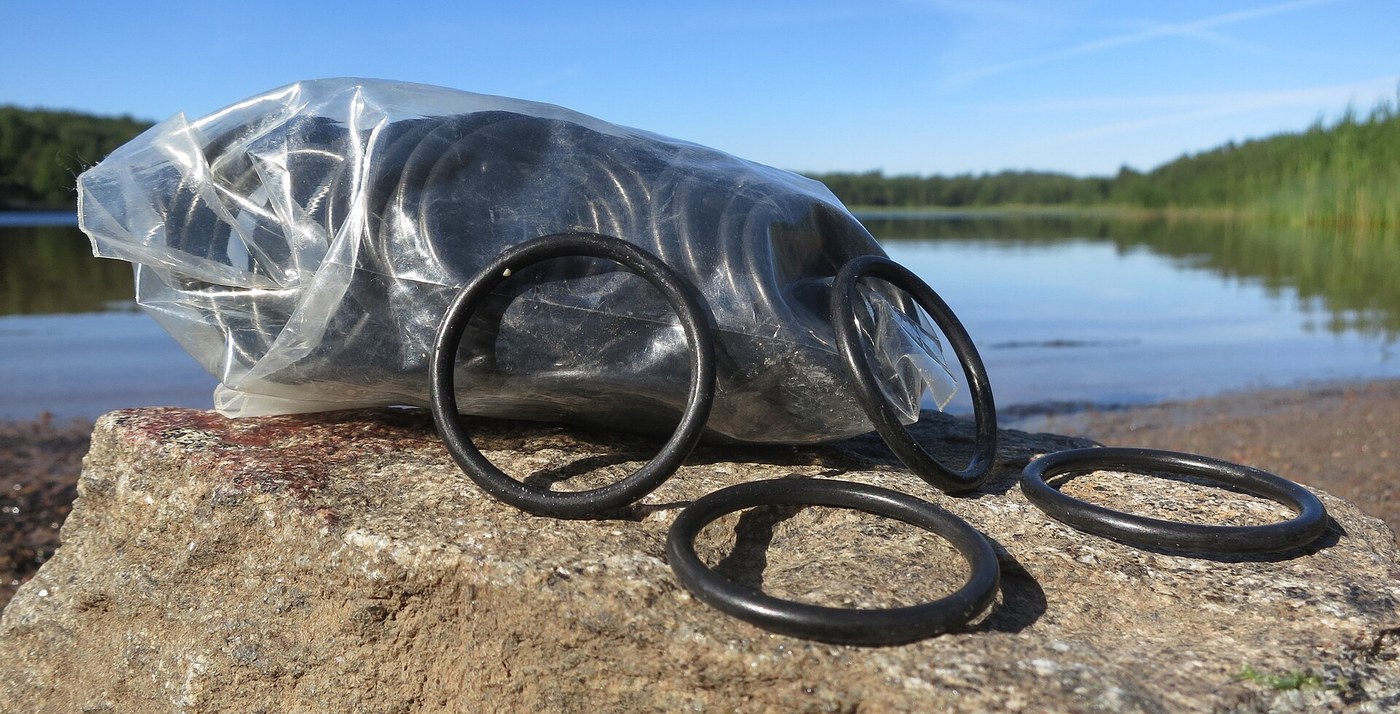


O-Ring Seal
It is a rubber doughnut. It is also, by count, one of the most-used engineered components ever made, and the reason is that it solves a hard problem with no moving parts, no orientation and one part number.
The trick is that an O-ring does not seal by being squeezed flat. It is fitted into a rectangular groove with a deliberate squeeze — typically 10–30% of its cross-section — which gives an initial seal. Then pressure arrives, and because rubber is effectively an incompressible fluid that holds its shape, the ring is pushed down the groove and extruded against the corner, sealing harder. The system pressure supplies its own sealing force.
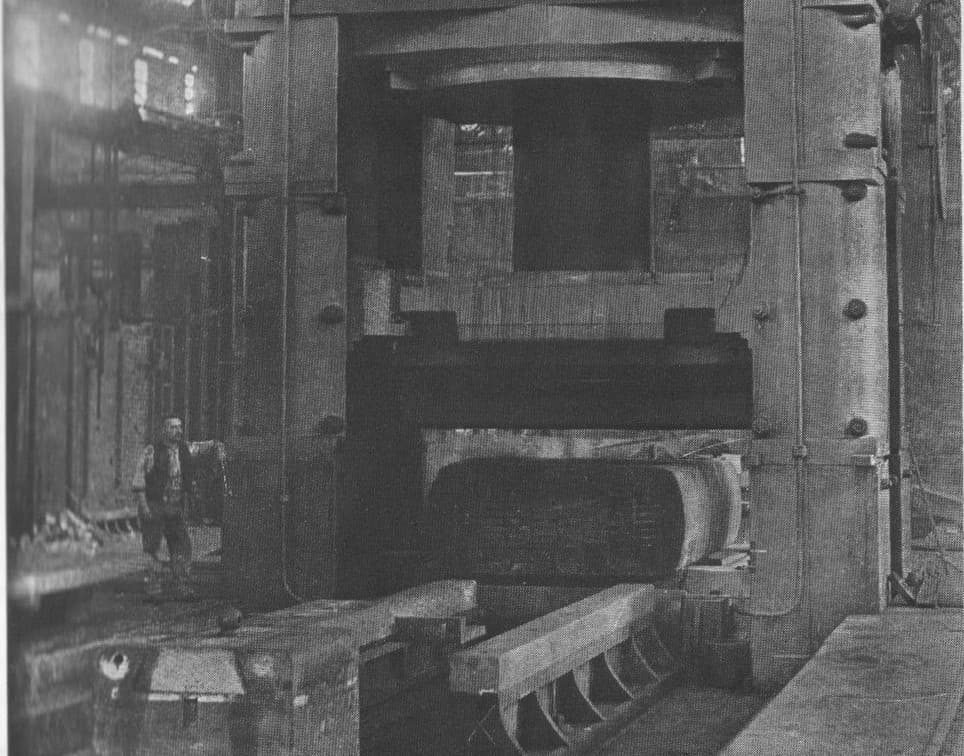
That makes it self-energising: the higher the pressure, the tighter the seal, which is the same principle Maudslay's leather cup used on Bramah's press a century and a half earlier — reduced to a shape you can mould by the million and drop into a groove either way round.
It also sets the failure mode. Push the pressure too high or make the clearance gap too wide, and the rubber is extruded into the gap and nibbled away. That is why high-pressure O-rings are fitted with hard backup rings, and why the gap matters as much as the ring.
Niels A. Christensen, US 2,180,795, "Packing", filed 2 October 1937, granted 21 November 1939. He was 72 years old when he filed it.
التعليمات
Measure the ring and the groove
Measure the ring and the groove
Measure the O-ring's cross-section diameter (the thickness of the rubber, not the hole) and its inside diameter.
Measure the groove depth it will sit in.
Compute squeeze = (cord diameter − groove depth) / cord diameter × 100%. Aim for 15–25% for a static seal.
المواد لهذه الخطوة:
 طقم حلقات إحكام1 طقم
الأدوات المطلوبة:
 قدمة رقمية 6 بوصات
Test too little squeeze
Test too little squeeze
Fit a ring that is too thin for the groove — under about 5% squeeze — and pressurise the joint with the syringe.
Expect it to leak immediately.
Without initial squeeze there is no seal to pressurise, so the self-energising effect never starts. The ring must seal before pressure arrives in order to seal harder because of it.
المواد لهذه الخطوة:
 طقم محاقن1 طقم
Test correct squeeze and watch it improve under pressure
Test correct squeeze and watch it improve under pressure
Fit the correctly-sized ring — 15–25% squeeze — and pressurise gradually.
Expect it to hold, and to hold better as pressure rises rather than worse.
That is the whole invention in one observation. Most seals get worse with pressure; this one gets better, because the pressure is what pushes the rubber into the corner it must seal.
Test far too much squeeze
Test far too much squeeze
Now fit a ring that is much too fat for the groove — over about 40% squeeze.
It will seal. Then leave it compressed overnight and re-test.
Expect compression set: the rubber has taken a permanent flat and no longer springs back, so the seal degrades. Over-squeezing also raises friction badly on a moving seal and can tear the ring on assembly.
More is not better. There is a window, and both edges of it fail.
Cause an extrusion failure deliberately
Cause an extrusion failure deliberately
Set up a joint with a deliberately wide clearance gap beside the groove, fit a correct ring, and raise the pressure hard.
Expect the ring to be squeezed into the gap and to develop a shaved, nibbled edge — extrusion damage.
This is why an O-ring's pressure rating is meaningless on its own: it depends on the gap it is asked to bridge, the rubber's hardness, and whether a backup ring is fitted. Same ring, different housing, different limit.
History & Context
History & Context
The patent. US 2,180,795, "Packing", Niels A. Christensen, filed 2 October 1937, granted 21 November 1939. He began working on hydraulic seals in 1933 and spent four years testing rubber rings in slots. He was 72 when he filed.
What happened to him is worth stating plainly. Christensen licensed the patent to United Aircraft in 1941. After Pearl Harbor the United States government bought out key military patents and distributed them to manufacturers; Christensen received a lump sum of $75,000 and the O-ring effectively became public property. The most widely used seal in engineering made its inventor comparatively little. That is not a footnote — it is what the record shows, and a blueprint that told only the triumphant half would be misleading.
Why the groove is the component. An O-ring is a commodity; the gland it sits in is the engineering. Squeeze, gap, surface finish and groove fill are all specified, and a correct ring in a wrong groove fails. Design standards exist for the groove, not really for the ring.
The rubber is a separate decision. Nitrile for oil, EPDM for water and brake fluid, Viton for heat and fuel, silicone for extreme cold. Fitting the wrong compound looks identical and fails chemically — the ring swells, hardens or dissolves.
The most famous O-ring failure. The Challenger disaster in 1986 turned on O-rings in the solid rocket booster joints losing resilience at low temperature — they were too cold to spring back and seal the joint as it flexed at ignition. It is the clearest possible demonstration of step 4's lesson: a seal that cannot recover its shape is not a seal, and the material's temperature range is a specification, not a detail.
الأدوات المطلوبة
2- عنصر نائب
- عنصر نائب
مواد المخططات المرتبطة

CC0 ملكية عامة
هذا المخطط مُصدر بموجب CC0. يحق لك نسخه وتعديله وتوزيعه واستخدامه لأي غرض، دون طلب إذن.
ادعم الصانع بشراء منتجات عبر مخططه حيث يكسب عمولة الصانع يحددها البائعون، أو أنشئ نسخة جديدة من هذا المخطط وضمّنه كرابط في مخططك لمشاركة الإيرادات.