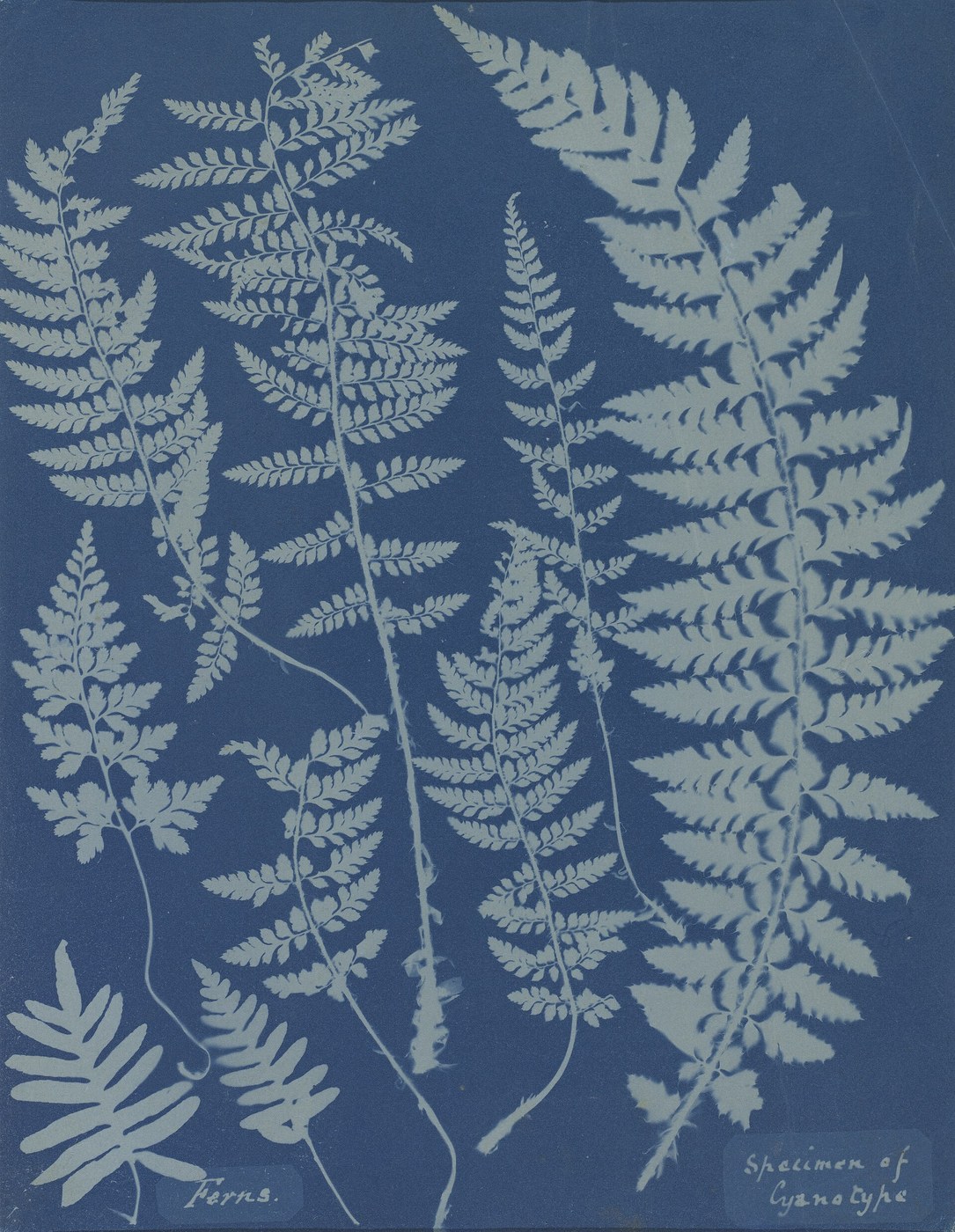


Cyanotype Print
The cyanotype is where the word blueprint comes from. Sir John Herschel invented it in 1842, and he was not trying to make art — he wanted a cheap way to copy mathematical tables. It was quickly adopted for reproducing technical drawings, and for the better part of a century an engineering drawing was literally a white line on a blue ground.
The chemistry is two iron salts: ferric ammonium citrate and potassium ferricyanide. Brushed onto paper and dried in the dark, the coating is sensitive to ultraviolet. Where UV strikes it, the iron is reduced and reacts to form Prussian blue, which lodges permanently between the paper fibres. Where something blocked the light, it washes away white.
No darkroom, no enlarger, no developer. Sunlight and water. It remains one of the oldest photographic processes still in everyday use.
محتوى خطير
يحتوي هذا المخطط على إجراءات خطرة. سجّل الدخول وفعّل المحتوى الخطير في إعدادات حسابك لعرض التعليمات خطوة بخطوة.
CC0 ملكية عامة
هذا المخطط مُصدر بموجب CC0. يحق لك نسخه وتعديله وتوزيعه واستخدامه لأي غرض، دون طلب إذن.
ادعم الصانع بشراء منتجات عبر مخططه حيث يكسب عمولة الصانع يحددها البائعون، أو أنشئ نسخة جديدة من هذا المخطط وضمّنه كرابط في مخططك لمشاركة الإيرادات.