
گلابگیری — تقطیر گل محمدی برای گلاب خالص
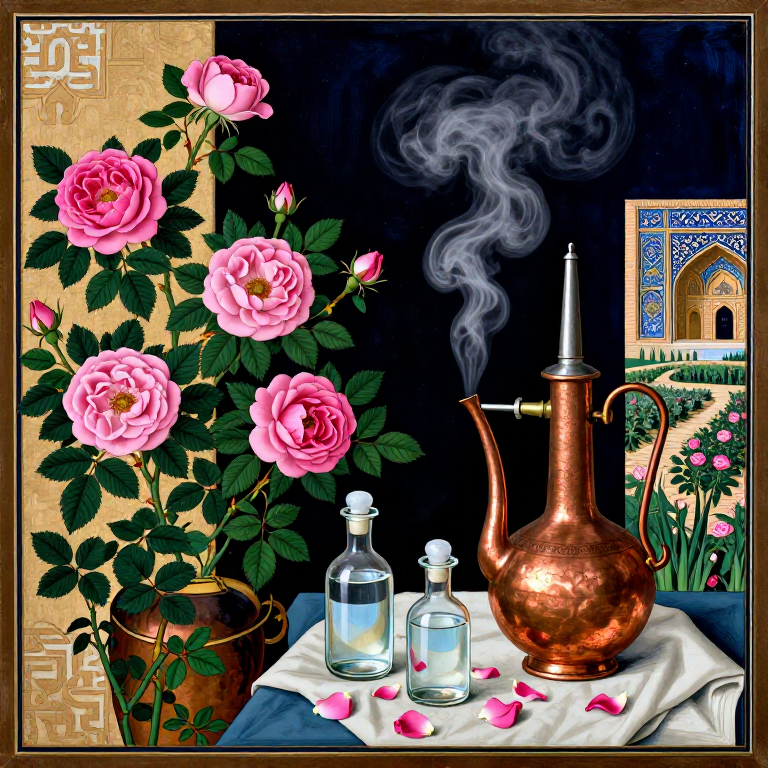
راهنمای جامع تقطیر سنتی گلاب از گل محمدی (Rosa damascena) به روش ایرانی. ایران بزرگترین تولیدکننده گلاب در جهان است و شهرهای کاشان و قمصر در استان اصفهان مرکز این صنعت هستند. گل محمدی ۳۰ گلبرگه در اردیبهشت و خرداد (اواسط اردیبهشت تا اوایل خرداد) به مدت حدود ۲۰ روز گل میدهد و باید در سحرگاه (ساعت ۴ تا ۷ صبح) چیده شود تا میزان اسانس در بالاترین حد باشد.
در این فرآیند، ۳۰ تا ۴۰ کیلوگرم گلبرگ تازه حدود ۱۰ لیتر گلاب تولید میکند. دستگاه تقطیر سنتی مسی (عرقکش) قرنهاست که برای این کار استفاده میشود. گلاب دوآتشه (دو بار تقطیر شده) بالاترین کیفیت را دارد. گلاب حاوی ترکیبات معطر سیترونلول، ژرانیول و نرول است و در غذا، شیرینیپزی، طب سنتی و مراسم مذهبی کاربرد دارد.
التعليمات
شناخت گل محمدی
شناخت گل محمدی
گل محمدی (Rosa damascena) گونهای از خانواده گل سرخ است که بومی ایران بوده و قدمت کشت آن به بیش از ۲۵۰۰ سال میرسد. این گل ۳۰ گلبرگ صورتی دارد و عطر بسیار قوی و مشخصی تولید میکند. گل محمدی در مناطق خشک و نیمهخشک با آبوهوای گرم و خاک آهکی به بهترین شکل رشد میکند. مناطق اصلی کشت در ایران شامل کاشان، قمصر، نیاسر، لالهزار کرمان و میمند فارس هستند. ایران سالانه حدود ۱۵٬۰۰۰ تن گلاب تولید میکند.
تعیین زمان مناسب برداشت
تعیین زمان مناسب برداشت
فصل گلدهی گل محمدی در ایران از اواسط اردیبهشت تا اوایل خرداد (اواسط ماه مه تا اوایل ژوئن) است و تنها حدود ۲۰ روز طول میکشد. برداشت باید حتماً در سحرگاه، بین ساعت ۴ تا ۷ صبح انجام شود. در این ساعات، میزان اسانسهای فرّار در گلبرگها به بیشترین مقدار خود میرسد. پس از طلوع آفتاب و با افزایش دما، اسانسها تبخیر شده و کیفیت گلبرگها کاهش مییابد. گلهایی که تازه باز شدهاند (نه غنچه و نه پژمرده) بهترین کیفیت را دارند.
چیدن گلبرگها
چیدن گلبرگها
گلها را با دست و به آرامی از ساقه جدا کنید. از له کردن، فشار دادن یا مچاله کردن گلبرگها خودداری کنید زیرا آسیب مکانیکی باعث از بین رفتن اسانسها میشود. گلها را بهصورت کامل (با گلبرگها) بچینید و در سبدهای حصیری یا پارچهای قرار دهید. از سبدهای پلاستیکی استفاده نکنید چون باعث تعریق و فساد گلبرگها میشوند. گلبرگها باید حداکثر ظرف ۲ تا ۳ ساعت پس از برداشت تقطیر شوند تا کیفیت حفظ شود.
المواد لهذه الخطوة:
 أزهار Rosa damascena الطازجة35 كغ
الأدوات المطلوبة:
 سلّة خوص للحصاد
آمادهسازی دستگاه تقطیر مسی
آمادهسازی دستگاه تقطیر مسی
دستگاه تقطیر سنتی ایرانی عرقکش (aragh-kesh) از مس ساخته شده و شامل سه بخش اصلی است: دیگ مسی (محل قرار دادن گلبرگ و آب)، سرپوش مخروطی (برای جمعآوری بخار) و لوله مارپیچ مسی (کندانسور) که از داخل یک مخزن آب سرد عبور میکند. قبل از استفاده، تمام اتصالات را با خمیر آرد و آب مهر و موم کنید تا بخار نشت نکند. دیگ باید کاملاً تمیز و بدون بقایای تقطیر قبلی باشد.
المواد لهذه الخطوة:
 عجينة إحكام من الدقيق والماء500 غ
الأدوات المطلوبة:
 إنبيق نحاسي
 طقم فُرَش تنظيف القطع
پر کردن دیگ با گلبرگ و آب
پر کردن دیگ با گلبرگ و آب
گلبرگهای تازه را داخل دیگ مسی بریزید. نسبت استاندارد ۳۰ تا ۴۰ کیلوگرم گلبرگ به ۶۰ تا ۸۰ لیتر آب است. آب باید تمیز و بدون کلر باشد (آب چاه یا چشمه ترجیح داده میشود). گلبرگها باید کاملاً در آب غوطهور باشند. دیگ را بیشتر از دو سوم ظرفیتش پر نکنید تا فضای کافی برای تولید بخار وجود داشته باشد.
المواد لهذه الخطوة:
 ماء ينبوع نظيف70 لترات
مهر و موم کردن و شروع حرارتدهی
مهر و موم کردن و شروع حرارتدهی
سرپوش دیگ را قرار داده و تمام درزها و اتصالات را با خمیر آرد و آب کاملاً مهر و موم کنید. این مرحله حیاتی است؛ هرگونه نشت بخار به معنای از دست رفتن اسانسهای معطر است. آتش را زیر دیگ روشن کرده و به آرامی حرارت را افزایش دهید. هدف رسیدن به جوش ملایم است، نه جوش شدید. جوش شدید باعث سوختن گلبرگها و تولید بوی نامطبوع در گلاب میشود. رسیدن به نقطه جوش حدود ۴۵ تا ۶۰ دقیقه طول میکشد.
المواد لهذه الخطوة:
 حطب15 كغ
الأدوات المطلوبة:
 حفرة نار
کنترل فرآیند تقطیر
کنترل فرآیند تقطیر
پس از شروع جوش، بخار حاوی ترکیبات فرّار (سیترونلول، ژرانیول، نرول) از گلبرگها جدا شده و از طریق سرپوش مخروطی به لوله مارپیچ هدایت میشود. لوله مارپیچ از داخل مخزن آب سرد عبور میکند و بخار تبدیل به مایع (گلاب) میشود. شدت آتش را ثابت نگه دارید تا قطرات گلاب با سرعت یکنواخت (حدود یک قطره در ثانیه) خارج شوند. آب مخزن خنککننده باید مرتباً تعویض شود تا سرد بماند.
المواد لهذه الخطوة:
 ماء بارد للمكثف100 لترات
جمعآوری میعان (گلاب خام)
جمعآوری میعان (گلاب خام)
مایع خروجی از لوله کندانسور را در ظروف شیشهای تمیز جمعآوری کنید. از ظروف پلاستیکی یا فلزی استفاده نکنید چون با ترکیبات اسانس واکنش میدهند. فرآیند تقطیر حدود ۳ تا ۴ ساعت طول میکشد. از هر ۳۰ تا ۴۰ کیلوگرم گلبرگ، حدود ۱۰ لیتر گلاب به دست میآید. گلاب اولین تقطیر یکآتشه نامیده میشود.
الأدوات المطلوبة:
 أوعية تجميع زجاجية
تقطیر مجدد برای گلاب دوآتشه
تقطیر مجدد برای گلاب دوآتشه
برای تولید گلاب با کیفیت بالاتر (دوآتشه)، گلاب یکآتشه را به جای آب خالص همراه با گلبرگهای تازه جدید دوباره تقطیر کنید. گلاب دوآتشه غلظت اسانس بیشتری دارد و عطر قویتر و ماندگارتری تولید میکند. این روش در کاشان و قمصر برای تولید مرغوبترین گلابها استفاده میشود. گلاب دوآتشه حدود دو برابر گلاب معمولی قیمت دارد.
المواد لهذه الخطوة:
 بتلات Rosa damascena للتقطير الثاني35 كغ
الأدوات المطلوبة:
إنبيق نحاسيجداسازی روغن گل سرخ
جداسازی روغن گل سرخ
در طول تقطیر، لایهای نازک از روغن اسانسی (عطر گل سرخ یا rose otto) روی سطح گلاب تشکیل میشود. این روغن بسیار ارزشمند است (هر کیلوگرم ۵٬۰۰۰ تا ۱۰٬۰۰۰ دلار). با استفاده از قاشق یا پیپت شیشهای، روغن را به آرامی از سطح گلاب جدا کنید. برای تولید ۱ کیلوگرم روغن گل سرخ، حدود ۳٬۰۰۰ تا ۳٬۵۰۰ کیلوگرم گلبرگ لازم است. روغن جدا شده را در شیشههای تیرهرنگ ذخیره کنید.
الأدوات المطلوبة:
 ماصّة زجاجية
 قنينة من زجاج قاتم
آزمایش کیفیت گلاب
آزمایش کیفیت گلاب
گلاب با کیفیت باید شفاف و بدون ذرات معلق باشد. رنگ آن بیرنگ تا کمی زرد کمرنگ است. عطر باید طبیعی، قوی و بدون بوی سوختگی یا تخمیر باشد. برای آزمایش ساده، چند قطره گلاب را روی پشت دست بریزید: گلاب خالص به سرعت جذب پوست میشود و عطر آن ماندگار است. گلاب رقیق شده سریع بخار میشود و عطر ضعیفی دارد. اگر گلاب را تکان دهید، کف تولید شده باید ظرف چند ثانیه از بین برود.
بطریکردن گلاب
بطریکردن گلاب
گلاب آماده را از صافی پارچهای نازک عبور دهید تا هرگونه ذرات ریز جدا شود. سپس در بطریهای شیشهای تمیز و استریل بریزید. بطریهای شیشه تیره (قهوهای یا سبز تیره) بهتر هستند چون نور باعث تجزیه ترکیبات معطر میشود. درب بطریها را محکم ببندید. روی هر بطری تاریخ تقطیر، نوع (یکآتشه یا دوآتشه)، و مقدار را بنویسید.
المواد لهذه الخطوة:
 قوارير زجاج داكن بأغطية10 قطع
 مرشّح قماش ناعم1 قطعة
الأدوات المطلوبة:
 قمع فصل
نگهداری و ذخیرهسازی
نگهداری و ذخیرهسازی
گلاب بطریشده را در مکانی خنک، خشک و تاریک نگهداری کنید. دمای ایدهآل ۱۵ تا ۲۰ درجه سانتیگراد است. از قرار دادن در معرض نور مستقیم آفتاب و حرارت بالا خودداری کنید. گلاب خالص و درست نگهداری شده تا ۲ سال و بیشتر کیفیت خود را حفظ میکند. عطر گلاب در ماههای اول پس از تقطیر بسیار تند است و با گذشت زمان ملایمتر و مطبوعتر میشود (عملآوری طبیعی).
کاربردها و تمیزکاری دستگاه
کاربردها و تمیزکاری دستگاه
گلاب ایرانی کاربردهای گستردهای دارد: در غذا و شیرینی (فالوده، بستنی، باقلوا)، در طب سنتی (تقویت قلب، آرامبخش، ضدالتهاب)، در مراسم مذهبی و سنتی، و در صنایع آرایشی و بهداشتی. پس از اتمام تقطیر، دیگ و تمام قطعات مسی را با آب گرم و سرکه بشویید و خشک کنید. بقایای گلبرگهای تقطیرشده را میتوان به عنوان کود آلی در باغ استفاده کرد. دستگاه مسی را در جای خشک نگهداری کنید تا از زنگزدگی جلوگیری شود.
المواد لهذه الخطوة:
 خلّ أبيض للتنظيف500 مل
الأدوات المطلوبة:
طقم فُرَش تنظيف القطعالمواد
11- عنصر نائب
- عنصر نائب
- 70 لتراتعنصر نائب
- 15 كغعنصر نائب
- 100 لتراتعنصر نائب
- عنصر نائب
- 10 قطععنصر نائب
- 1 قطعةعنصر نائب
- 500 ملعنصر نائب
- 70 لتراتعنصر نائب
- 100 لتراتعنصر نائب
الأدوات المطلوبة
8- عنصر نائب
- عنصر نائب
- عنصر نائب
- عنصر نائب
- عنصر نائب
- عنصر نائب
- عنصر نائب
- عنصر نائب
هذا المخطط يصنع
CC0 ملكية عامة
هذا المخطط مُصدر بموجب CC0. يحق لك نسخه وتعديله وتوزيعه واستخدامه لأي غرض، دون طلب إذن.
ادعم الصانع بشراء منتجات عبر مخططه حيث يكسب عمولة الصانع يحددها البائعون، أو أنشئ نسخة جديدة من هذا المخطط وضمّنه كرابط في مخططك لمشاركة الإيرادات.