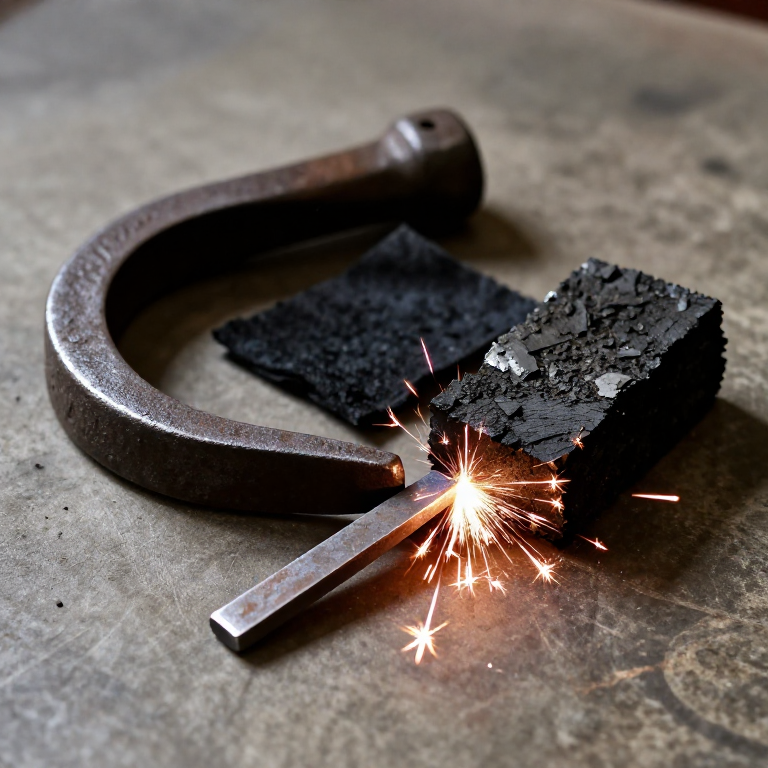


Striking Fire with Flint and Steel — The Iron Age Upgrade to Fire Starting
The moment iron became available, someone struck it against flint and noticed the sparks were hotter and more reliable than the old flint-on-pyrite method. Flint and steel replaced friction fire-starting and flint-on-pyrite across the entire Old World and remained the primary fire-starting technology for over two thousand years — from the Iron Age through the invention of friction matches in the 1830s.
The principle is simple: striking a hardened steel edge sharply against the sharp edge of flint shears off tiny curls of steel. The impact heats these curls to their ignition temperature (about 1,500 °C) and they burn in air as bright white sparks. These sparks are caught in a prepared tinder — charcloth, dried fungus, or charred plant pith — which smoulders and is blown into flame.
The steel used must be high-carbon steel (case-carburised wrought iron or proper spring steel). Soft wrought iron does not produce good sparks — the flint simply scrapes off cold shavings. A properly made fire steel is one of the most important personal tools in pre-match society.
التعليمات
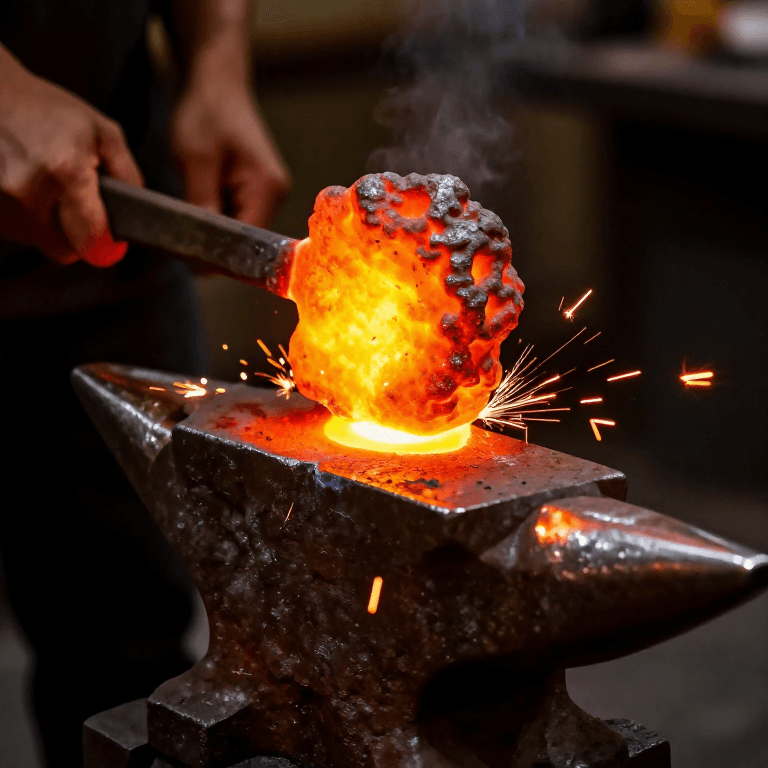
Forge the fire steel blank
Forge the fire steel blank
المواد لهذه الخطوة:
 فحم نباتي2 كغ
الأدوات المطلوبة:
 مطرقة حدادة
 كلّابة حدادة
 موقد (نار الحدادة)
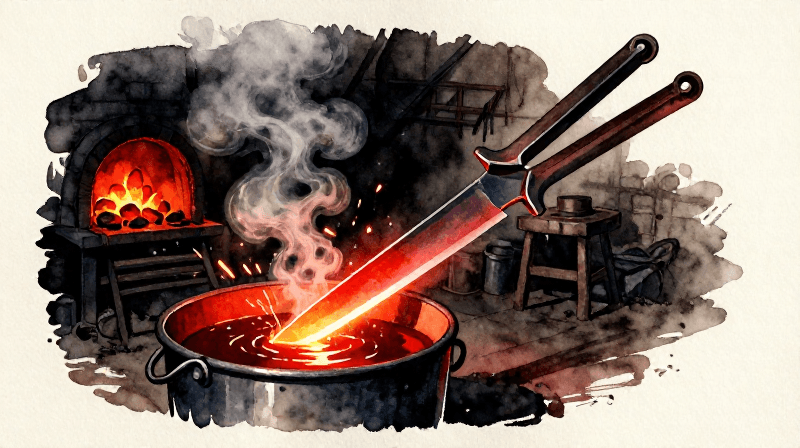
Harden the striking edge
Harden the striking edge
Select and prepare flint
Select and prepare flint
Make charcloth tinder
Make charcloth tinder
Strike sparks onto the tinder
Strike sparks onto the tinder
Blow the ember into flame
Blow the ember into flame
المواد
4- 2 كغعنصر نائب
- 1 قطعةعنصر نائب
- 1 قطعةعنصر نائب
- 1 قطعةعنصر نائب
الأدوات المطلوبة
3- عنصر نائب
- عنصر نائب
- عنصر نائب
مواد المخططات المرتبطة
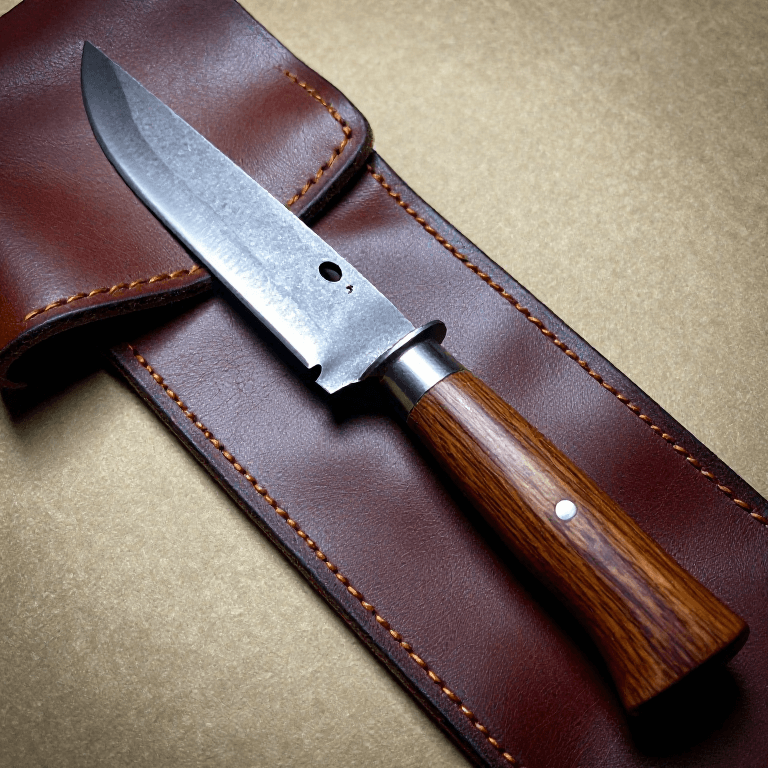
هذا المخطط يصنع
المخططات ذات الصلة
هذه المخططات تشارك المعرفة مع هذا — التقنيات والمواد والمبادئ


CC0 ملكية عامة
هذا المخطط مُصدر بموجب CC0. يحق لك نسخه وتعديله وتوزيعه واستخدامه لأي غرض، دون طلب إذن.
ادعم الصانع بشراء منتجات عبر مخططه حيث يكسب عمولة الصانع يحددها البائعون، أو أنشئ نسخة جديدة من هذا المخطط وضمّنه كرابط في مخططك لمشاركة الإيرادات.