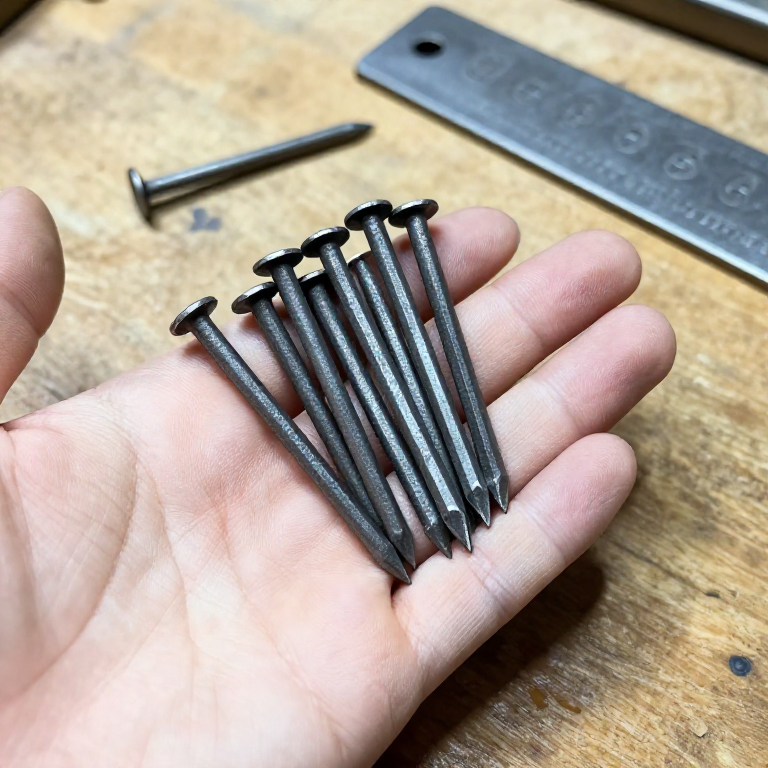


Forging Iron Nails by Hand — Drawing, Cutting, and Heading
Before wire-drawing machines and nail-cutting factories, every nail was forged individually by hand. A skilled nailer could produce 200-300 nails per day — and millions were needed. The Roman army alone consumed an estimated 7 tonnes of iron nails for a single fortress. Medieval cathedrals, Viking longships, and colonial farmhouses all depended on hand-forged nails.
The process is deceptively simple: heat an iron rod, draw it to a taper, cut it to length, insert the cut end into a heading plate, and hammer the protruding end into a head. Each nail takes about 30 seconds for an experienced nailer — making it one of the fastest and most repetitive forge operations.
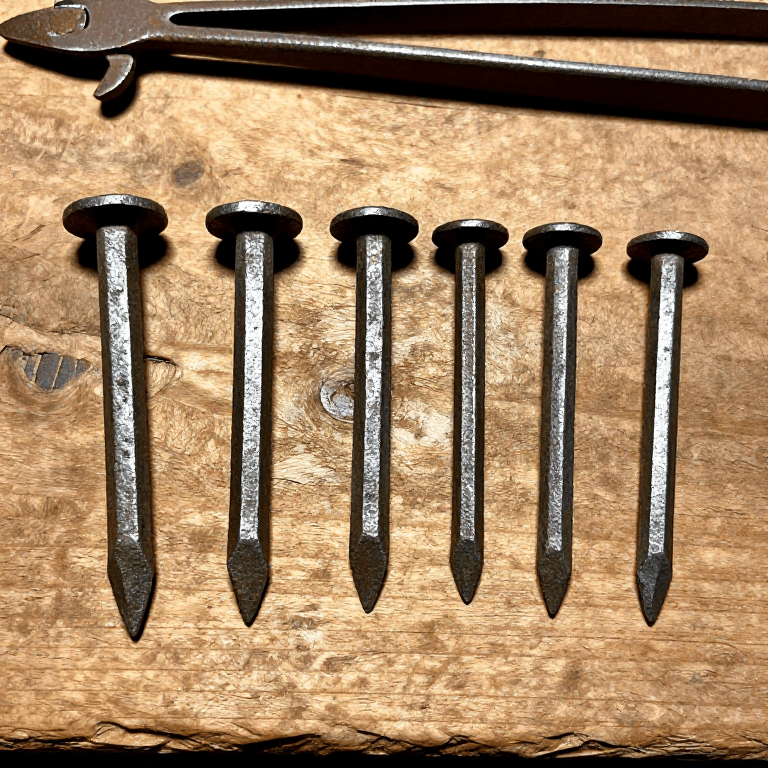
Hand-forged nails have a characteristic square cross-section (from the square rod stock) and an irregular rose head from the final heading blows. This is the blueprint for the most-produced iron object in human history.
التعليمات
Prepare the nail rod
Prepare the nail rod
المواد لهذه الخطوة:
 فحم نباتي2 كغ
Heat the tip to forging temperature
Heat the tip to forging temperature
الأدوات المطلوبة:
 موقد (نار الحدادة)
Draw the taper
Draw the taper
الأدوات المطلوبة:
 مطرقة حدادة
 كلّابة حدادة
Cut nearly through at the nail length
Cut nearly through at the nail length
Insert into the heading plate
Insert into the heading plate
Forge the head
Forge the head
Snap free and quench
Snap free and quench
المواد لهذه الخطوة:
 ماء2 l
Repeat for the batch
Repeat for the batch
الأدوات المطلوبة
3- عنصر نائب
- عنصر نائب
- عنصر نائب
مواد المخططات المرتبطة
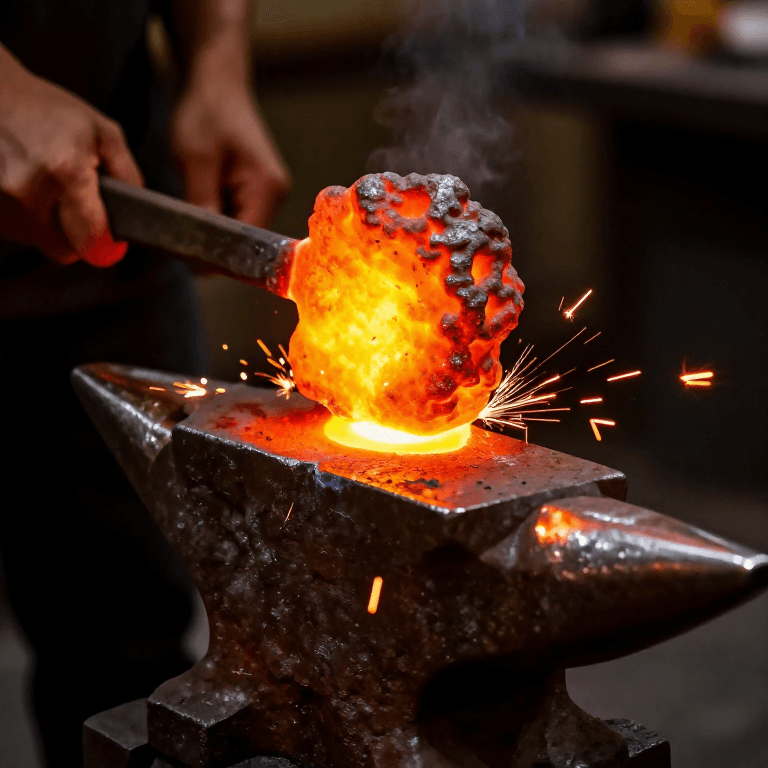
هذا المخطط يصنع



المخططات ذات الصلة
هذه المخططات تشارك المعرفة مع هذا — التقنيات والمواد والمبادئ
CC0 ملكية عامة
هذا المخطط مُصدر بموجب CC0. يحق لك نسخه وتعديله وتوزيعه واستخدامه لأي غرض، دون طلب إذن.
ادعم الصانع بشراء منتجات عبر مخططه حيث يكسب عمولة الصانع يحددها البائعون، أو أنشئ نسخة جديدة من هذا المخطط وضمّنه كرابط في مخططك لمشاركة الإيرادات.