التعاون
فنون
الجمال والعناية
حِرَف
الثقافة والتاريخ
ترفيه
البيئة
الطعام والمشروبات
الهندسة العكسية
العلوم
رياضة
التقنية
الأجهزة القابلة للارتداء
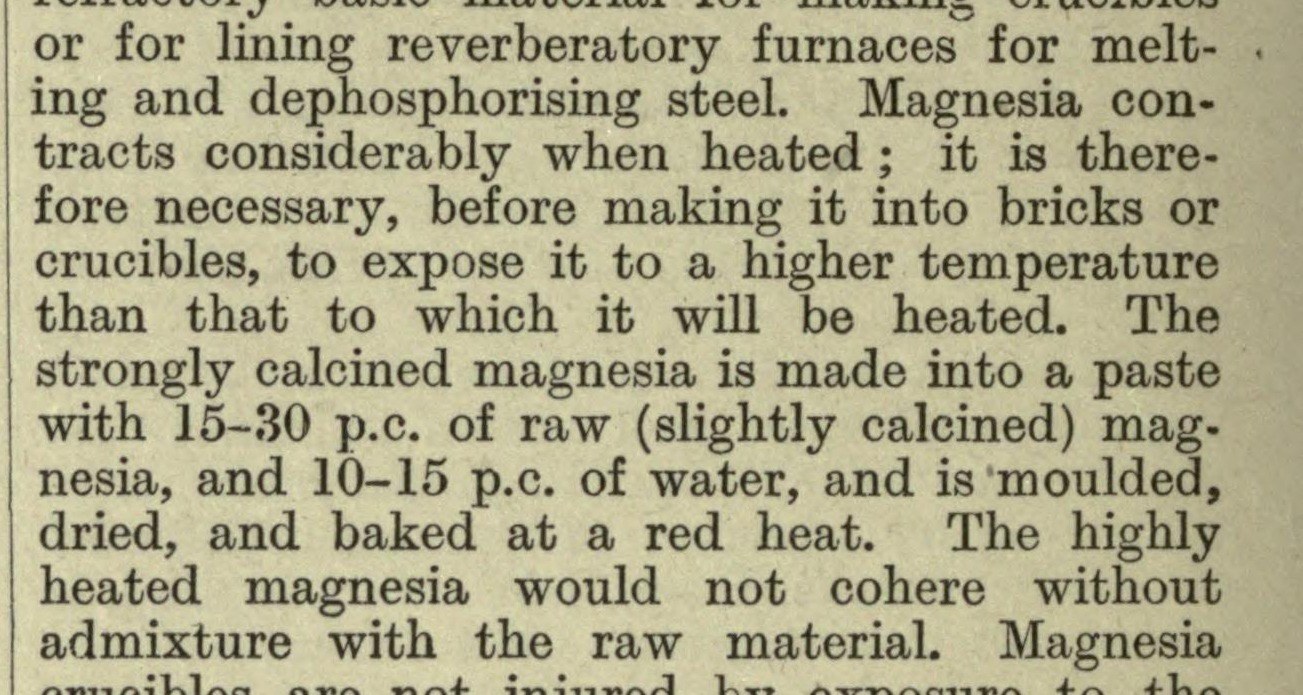


Magnesia Crucible: Strongly Calcined Magnesia Bound with Raw Magnesia and Baked at a Red Heat (Thorpe 1912)
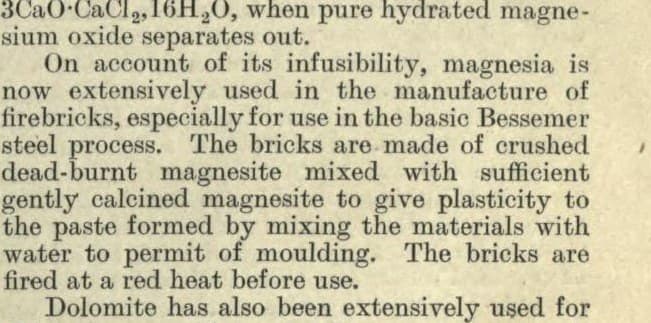
A magnesia crucible is a pot of magnesia, a basic refractory. Thorpe's Dictionary of Applied Chemistry (1912) gives the recipe introduced by Caron: magnesia shrinks a great deal when heated, so it is first calcined hotter than it will ever be used, then bound with 15-30 per cent of raw, slightly calcined magnesia and 10-15 per cent of water, moulded, dried and baked at a red heat.
He gives no calcining temperature, mould or size; those are unknown here.
Source: Thorpe, Dictionary of Applied Chemistry vol. II (1912), CRUCIBLES, p. 170. Picture: that passage.
متوسط
Two to three days
التعليمات
1
1
Read Thorpe
Read Thorpe
"The highly heated magnesia would not cohere without admixture with the raw material."
2
2
Calcine most of the magnesia hard
Calcine most of the magnesia hard
Magnesia contracts considerably when heated, so before making it into a crucible expose it to a higher temperature than the crucible will meet in use. The temperature itself is not given. Keep back a part of the magnesia only slightly calcined.
المواد لهذه الخطوة:
 أكسيد المغنيسيوم1 as required
الأدوات المطلوبة:
 فرن حراري
 قفّازات مقاومة للحرارة
3
3
Make the paste
Make the paste
Grind the strongly calcined magnesia and mix it with 15-30 per cent of the raw (slightly calcined) magnesia and 10-15 per cent of water into a paste. The raw part is what makes it hold together.
المواد لهذه الخطوة:
 ماء1 10-15 per cent
الأدوات المطلوبة:
 هاون مع مدقّة
 ميزان رقمي دقيق
 كمامة غبار
4
4
Mould the crucible
Mould the crucible
Mould the paste into crucibles. Thorpe does not describe the mould or give sizes (unknown).
الأدوات المطلوبة:
 مادة غير معروفة
 أبعاد غير معروفة
5
5
Dry and bake
Dry and bake
Dry the crucibles, then bake them at a red heat. Thorpe notes that magnesia crucibles are not harmed by standing in the air.
الأدوات المطلوبة:
فرن حراريقفّازات مقاومة للحرارة6
6
History and honest limits
History and honest limits
Thorpe credits Caron with introducing magnesia for crucibles and for lining reverberatory furnaces in which steel was melted and dephosphorised. He also lists magnesia-bauxite crucibles (Gaudin) and calcined magnesite with a boron compound (Rawson and Littlefield, 1900).
The calcining temperature, the mould, the size and the drying are not given; the tools are ours.
الأدوات المطلوبة
7- عنصر نائب
- عنصر نائب
- عنصر نائب
- عنصر نائب
- عنصر نائب
- عنصر نائب
- عنصر نائب
هذا المخطط يصنع
المخططات ذات الصلة
هذه المخططات تشارك المعرفة مع هذا — التقنيات والمواد والمبادئ
CC0 ملكية عامة
هذا المخطط مُصدر بموجب CC0. يحق لك نسخه وتعديله وتوزيعه واستخدامه لأي غرض، دون طلب إذن.
ادعم الصانع بشراء منتجات عبر مخططه حيث يكسب عمولة الصانع يحددها البائعون، أو أنشئ نسخة جديدة من هذا المخطط وضمّنه كرابط في مخططك لمشاركة الإيرادات.