

Linking Riveted Chain Mail Rings — Medieval Armour Crafting
التعليمات
Coil and Cut Wire into Rings
Coil and Cut Wire into Rings
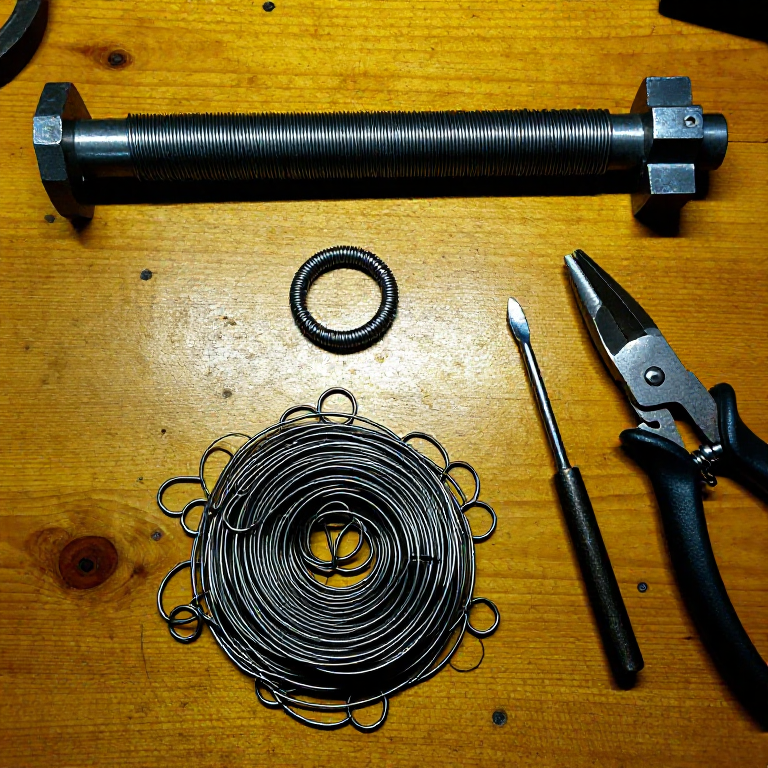
Wrap the iron or mild steel wire tightly around a steel mandrel rod of 8 to 10 mm diameter, forming a close-wound coil. The mandrel diameter determines the inner diameter of the finished rings — most medieval mail used rings with an inner diameter of 8 to 10 mm. Slide the coil off the mandrel and cut along one side with wire cutters or a jeweller's saw to produce individual open rings. Each ring should have two overlapping flat ends where it was cut. If using wire cutters, file the cut ends flat so they overlap cleanly. If using a saw, the cut produces flat ends automatically. For riveted mail, punch or drill a small hole (approximately 1 mm) through both overlapping ends of each ring where the rivet will pass through. This is the most time-consuming preparatory step — a mail shirt requires 20,000 to 40,000 rings, each individually punched.
المواد لهذه الخطوة:
 زاوية من الفولاذ الطريlarge coil (50+ metres for a small section) قطعة
 برشام حديدhundreds per section قطعة
Pre-Close Half the Rings
Pre-Close Half the Rings
Divide the rings into two groups. One group will be closed first (these are the linking rings), and the other group will remain open for threading through closed rings during assembly. Take the first group and close each ring by overlapping the flat ends, aligning the rivet holes, inserting a small rivet through both holes, and peening (hammering) both ends of the rivet on a small anvil until the rivet head mushrooms and locks the ring permanently closed. This is painstaking work — each ring takes approximately 15 to 30 seconds to rivet. The rivet must be tight enough that the ring cannot open under stress. Archaeological examples from the Battle of Visby (1361) and other medieval sites show consistently tight rivet work, indicating that this was a highly practiced craft with quality standards.
Link Rings in the 4-in-1 Pattern
Link Rings in the 4-in-1 Pattern
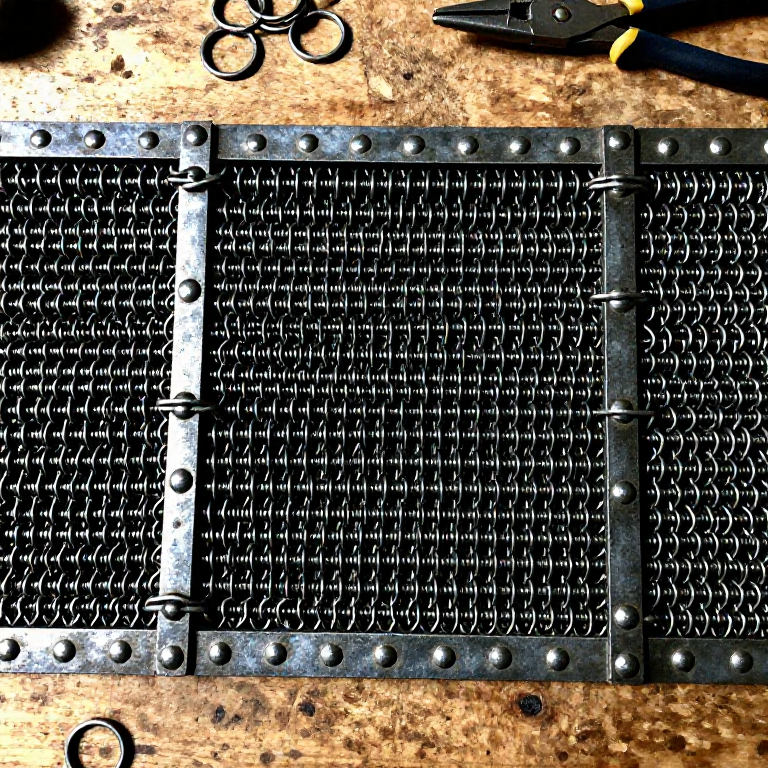
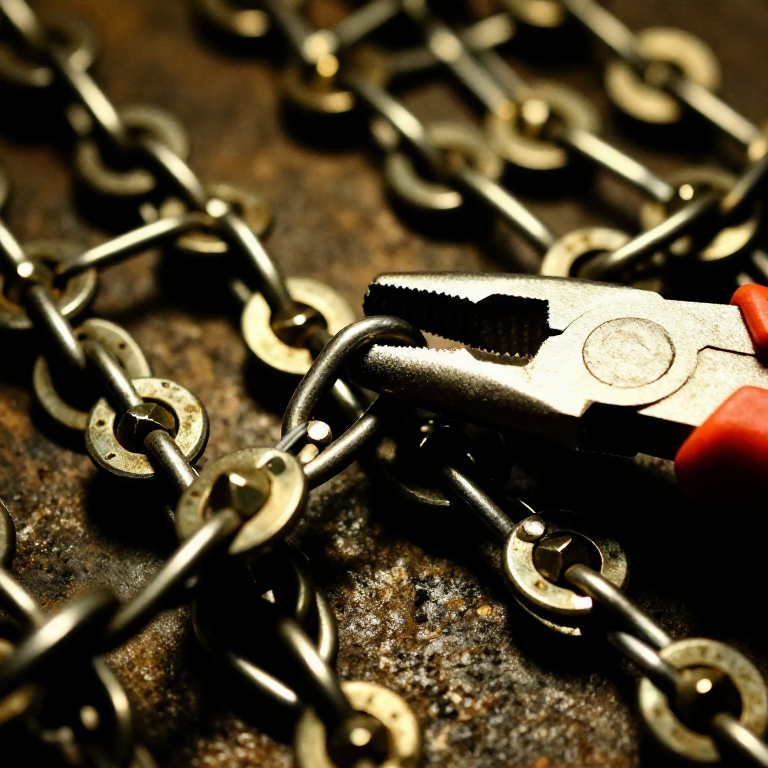
The 4-in-1 European pattern means every ring passes through four adjacent rings. Start by threading one open ring through four closed rings, then close and rivet it. This creates a basic unit. Lay this flat — the central ring will be surrounded by four rings in a diamond orientation. To expand, thread a new open ring through two adjacent rings from the existing fabric and two new closed rings, then rivet it shut. Continue this process, always linking each new ring to two existing rings from the growing fabric and two fresh closed rings. Work in rows for consistency. The fabric should lie flat and drape smoothly. If it buckles or curls, the ring orientation is incorrect — all rings in a row should lean in the same direction, alternating with the next row. A 10 x 10 cm patch of 4-in-1 mail in 10 mm rings contains approximately 400 rings.
Shape the Mail Fabric
Shape the Mail Fabric
To shape a flat mail fabric into a three-dimensional garment like a hauberk, expansions and contractions are made by varying the number of rings in each row. To expand (make the fabric wider, as at the chest or skirt flare), add extra linking rings so that some connecting rings link to three rings from the previous row instead of two. To contract (narrow the fabric, as at the waist), skip linking points so some connecting rings link to only one ring from the previous row. Medieval armourers shaped mail by working on a padded form (mannequin) of the intended wearer's dimensions. The neck opening, armholes, and hem edges are finished by closing all edge rings so no open ends protrude that could snag or scratch.
Inspect and Finish
Inspect and Finish
Inspect every rivet in the completed mail section by flexing the fabric and looking for any rings that open or separate — a single failed rivet weakens the local area and can propagate into a larger hole under stress. Re-rivet any loose rings. To protect against rust, tumble the mail in a barrel with sand and vinegar to remove forge scale and polish the rings, then oil lightly with linseed oil or animal fat. Medieval soldiers maintained their mail by rolling it in a barrel of sand periodically to scour off rust — a technique documented in period armour maintenance manuals. A completed mail hauberk (knee-length, long-sleeved) weighs approximately 10 to 15 kg and contains 25,000 to 40,000 riveted rings. Despite its weight, mail distributes load across the body and provides excellent protection against cutting attacks, though it is less effective against heavy blunt impacts and narrow-pointed thrusts.
المواد
2- large coil (50+ metres for a small section) قطعةعنصر نائب
- hundreds per section قطعةعنصر نائب
الأدوات المطلوبة
10- عنصر نائب
- عنصر نائب
- عنصر نائب
- عنصر نائب
- عنصر نائب
- عنصر نائب
- عنصر نائب
- Steel mandrel rod (8-10 mm diameter) for coiling wireعنصر نائب
- عنصر نائب
- عنصر نائب
CC0 ملكية عامة
هذا المخطط مُصدر بموجب CC0. يحق لك نسخه وتعديله وتوزيعه واستخدامه لأي غرض، دون طلب إذن.
ادعم الصانع بشراء منتجات عبر مخططه حيث يكسب عمولة الصانع يحددها البائعون، أو أنشئ نسخة جديدة من هذا المخطط وضمّنه كرابط في مخططك لمشاركة الإيرادات.