

Smelting Pig Iron in a Coke Blast Furnace — Molten Iron at Industrial Scale
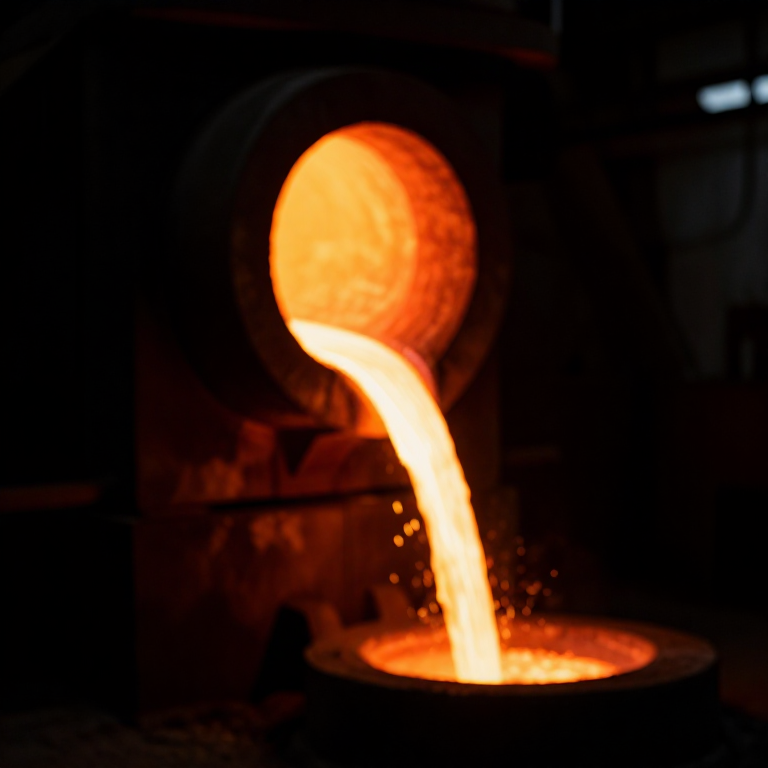
The bloomery gave the ancient world iron, but only in small spongy lumps, one slow batch at a time. The blast furnace changed everything: a tall shaft kept continuously charged and blown produces a steady river of molten iron. Where a bloomery never melts its metal, a blast furnace runs hot enough to liquefy iron entirely, letting it pool at the hearth and be tapped out by the tonne.
The key is heat and chemistry working together. A powerful air blast burns coke to carbon monoxide, which strips the oxygen from iron ore; meanwhile the descending iron soaks up carbon until it melts. Limestone added as flux carries off the stony impurities as a floating slag. What runs out of the tap hole is pig iron — iron saturated with about four percent carbon: hard, brittle, and perfect for casting or for refining into wrought iron and steel.
When coke replaced charcoal as the blast-furnace fuel in the early 1700s, iron could finally be made in unlimited quantity without consuming whole forests. Cheap pig iron became the raw material of the Industrial Revolution — the metal behind rails, bridges, engines, and machines.
التعليمات
Understand pig iron
Understand pig iron
Build the shaft furnace
Build the shaft furnace
المواد لهذه الخطوة:
 طوب حراري80 قطع
الأدوات المطلوبة:
 مِسحاة يدوية
Crush the ore and flux
Crush the ore and flux
المواد لهذه الخطوة:
 خام حديد المستنقعات المجفّف30 كغ
 لوح حجر جيري8 كغ
الأدوات المطلوبة:
 مطرقة
مطرقةSet up the air blast
Set up the air blast
الأدوات المطلوبة:
 منفاخ
منفاخLight the coke bed
Light the coke bed
المواد لهذه الخطوة:
 فحم كوك معدني40 كغ
Charge in layers
Charge in layers
المواد لهذه الخطوة:
فحم كوك معدني40 كغReduce the ore
Reduce the ore
Melt and carburize
Melt and carburize
Form and tap the slag
Form and tap the slag
الأدوات المطلوبة:
 قضيب السحب
Tap the molten iron
Tap the molten iron
الأدوات المطلوبة:
قضيب السحبCast the pigs
Cast the pigs
المواد لهذه الخطوة:
 رمل السباكة50 كغ
Cool, break, and identify
Cool, break, and identify
الأدوات المطلوبة:
مطرقةالمواد
5- 80 قطععنصر نائب
- عنصر نائب
- 8 كغعنصر نائب
- 40 كغعنصر نائب
- 50 كغعنصر نائب
مواد المخططات المرتبطة
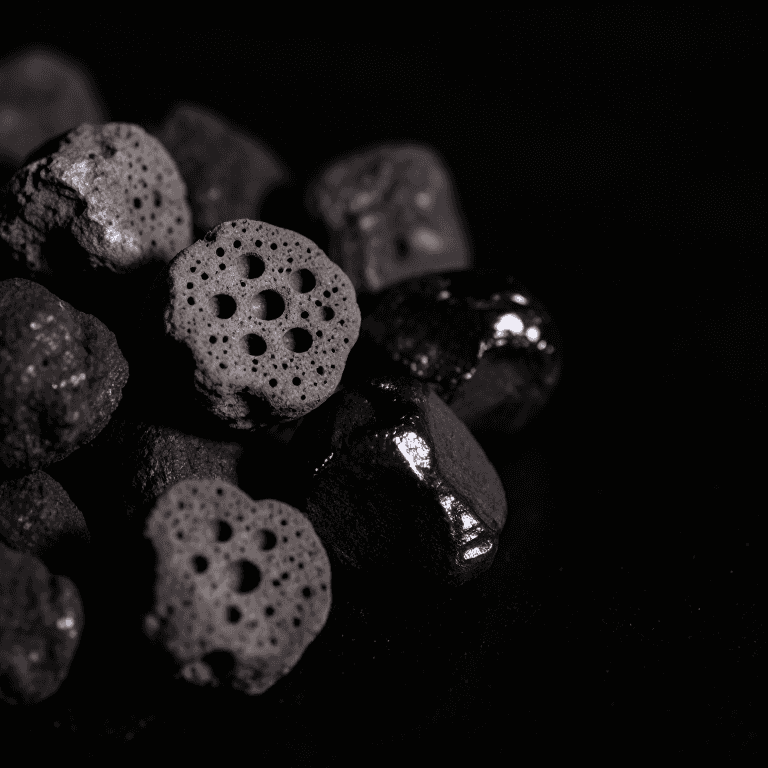
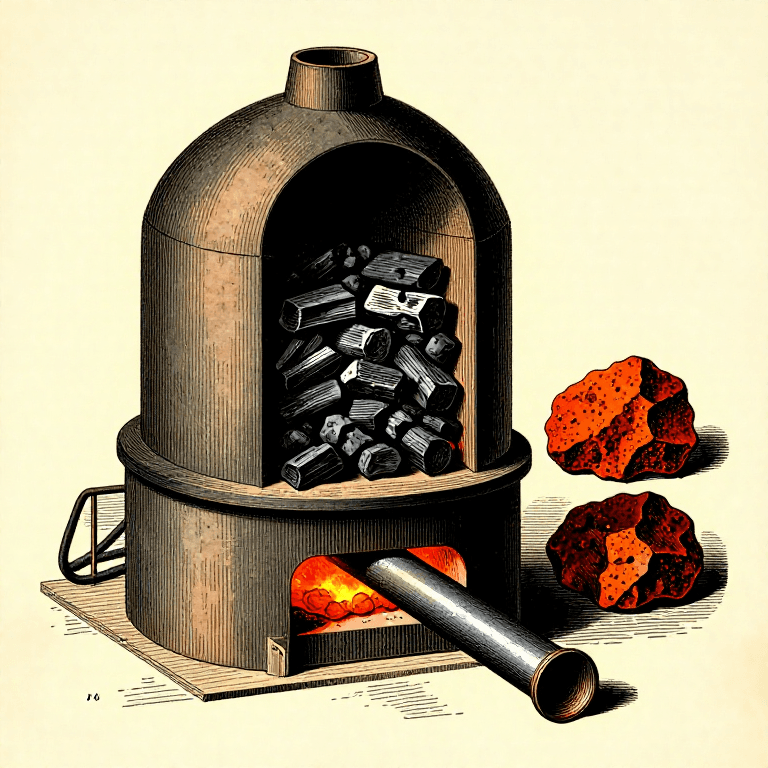

المخططات ذات الصلة
هذه المخططات تشارك المعرفة مع هذا — التقنيات والمواد والمبادئ
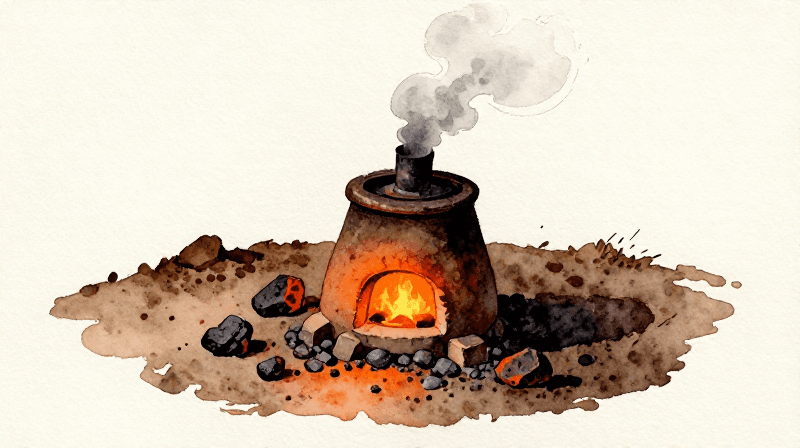

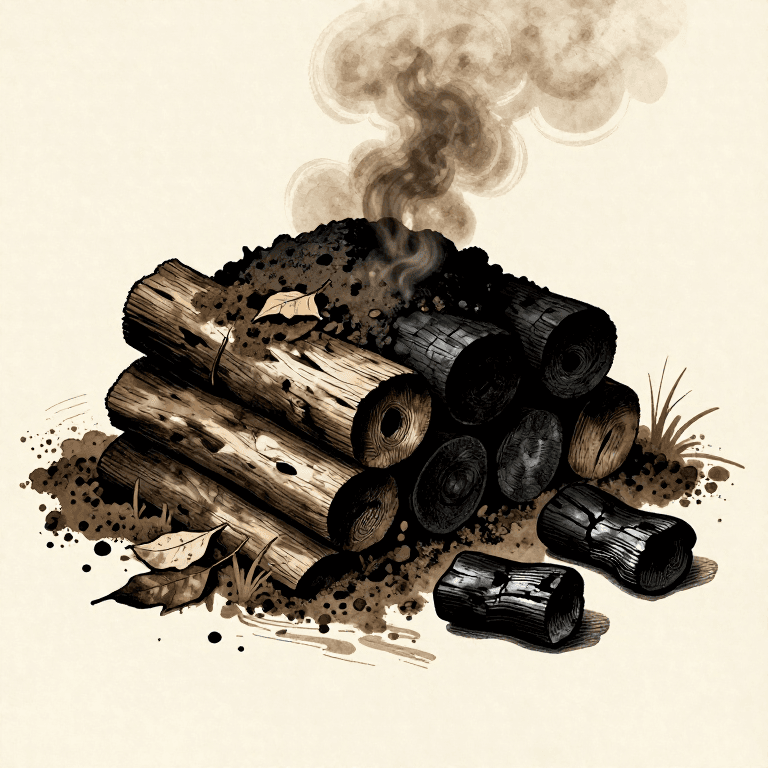

CC0 ملكية عامة
هذا المخطط مُصدر بموجب CC0. يحق لك نسخه وتعديله وتوزيعه واستخدامه لأي غرض، دون طلب إذن.
ادعم الصانع بشراء منتجات عبر مخططه حيث يكسب عمولة الصانع يحددها البائعون، أو أنشئ نسخة جديدة من هذا المخطط وضمّنه كرابط في مخططك لمشاركة الإيرادات.