فنون
الجمال والعناية
حِرَف
الثقافة والتاريخ
ترفيه
البيئة
الطعام والمشروبات
الهندسة العكسية
العلوم
رياضة
التقنية
الأجهزة القابلة للارتداء
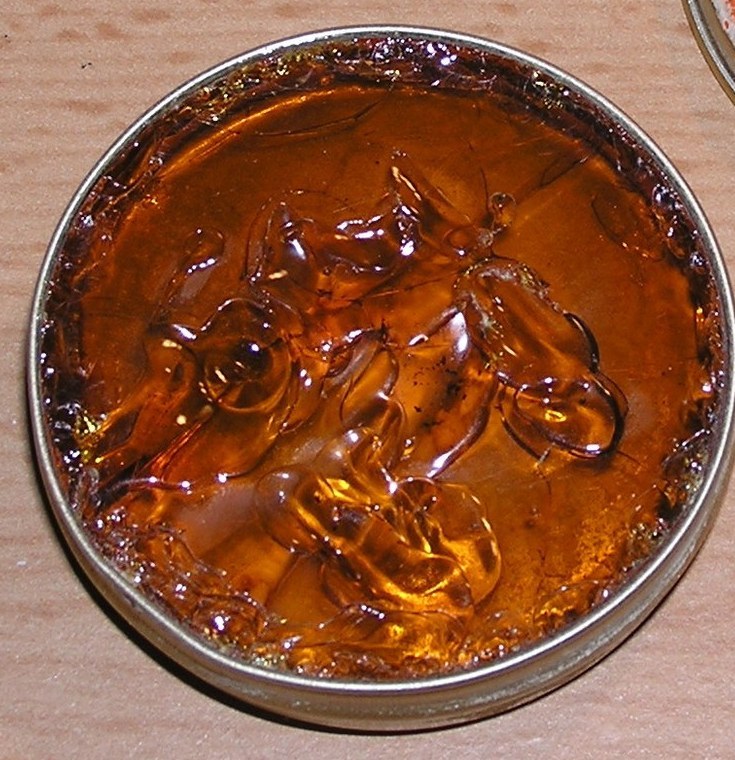


Plastic Rosin Flux: Ripley, 1929
Perry C. Ripley of Chicago, for the Kester Solder Company, patented this flux in 1929, US 1,724,680. In cored solder the heat releases the flux onto the surfaces to be joined. Rosin in the usual dry, powdered form cracks, lets in air and moisture and decomposes. Mixed with turpentine, rosin stays permanently plastic: it does not crystallise or crack, and it keeps air and moisture out. Ripley made it as the core of rosin-core solder.
مبتدئ
Workshop process
التعليمات
1
1
Melt the rosin
Melt the rosin
Melt the rosin in a suitable container until it is fluid.
المواد لهذه الخطوة:
 صمغ الصنوبر الراتنجي1 as required
الأدوات المطلوبة:
 قِدر
قِدر صفيحة تسخين
2
2
Add the turpentine
Add the turpentine
Add turpentine as the plasticiser, from 2% to 50% by weight depending on the grade of rosin, since rosins contain varying amounts of fluids. It may also be added while the rosin is still melting. Ripley lists other solvents (kerosene, naphtha, alcohol, acetone and more), but chose turpentine: it is not very volatile at soldering temperatures and does not conduct electricity.
المواد لهذه الخطوة:
 زيت التربنتين1 as required
الأدوات المطلوبة:
 ميزان وزن
3
3
Mix thoroughly
Mix thoroughly
Agitate the rosin and turpentine mechanically until the turpentine has penetrated the whole rosin mass. The result is a rosin flux in a substantially permanent plastic form.
الأدوات المطلوبة:
 قضيب تحريك
المواد
2- 1 as requiredعنصر نائب
- 1 as requiredعنصر نائب
هذا المخطط يصنع


المخططات ذات الصلة
هذه المخططات تشارك المعرفة مع هذا — التقنيات والمواد والمبادئ


CC0 ملكية عامة
هذا المخطط مُصدر بموجب CC0. يحق لك نسخه وتعديله وتوزيعه واستخدامه لأي غرض، دون طلب إذن.
ادعم الصانع بشراء منتجات عبر مخططه حيث يكسب عمولة الصانع يحددها البائعون، أو أنشئ نسخة جديدة من هذا المخطط وضمّنه كرابط في مخططك لمشاركة الإيرادات.