

Mixing Roman Concrete (Opus Caementicium) — Volcanic Ash Hydraulic Cement
التعليمات
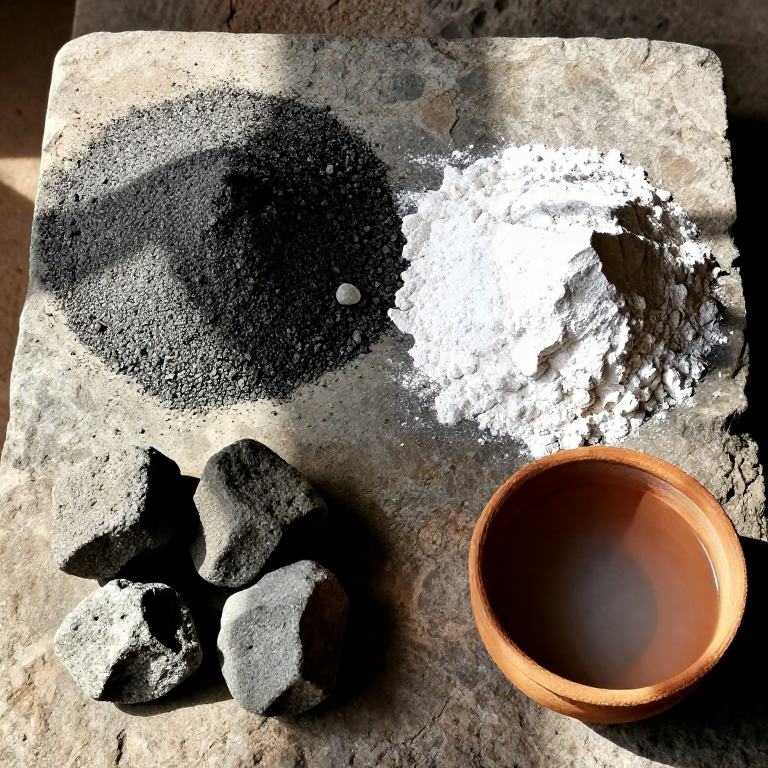
Slake the Quicklime
Slake the Quicklime
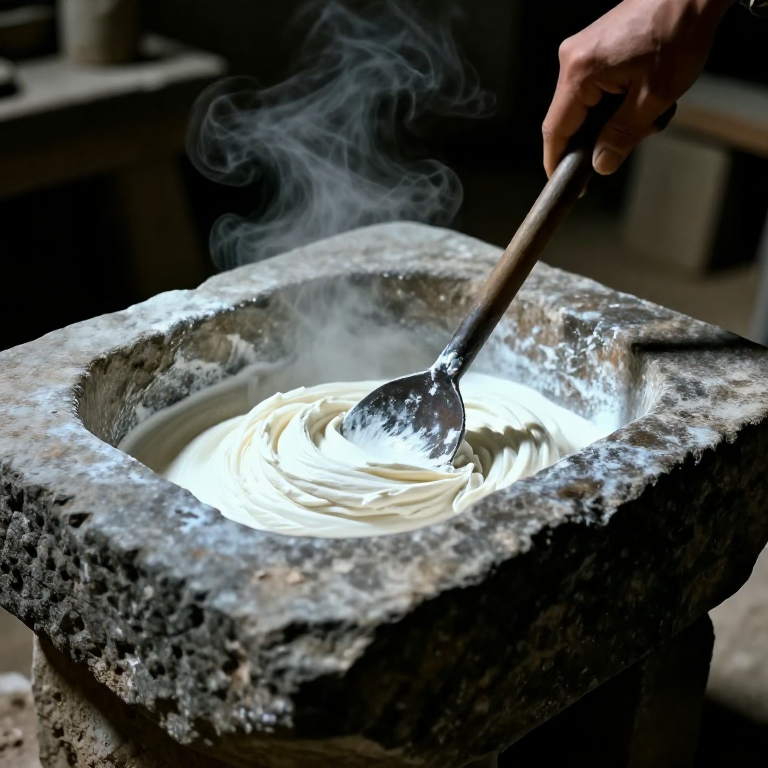
Place quicklime (calcium oxide) in a stone or wooden trough and gradually add water while stirring with a long-handled iron hoe. The exothermic reaction produces temperatures exceeding 150 °C, so add water slowly and stand back from the steam. Continue adding water and stirring until the quicklime has fully hydrated into a smooth, thick putty of calcium hydroxide (slaked lime). Vitruvius recommended ageing this lime putty for at least three months before use, as longer ageing produces finer particles and a more workable morite. Store the slaked lime submerged under a thin layer of water to prevent it from carbonating in air.
المواد لهذه الخطوة:
 رماد بركاني3 parts by volume قطعةرماد بركاني3 parts by volume قطعة
 ماءas needed for workable consistency قطعة
الأدوات المطلوبة:
 حجر
حجر مجرفة خلط
 عمود سبر
 ألواح قوالب خرسانية خشبية
 خطّاف دلو
 قفازات جلدية
Measure and Combine Pozzolana with Lime
Measure and Combine Pozzolana with Lime
Measure three volumes of volcanic ash (pozzolana) to one volume of slaked lime putty, following the ratio prescribed by Vitruvius. The pozzolana from the region around Puteoli (modern Pozzuoli, near Naples) was considered the finest grade, but any volcanic ash rich in reactive silica and alumina will work. Combine the pozzolana and lime in the mixing trough and work them together thoroughly with the hoe until the colour is uniform — a grey-brown paste with no white streaks of unmixed lime. Add water sparingly to achieve a stiff but workable mortar consistency, similar to modern concrete that holds its shape when scooped.
Add Aggregate (Caementa)
Add Aggregate (Caementa)
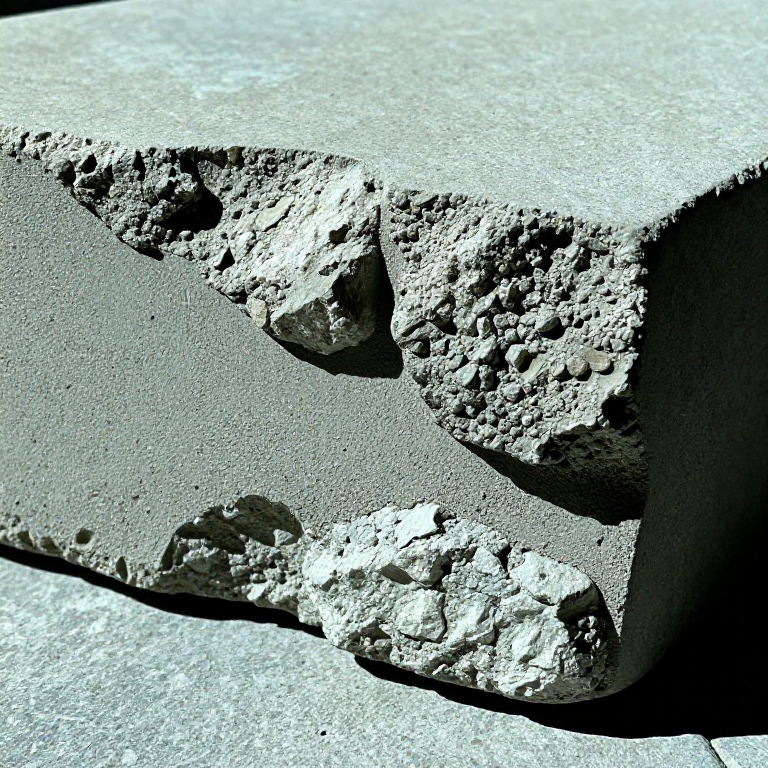
Add roughly three volumes of broken stone aggregate (caementa) to the mortar mixture. Roman builders used whatever local stone was available — tufa, travertine, broken brick, or pumice for lighter vaults. The aggregate pieces should range from 2 to 8 cm in diameter. Fold the aggregate into the mortar with the hoe, ensuring every stone is coated. Do not over-mix; the goal is thorough coating, not a slurry. The resulting mass should be stiff enough that aggregate stones do not sink to the bottom when placed in formwork.
Place and Tamp in Formwork
Place and Tamp in Formwork
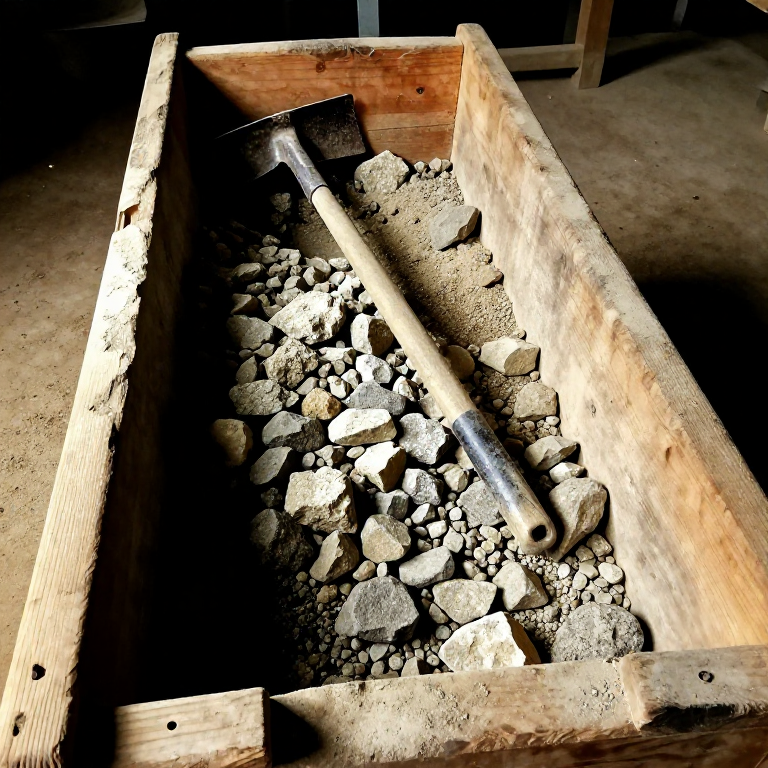
Erect wooden formwork at the desired location and oil the interior surfaces with olive oil or animal fat to prevent sticking. Shovel the concrete mixture into the formwork in layers approximately 15 cm deep. After each layer, tamp vigorously with a wooden tamping rod to eliminate air voids and ensure the mortar fills around every aggregate stone. Roman builders often alternated layers of mortar and hand-placed larger stones for thick walls. Continue layering and tamping until the formwork is filled to the desired height. The surface can be levelled with a straight board (regula) drawn across the top of the formwork.
Curing and Strength Development
Curing and Strength Development
Cover the exposed surface with damp cloth or straw and keep it moist for at least seven days to allow the pozzolanic reaction to proceed. Unlike Portland cement, which achieves most of its strength within 28 days, Roman concrete continues gaining strength for years as aluminium tobermorite and phillipsite crystals grow within the matrix. The initial set occurs within 24 to 48 hours, but the concrete remains relatively soft for the first week. Remove formwork after at least seven days for walls, or longer for structural arches. In marine applications, seawater actively promotes the growth of interlocking mineral crystals that make the concrete progressively stronger and more resistant to cracking.
المواد
6- Quicklime (calcium oxide), slaked to putty1 part by volume قطعة
- as needed for workable consistency قطعةعنصر نائب
- 3 parts by volume قطعةعنصر نائب
- 1 part by volume قطعةعنصر نائب
- 3 parts by volume قطعةعنصر نائب
- عنصر نائب
الأدوات المطلوبة
10- عنصر نائب
- عنصر نائب
- عنصر نائب
- عنصر نائب
- عنصر نائب
- عنصر نائب
- عنصر نائب
- عنصر نائب
- عنصر نائب
- عنصر نائب
CC0 ملكية عامة
هذا المخطط مُصدر بموجب CC0. يحق لك نسخه وتعديله وتوزيعه واستخدامه لأي غرض، دون طلب إذن.
ادعم الصانع بشراء منتجات عبر مخططه حيث يكسب عمولة الصانع يحددها البائعون، أو أنشئ نسخة جديدة من هذا المخطط وضمّنه كرابط في مخططك لمشاركة الإيرادات.