
Brewing Viking Mead — Honey Wine of the Norse
التعليمات
Prepare the Must
Prepare the Must
Warm water to approximately 40°C (comfortable to touch, not hot). Dissolve honey into the water at a ratio of approximately 1 part honey to 3-4 parts water by volume. Use more honey for a sweeter, stronger mead; less for a lighter, drier mead.
Stir thoroughly until the honey is fully dissolved — this is the must (unfermented mead). Do not boil the must, as boiling drives off volatile aromatics from the honey. Gentle warming is sufficient to dissolve and mix.
المواد لهذه الخطوة:
 عسل1-1.5 kg كغ
 ماء3-4 litres لتر
Cool and Pitch Yeast
Cool and Pitch Yeast
Allow the must to cool to room temperature (approximately 20°C). At this temperature, yeast thrives without being killed by heat. Add yeast — in the Viking Age this would have been wild yeast captured from fruit skins, air exposure, or (more reliably) a saved culture from a previous successful batch.
Stir gently to distribute the yeast throughout the must. The must should be in a clean vessel — a wooden barrel, clay pot, or similar container. Cleanliness prevents unwanted bacteria from souring the batch.
المواد لهذه الخطوة:
 مزرعة خميرةsmall amount قطعة
Primary Fermentation
Primary Fermentation
Transfer the must to a fermentation vessel — a wooden barrel or large clay pot. Cover loosely with a cloth or a lid that is not sealed tight, allowing carbon dioxide gas from fermentation to escape while keeping insects and debris out.
Place in a cool, dark location (15-20°C is ideal). Fermentation will begin within 1-2 days — you will see bubbles rising to the surface and possibly a frothy head forming. Active fermentation lasts 2-4 weeks depending on temperature, honey concentration, and yeast vigor.
الأدوات المطلوبة:
 برميل خشبي
 قماش (للتصفية)
Flavor with Herbs (Optional)
Flavor with Herbs (Optional)
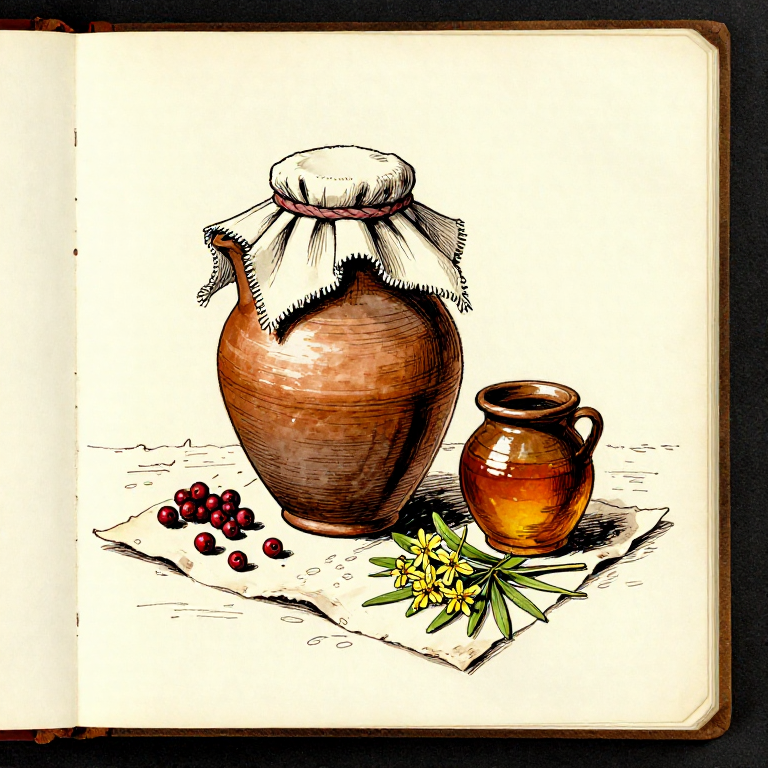
Viking mead was often enhanced with locally available botanicals. During or after primary fermentation, add flavoring agents: juniper berries, meadowsweet (Filipendula ulmaria — historically associated with mead), heather tips, wild berries (lingonberries, bilberries), or herbs like yarrow.
Add flavorings in a cloth bag for easy removal, or loose and strain later. Start with small amounts — botanical flavors intensify over time. The goal is to complement the honey, not overpower it.
المواد لهذه الخطوة:
 العرعر (الثمار والخشب)handful قطعة
Rack and Age
Rack and Age
Once fermentation slows significantly (few bubbles per minute, the must tastes less sweet), carefully pour or siphon the clear mead off the sediment (lees) into a clean vessel. This is called racking. Leaving mead on its lees for too long can introduce off-flavors.
Seal the new vessel more tightly (a wooden bung, clay stopper, or wax-sealed lid) and store in a cool location. Age for weeks to months — longer aging produces a smoother, more refined mead as harsh flavors mellow and the mead clarifies further.
الأدوات المطلوبة:
برميل خشبيServe
Serve
Viking mead was consumed from drinking horns, wooden cups, or ceramic vessels. Serve at cool to room temperature. The mead should be clear to slightly hazy, golden to amber in color (depending on the honey used), with a flavor ranging from dry to sweet.
Mead was the celebratory drink of Norse culture — served at weddings (the month of mead-drinking after a wedding gave us the word "honeymoon"), at blóts (sacrificial feasts), and at the halls of chieftains. Skál!
الأدوات المطلوبة:
 قدح للشرب
المواد
4- 1-1.5 kg كغعنصر نائب
- 3-4 litres لترعنصر نائب
- small amount قطعةعنصر نائب
- handful قطعةعنصر نائب
هذا المخطط يصنع
CC0 ملكية عامة
هذا المخطط مُصدر بموجب CC0. يحق لك نسخه وتعديله وتوزيعه واستخدامه لأي غرض، دون طلب إذن.
ادعم الصانع بشراء منتجات عبر مخططه حيث يكسب عمولة الصانع يحددها البائعون، أو أنشئ نسخة جديدة من هذا المخطط وضمّنه كرابط في مخططك لمشاركة الإيرادات.