ART
BEAUTY & WELLNESS
CRAFT
CULTURE & HISTORY
ENTERTAINMENT
ENVIRONMENT
FOOD & DRINKS
GREEN FUTURE
REVERSE ENGINEERING
SCIENCES
SPORTS
TECHNOLOGY
WEARABLES
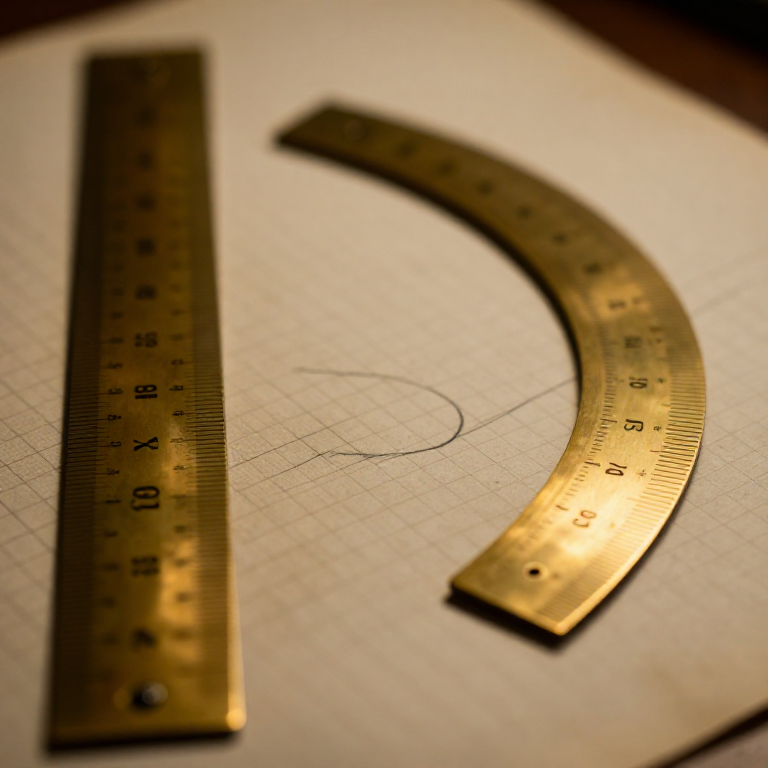


Newton's Method — Chase a Root Down Tangent Lines You Draw
A hands-on maths project: plot a curve on grid paper, draw the tangent line where it starts, slide down it to the axis, and repeat -- watching your guesses march onto the solution. This is Newton's method; a Python cell checks your root, and a compendium shows its power and its pitfalls.
Beginner
30 minutes
Instructions
1
1
Following the slope to the answer
Following the slope to the answer
How do you solve an equation with no tidy formula? Around 1669 Isaac Newton gave an answer: guess, draw the tangent line to the curve there, and follow it down to where it crosses zero -- that landing point is a much better guess. Repeat, and you zoom in. You will do it with a ruler.
2
2
Plot the curve
Plot the curve
Rule a grid on card (your graph paper). Plot the curve y = x-cubed minus 2x minus 5 for x from 1.5 to 3 by working out a few points and joining them smoothly. It crosses the x-axis somewhere near x = 2 -- that crossing is the solution you are hunting.
Materials for this step:
 Cardstock Assorted Pack (50 sheets)1 piece
Tools needed:
 Steel Ruler (30cm)
 Graphite Pencil Set
3
3
Slide down the tangents
Slide down the tangents
Start at x = 2. Lay your ruler along the curve there to draw the tangent line, and mark where that straight line crosses the x-axis -- read off the new x. Move to that x on the curve, draw the new tangent, and mark where IT crosses. After just two or three tangents your marks pile up on the root, near x = 2.095.
Tools needed:
 Calculator
4
4
Check the root
Check the root
Loading Jupyter Notebook...
Tools needed:
 Desktop ComputerCalculator
5
5
Compendium: fast, but handle with care
Compendium: fast, but handle with care
What your tangents teach. (1) Each step replaces the guess with x minus f(x) divided by the slope f'(x); near the root the accuracy doubles every step, dazzlingly fast. (2) Heron's ancient square-root trick is just Newton's method applied to 'x squared minus S'. (3) It needs a derivative (the slope) and a reasonable starting guess -- start in a bad spot, or near a flat part of the curve, and the tangents can fly AWAY from the root instead of toward it. (4) Given a good start, it is the default way computers solve equations in engineering, physics, computer graphics and the training of machine-learning models.
Materials
1- Placeholder
Tools Required
4- Placeholder
- Placeholder
- Placeholder
- Placeholder
Related Blueprints
These blueprints share knowledge with this one — techniques, materials, or principles that connect them in the learning graph.
Related blueprints
Other builds that share materials, tools, or techniques with this one.

Tentering Cloth on a Frame — Stretching Fulled Wool to Set Width and GrainTextile & Leather
Sewing Leather Moccasins from Brain-Tanned Hide — One-Piece Wraparound Patternwearables

Making Synthetic Alizarin Crimson — The Coal Tar Pigment That Destroyed the Madder Industrypigment-making

Carbon Fiber — From Polymer Precursor to the Strongest Textile Fiber on Earthtextiles
Building a Shave Horse — The Foot-Operated Clamping Bench for Green WoodworkingWoodworking

Forging an Iron Chisel — The Cutting Tool That Shapes Stone, Wood, and MetalMetalworking
CC0 Public Domain
This blueprint is released under CC0. You are free to copy, modify, distribute, and use this work for any purpose, without asking permission.
Support the Maker by purchasing products through their Blueprint where they earn a Maker Commission set by Vendors, or create a new iteration of this Blueprint and include it as a connection in your own Blueprint to share revenue.