ART
BEAUTY & WELLNESS
CRAFT
CULTURE & HISTORY
ENTERTAINMENT
ENVIRONMENT
FOOD & DRINKS
GREEN FUTURE
REVERSE ENGINEERING
SCIENCES
SPORTS
TECHNOLOGY
WEARABLES

Understanding Bromine from Seawater Brine — The Only Liquid Non-Metal
Intermediate
Instructions
1
1
Understand Bromine's Place Among the Halogens
Understand Bromine's Place Among the Halogens
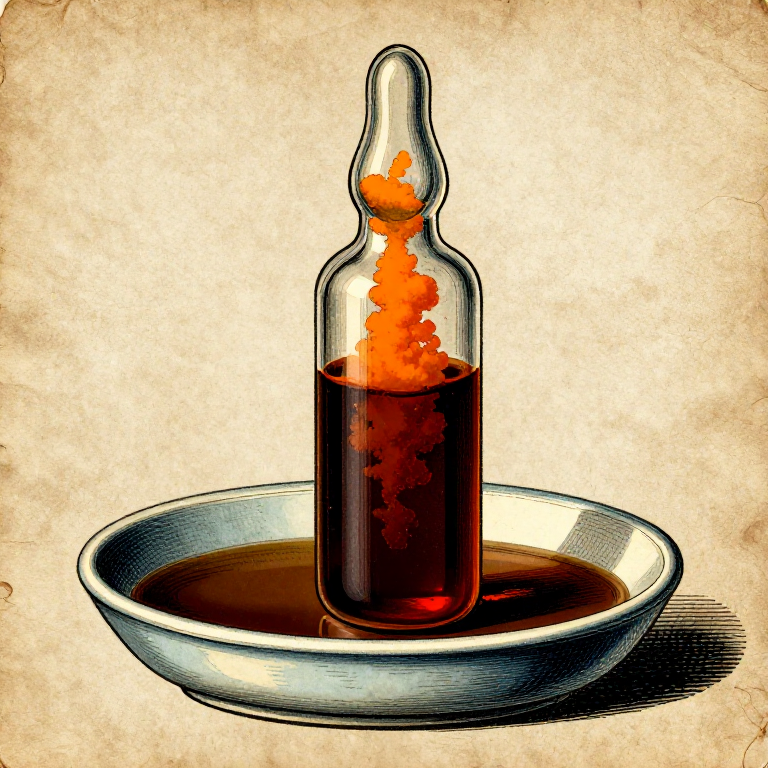
Bromine (Br, atomic number 35) is the only non-metallic element that is liquid at room temperature. Its name comes from Greek 'bromos' (stench) — the dark reddish-brown liquid produces suffocating, toxic fumes. Antoine-Jérôme Balard discovered it in 1826 by passing chlorine through concentrated seawater residue from salt production in Montpellier, France.
2
2
Identify Bromine Sources in Nature
Identify Bromine Sources in Nature
Seawater contains 65 ppm bromide (Br⁻), making the oceans a virtually inexhaustible source. The Dead Sea contains 5,000 ppm — the world's richest natural brine. Underground brine wells in Arkansas and China are major commercial sources. Bromine never occurs free in nature because chlorine, being more reactive, keeps it as bromide salts. Israel and Jordan produce over 40% of global supply from Dead Sea brines.
3
3
Prepare Concentrated Brine Solution
Prepare Concentrated Brine Solution
Start with saturated salt brine or seawater concentrated by solar evaporation. The key is maximizing bromide concentration while minimizing volume. Industrial plants first extract sodium chloride by crystallization, leaving a bittern (mother liquor) enriched in bromide, magnesium, and potassium salts. This bittern typically contains 2,500-5,000 ppm bromide — 40-80 times seawater concentration.
Materials for this step:
 Distilled Water (1 Liter)
 Table Salt
Tools needed:
 Heat-Resistant Glass Beaker (1 liter)
 Hot Plate (Laboratory/Kitchen)
4
4
Understand the Chlorine Displacement Reaction
Understand the Chlorine Displacement Reaction
The extraction principle is simple: chlorine is more electronegative than bromine, so it displaces bromide from solution. Cl₂ + 2Br⁻ → 2Cl⁻ + Br₂. The liberated bromine colors the solution deep orange-brown. Industrially, chlorine gas is blown through acidified brine at 80-90°C in tall packed columns. The bromine vapor is swept out with steam or air and condensed.
5
5
Observe Bromine's Physical Properties
Observe Bromine's Physical Properties
DANGER: Bromine is extremely corrosive and toxic. It boils at 58.8°C — barely above body temperature — producing dense reddish-brown vapor that causes severe chemical burns to skin, eyes, and lungs. Even small spills produce dangerous fume concentrations. Liquid bromine has density 3.1 g/cm³ (sinks in water), freezes at -7.2°C, and dissolves slightly in water to form brown 'bromine water' used as a test reagent.
Tools needed:
 Chemical Splash Goggles
 Chemical-Resistant Gloves
 P100/FFP3 Respirator with Acid Gas Cartridge
6
6
Test with Bromine Water Reagent
Test with Bromine Water Reagent
Bromine water (dilute Br₂ in water) is a classic chemistry test reagent. It decolorizes instantly when shaken with unsaturated organic compounds — the bromine adds across carbon-carbon double bonds. This 'bromine water test' distinguishes alkenes from alkanes and was one of the first chemical tests taught in organic chemistry. The color change from orange-brown to colorless is unmistakable.
Materials for this step:
Distilled Water (1 Liter)Tools needed:
 Test Tube (Borosilicate)
 Safety Goggles
7
7
Explore the Silver Bromide Photography Revolution
Explore the Silver Bromide Photography Revolution
Silver bromide (AgBr) is far more light-sensitive than silver chloride, making it the foundation of photography from 1840 to 2000. When photons strike AgBr crystals in a gelatin emulsion, they create tiny clusters of metallic silver — the latent image. Chemical development amplifies this to visible silver deposits. Faster films used larger AgBr crystals; fine-grain films used smaller ones. Every photograph for 160 years depended on bromine.
8
8
Understand Flame Retardant Applications
Understand Flame Retardant Applications
Brominated flame retardants (BFRs) are added to electronics, textiles, and building materials. When heated, they release HBr gas that interrupts the radical chain reactions of combustion. Tetrabromobisphenol A (TBBPA) is the most-produced BFR, used in circuit board laminates. Polybrominated diphenyl ethers (PBDEs) were widely used in furniture foam until environmental concerns led to bans — they persist in the environment and bioaccumulate.
9
9
Survey Pharmaceutical and Agricultural Uses
Survey Pharmaceutical and Agricultural Uses
Potassium bromide was the first effective anticonvulsant drug, used from 1857 to treat epilepsy (and famously added to soldiers' tea to suppress libido — likely a myth). Methyl bromide (CH₃Br) was the most effective soil fumigant ever developed, killing insects, nematodes, fungi, and weed seeds. It was phased out under the Montreal Protocol for depleting stratospheric ozone, but no single replacement matches its effectiveness.
10
10
Map Modern Bromine Demand
Map Modern Bromine Demand
Clear brine fluids containing calcium bromide (CaBr₂) are pumped into oil and gas wells to control pressure during drilling — their high density (up to 1.8 g/cm³) prevents blowouts without using solid particles that could damage the formation. This single application consumes 25% of global bromine production. Flame retardants take another 30%, with the remainder split among pharmaceuticals, water treatment, and chemical synthesis.
11
11
Document Findings and Safety Protocols
Document Findings and Safety Protocols
Record bromine's key properties: atomic number 35, density 3.1 g/cm³, boiling point 58.8°C, dark reddish-brown liquid with choking fumes. Bromine spills require sodium thiosulfate or sodium carbonate for neutralization — never use water alone, as it spreads the liquid and increases vaporization surface area. Bromine burns on skin appear white initially, turning dark brown, and heal extremely slowly.
Tools needed:
 Precision Scale (0.01g)
Materials
2- 1 piecePlaceholder
- 1 piecePlaceholder
Tools Required
8- Placeholder
- Placeholder
- Placeholder
- Placeholder
- Placeholder
- Placeholder
- Placeholder
- Placeholder
Related blueprints
Other builds that share materials, tools, or techniques with this one.
Understanding Rhodium from Platinum Group Ore — The Most Expensive Industrial Metalchemistry
Understanding Gadolinium from Monazite — The MRI Contrast Agent Metalchemistry
Understanding Osmium from Platinum Group Ores — The Densest Element on Earthchemistry
Understanding Krypton from Air Separation — The Hidden Gas That Once Defined the Meterchemistry
Understanding Cerium from Bastnasite — The Self-Cleaning Rare Earthchemistry
Understanding Ruthenium from Platinum Group Ore — The Hardest Platinum Metalchemistry
CC0 Public Domain
This blueprint is released under CC0. You are free to copy, modify, distribute, and use this work for any purpose, without asking permission.
Support the Maker by purchasing products through their Blueprint where they earn a Maker Commission set by Vendors, or create a new iteration of this Blueprint and include it as a connection in your own Blueprint to share revenue.