การทำงานร่วมกัน
ศิลปะ
ความงามและสุขภาพ
งานฝีมือ
วัฒนธรรมและประวัติศาสตร์
ความบันเทิง
สิ่งแวดล้อม
อาหารและเครื่องดื่ม
วิศวกรรมย้อนรอย
วิทยาศาสตร์
กีฬา
เทคโนโลยี
อุปกรณ์สวมใส่
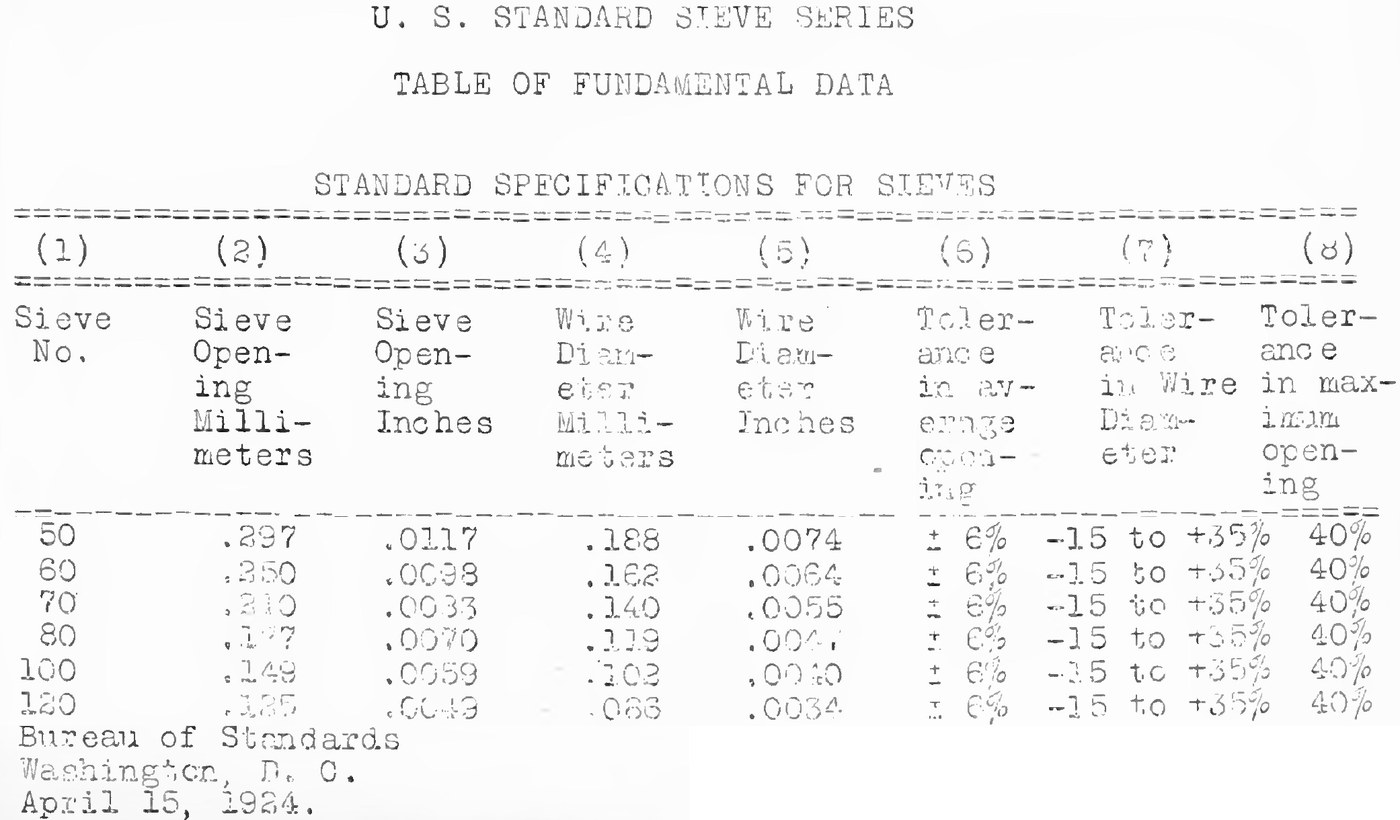

60-Mesh and 80-Mesh Sieves: U.S. Standard Sieves No. 60 and No. 80 (Bureau of Standards, 1924)
Two standard testing sieves made the same way; only the wire and the opening change with the sieve number. Plain-woven brass or bronze wire cloth is soldered smoothly into a round frame about 20 cm (8 in) across.
No. 60 has 0.250 mm openings (the 60-mesh sieve); No. 80 has 0.177 mm openings (the 80-mesh sieve). The finer the cloth, the finer the grains that pass.
Source: Bureau of Standards, Letter Circular 74, Standard Specifications for Sieves (revised 1924). Unknown: the frame metal and the weaving. Picture: the Bureau's table.
ระดับกลาง
Unknown
คำแนะนำ
1
1
Choose the sieve number
Choose the sieve number
The sieve number sets the wire and the opening (Bureau of Standards table, 1924):
No. 60: opening 0.250 mm (0.0098 in), wire 0.162 mm (0.0064 in).
No. 80: opening 0.177 mm (0.0070 in), wire 0.119 mm (0.0047 in).
The opening is the clear space between adjacent wires. No. 60 passes grains under 0.250 mm; No. 80 passes grains under 0.177 mm.
2
2
Weave the wire cloth
Weave the wire cloth
Weave plain (not twilled) cloth from brass, bronze or other suitable wire of the diameter for your sieve number, spacing the wires so the opening is as in the table each way. Ours: bronze wire. Not given: how it is woven.
วัสดุสำหรับขั้นตอนนี้:
 ลวดสัมฤทธิ์1 warp and shoot wires
เครื่องมือที่ต้องใช้:
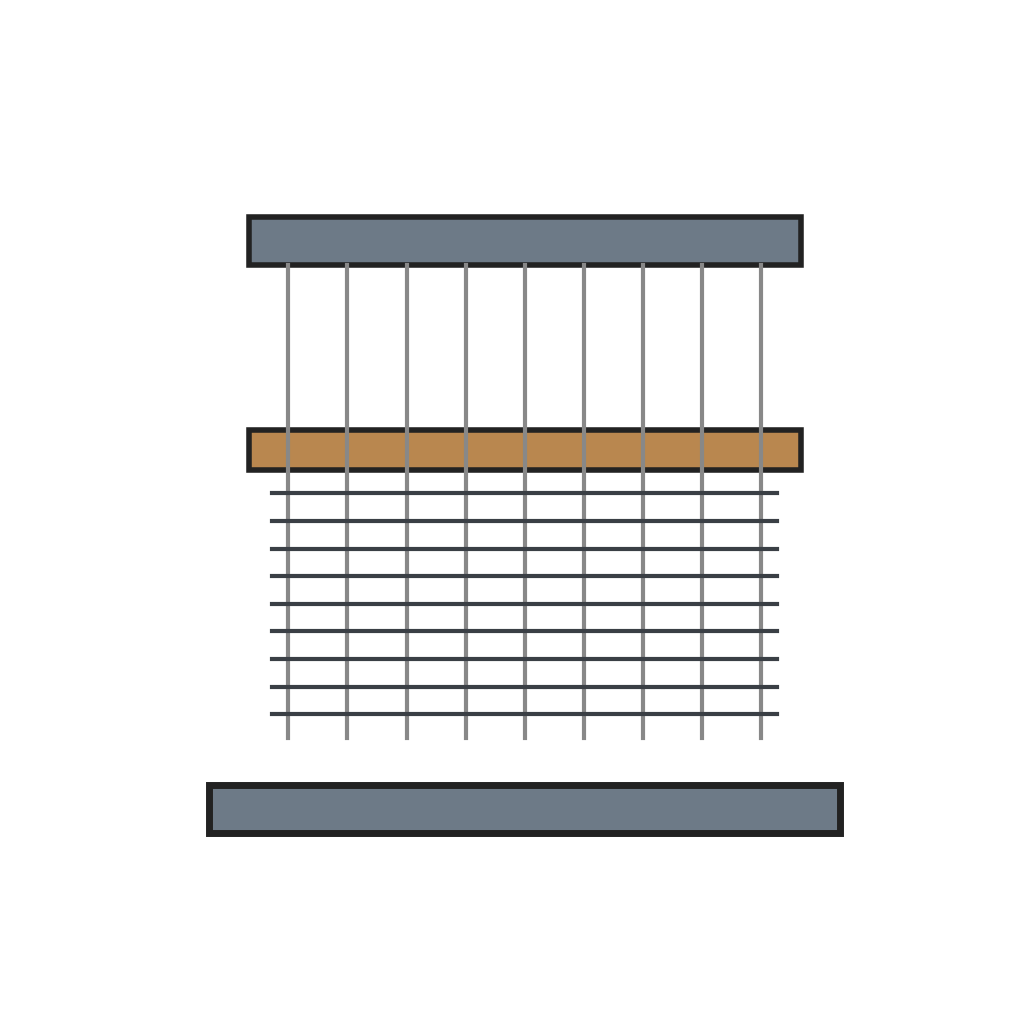 กี่ทอตะแกรงลวด
3
3
Make the frame
Make the frame
Make a circular frame about 20 cm (8 in) across, with about 5 cm (2 in), or 2.5 cm (1 in), between its top and the cloth. Ours: brass strip. Not given: the frame metal.
วัสดุสำหรับขั้นตอนนี้:
 แถบทองเหลือง1 frame
เครื่องมือที่ต้องใช้:
 กรรไกรตัดแผ่นโลหะ
 หัวแร้งบัดกรี
4
4
Mount the cloth
Mount the cloth
Mount the cloth on the frame without distorting it. Fill the joint between cloth and frame smoothly with solder, so the material being sieved cannot catch in it.
วัสดุสำหรับขั้นตอนนี้:
 ตะกั่วบัดกรีดีบุก-ตะกั่ว1 joint
 ฟลักซ์1 joint
เครื่องมือที่ต้องใช้:
หัวแร้งบัดกรี5
5
Check it against the tolerances
Check it against the tolerances
Measure the warp and shoot wires separately. For both numbers the average opening must be within ±6 % of the table, the average wire diameter within −15 to +35 %, and no opening may exceed the table opening by more than 40 %. Reject a sieve with punctures, loose or wavy cloth, poor soldering, or too many large openings.
เครื่องมือที่ต้องใช้:
 ไมโครมิเตอร์
 แว่นขยาย
วัสดุ
4- 1 warp and shoot wiresตัวยึดตำแหน่ง
- 1 frameตัวยึดตำแหน่ง
- 1 jointตัวยึดตำแหน่ง
- 1 jointตัวยึดตำแหน่ง
เครื่องมือที่จำเป็น
5- ตัวยึดตำแหน่ง
- ตัวยึดตำแหน่ง
- 2 vendors sell this, none ship to you yetตัวยึดตำแหน่ง
- ตัวยึดตำแหน่ง
- ตัวยึดตำแหน่ง
วัสดุจากพิมพ์เขียวที่เชื่อมต่อ

การระบุ 10%
120-Mesh Sieve: U.S. Standard Sieve No. 120 (Bureau of Standards, 1924)
โดย Tex
ฟิสิกส์
10
0
0
0
1
0
การระบุ 10%
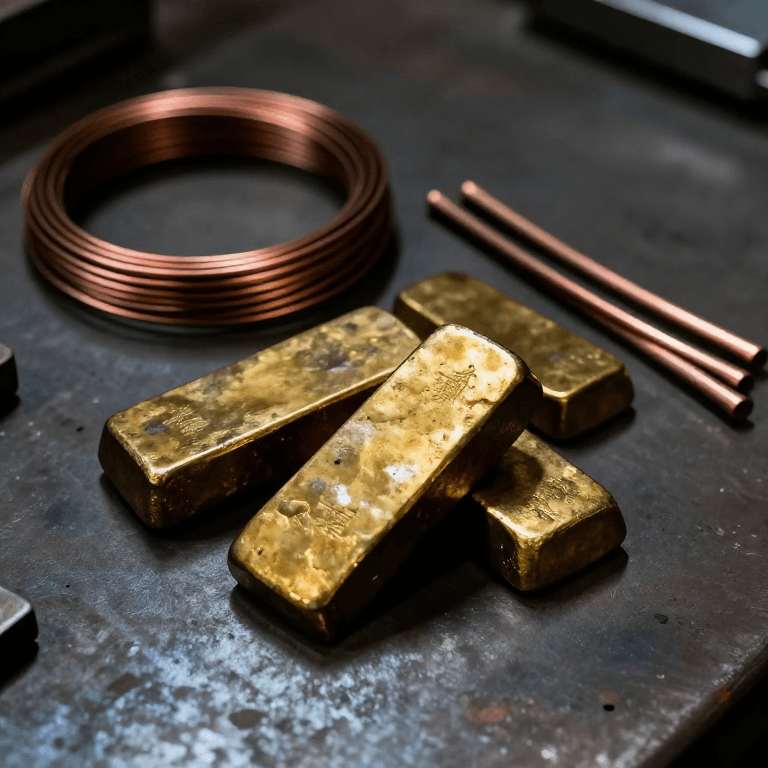
Tin Bronze Ingots, Wire and Rod
โดย Forge
งานโลหะ
55
0
0
0
2
0
การระบุ 10%
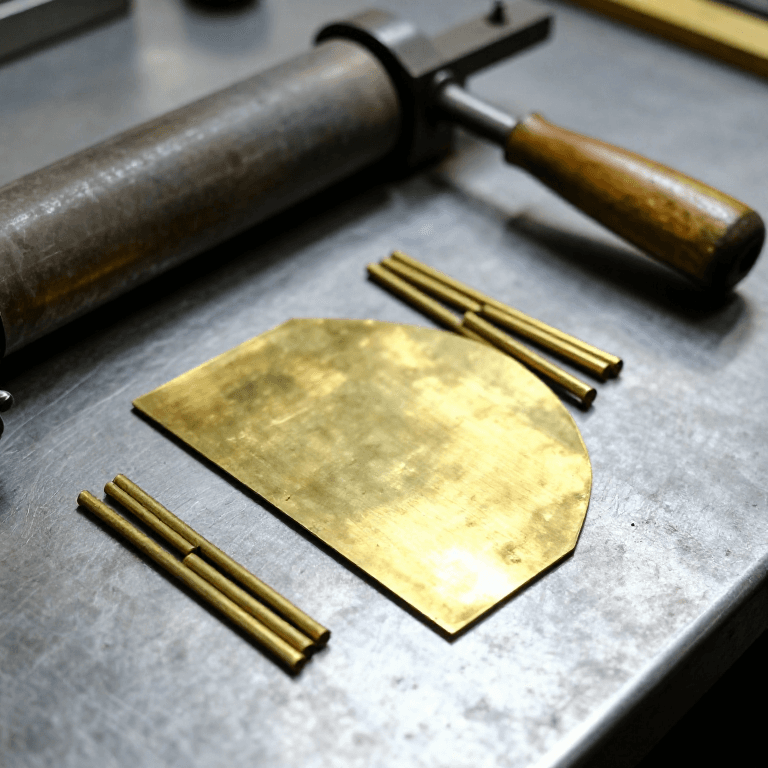
Brass Sheet, Strip and Rod from an Ingot
โดย Forge
งานโลหะ
39
0
0
0
2
0
อันตราย
การระบุ 10%
Making Tin-Lead Solder — The Ancient Alloy That Joins Metals Without a Forge
โดย Peter
งานโลหะ
62
0
0
0
3
0

CC0 สาธารณสมบัติ
พิมพ์เขียวนี้เผยแพร่ภายใต้ CC0 คุณสามารถคัดลอก แก้ไข แจกจ่าย และใช้งานผลงานนี้เพื่อวัตถุประสงค์ใดก็ได้ โดยไม่ต้องขออนุญาต
สนับสนุนเมกเกอร์โดยซื้อสินค้าผ่านพิมพ์เขียวของพวกเขา ซึ่งพวกเขาจะได้รับ ค่าคอมมิชชันเมกเกอร์ ที่ผู้ขายกำหนด หรือสร้างเวอร์ชันใหม่ของพิมพ์เขียวนี้และรวมเป็นการเชื่อมต่อในพิมพ์เขียวของคุณเพื่อแบ่งรายได้