ศิลปะ
ความงามและสุขภาพ
งานฝีมือ
วัฒนธรรมและประวัติศาสตร์
ความบันเทิง
สิ่งแวดล้อม
อาหารและเครื่องดื่ม
วิศวกรรมย้อนรอย
วิทยาศาสตร์
กีฬา
เทคโนโลยี
อุปกรณ์สวมใส่
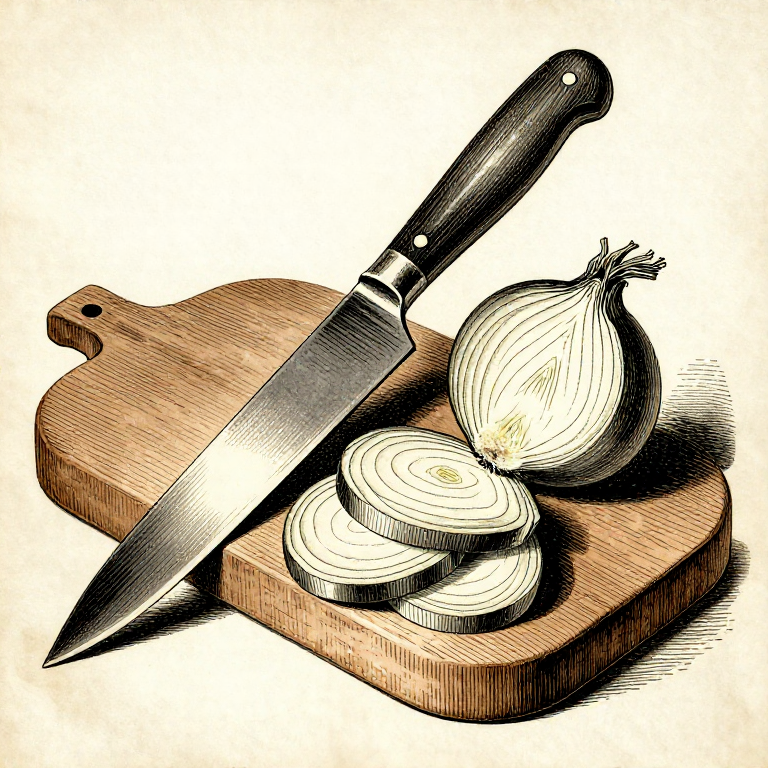


A Knife Does the Work: The Grip, the Claw, and Why the Blunt One Cuts You
A sharp knife is pushed through food by its own weight and a little guidance. A blunt one has to be forced — and force is what makes a knife slip off a curved surface and into the hand holding it.
So the safety advice and the technique advice are the same advice. Everything that makes cutting easier makes it safer: a sharp edge, a board that cannot slide, a grip on the blade rather than the handle, and fingertips curled out of the way.
None of it is difficult, and all of it is habit. An hour spent deliberately holding the knife correctly is the whole investment, and it pays out on every meal afterwards.
เริ่มต้น
2 hours
คำแนะนำ
1
1
Pinch the blade, do not hold the handle
Pinch the blade, do not hold the handle
Put your thumb and the side of your index finger on the flat of the BLADE, just in front of the handle, and wrap the remaining three fingers round the handle. That is the pinch grip.
It works because it puts your hand at the knife's balance point, so the blade becomes an extension of your arm rather than a weight on the end of a lever. The difference in control is immediate and slightly surprising.
Holding the handle alone — the grip everybody starts with — leaves the blade wagging and forces the wrist to do the steering. It is the reason a beginner's slices are uneven, far more than any lack of practice.
วัสดุสำหรับขั้นตอนนี้:
 หัวหอม1 ชิ้น
เครื่องมือที่ต้องใช้:
 มีดครัว
 ท่อนไม้เมเปิลสำหรับเขียง
2
2
The claw, and letting the knife touch your knuckles
The claw, and letting the knife touch your knuckles
Curl the fingertips of the guiding hand under, so the flat middle joints of your fingers face the blade and the tips are tucked safely behind them. That is the claw.
Then rest the flat of the blade against those knuckles and let them guide it. The knife physically cannot reach your fingertips while it is touching your knuckles, and the knuckle position sets the thickness of each slice — so the same habit gives both safety and evenness.
Move the claw back a slice's width at a time. A steady retreat produces even slices without measuring anything, which is the dividers-and-stepping-off idea in a kitchen.
วัสดุสำหรับขั้นตอนนี้:
หัวหอม1 ชิ้นเครื่องมือที่ต้องใช้:
มีดครัวท่อนไม้เมเปิลสำหรับเขียง3
3
Slice, do not chop — the blade is a curve
Slice, do not chop — the blade is a curve
Keep the tip of the knife on the board and rock the handle down and forward, so the edge travels through the food rather than pressing straight down.
A cutting edge is a row of microscopic teeth; drawing them across the food lets them cut, while pressing straight down asks them to split it apart by wedging. That is why a slicing motion goes through a ripe tomato that a downward press just squashes.
Let the knife's own weight do most of the work and guide rather than push. If you are leaning on it, either the knife is blunt or the motion is wrong, and both are worth stopping to fix.
วัสดุสำหรับขั้นตอนนี้:
หัวหอม1 ชิ้น น้ำมะนาว (คั้นสด)1 ชิ้น
เครื่องมือที่ต้องใช้:
มีดครัวท่อนไม้เมเปิลสำหรับเขียง4
4
Stop the board moving, and stop the food rolling
Stop the board moving, and stop the food rolling
Put a damp cloth or a sheet of damp kitchen paper under the board. A board that slides is the second commonest cause of a cut hand, after a blunt knife, and it takes five seconds to prevent.
Then give every round thing a FLAT SIDE before you do anything else. Cut an onion or a carrot in half and lay it cut-side down, and it cannot roll — which removes the situation where a knife skids off a curved surface entirely.
Keep the board clear and the edge safe between cuts. Scrape food off with the SPINE of the knife rather than the edge, lay the knife flat when it is not in use, and never put a knife in a sink of water where a hand will find it before an eye does.
วัสดุสำหรับขั้นตอนนี้:
หัวหอม1 ชิ้น น้ำ1 ชิ้น
เครื่องมือที่ต้องใช้:
มีดครัวท่อนไม้เมเปิลสำหรับเขียง ชุดชามผสม
วัสดุ
3- 1 ชิ้นตัวยึดตำแหน่ง
- 1 ชิ้นตัวยึดตำแหน่ง
- 1 ชิ้นตัวยึดตำแหน่ง
บลูพริ้นท์ที่เกี่ยวข้อง
บลูพริ้นท์เหล่านี้แบ่งปันความรู้ — เทคนิค วัสดุ หรือหลักการ


CC0 สาธารณสมบัติ
พิมพ์เขียวนี้เผยแพร่ภายใต้ CC0 คุณสามารถคัดลอก แก้ไข แจกจ่าย และใช้งานผลงานนี้เพื่อวัตถุประสงค์ใดก็ได้ โดยไม่ต้องขออนุญาต
สนับสนุนเมกเกอร์โดยซื้อสินค้าผ่านพิมพ์เขียวของพวกเขา ซึ่งพวกเขาจะได้รับ ค่าคอมมิชชันเมกเกอร์ ที่ผู้ขายกำหนด หรือสร้างเวอร์ชันใหม่ของพิมพ์เขียวนี้และรวมเป็นการเชื่อมต่อในพิมพ์เขียวของคุณเพื่อแบ่งรายได้