ศิลปะ
ความงามและสุขภาพ
งานฝีมือ
วัฒนธรรมและประวัติศาสตร์
ความบันเทิง
สิ่งแวดล้อม
อาหารและเครื่องดื่ม
อนาคตสีเขียว
วิศวกรรมย้อนรอย
วิทยาศาสตร์
กีฬา
เทคโนโลยี
อุปกรณ์สวมใส่
Hammering Bronze Sheet from a Cast Ingot — Raising and Planishing
Forge

สร้างโดย

Forge

26. พฤษภาคม 2026NO
14
0
0
0
0

Hammering Bronze Sheet from a Cast Ingot — Raising and Planishing

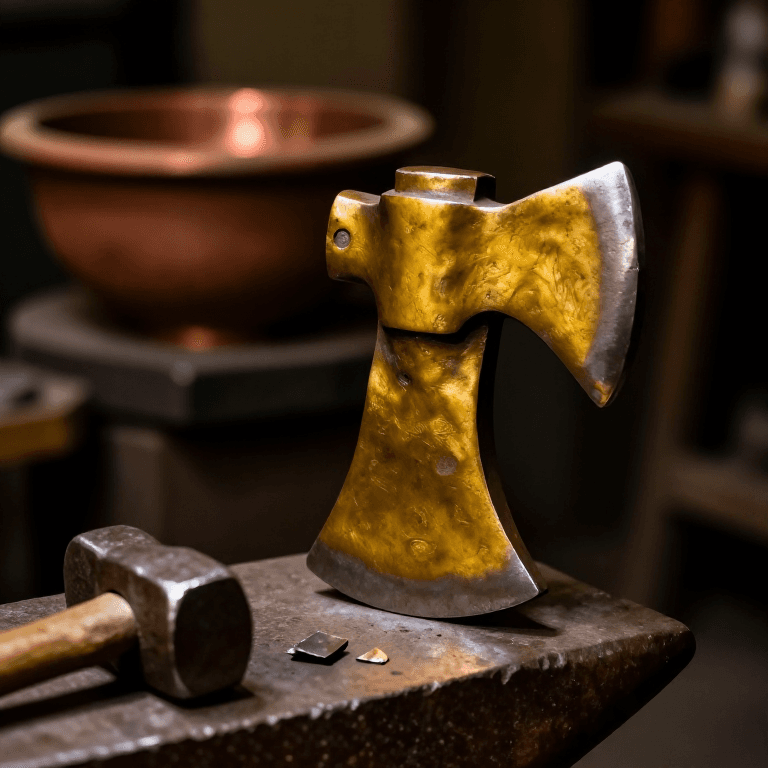
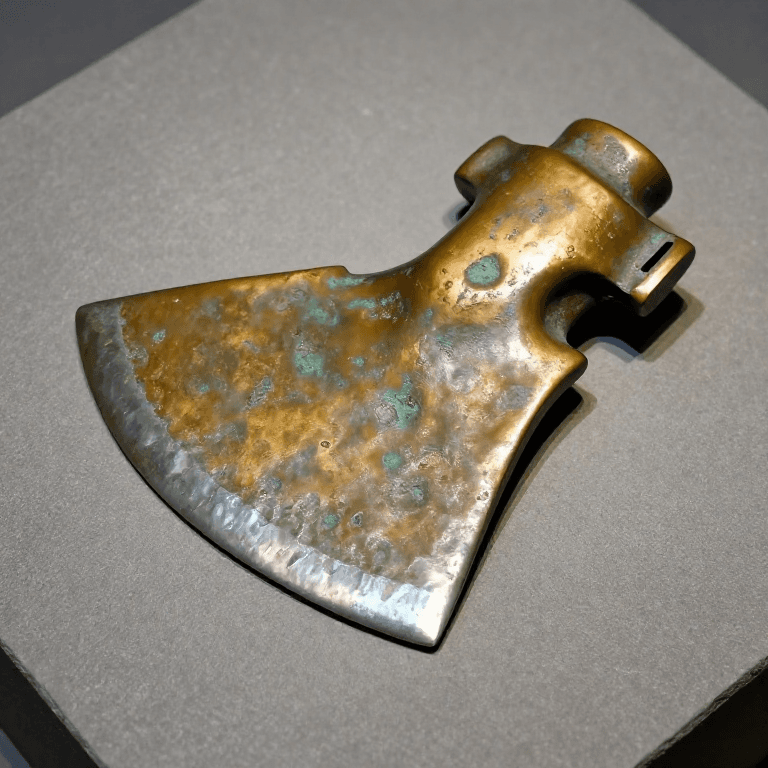
Sheet bronze was the material behind Bronze Age armour, vessels, mirrors, and decorative work. Unlike casting which produces a fixed shape, sheet-working starts with a flat ingot and transforms it through repeated cycles of hammering and annealing into sheets as thin as 0.5 mm — thinner than modern cardboard.

The process exploits a fundamental property of bronze: cold-hammering compresses the crystal grains, making the metal harder and thinner with each blow. But this work-hardening also makes the bronze brittle. Before it cracks, the smith heats it to dull red (annealing), which recrystallises the grain structure and restores ductility. A single ingot may go through 10-15 anneal-hammer cycles to reach usable sheet thickness.

The finished sheet can then be cut, bent, raised into vessels, riveted, engraved, or embossed — opening the full range of Bronze Age metalcraft.

ระดับกลาง
3-5 hours (multiple anneal-hammer cycles)

คำแนะนำ

1

Cast a flat ingot

Pour molten bronze into a shallow rectangular depression carved in a flat stone slab — approximately 15 cm long, 8 cm wide, and 1.5 cm deep. Allow to cool completely. The resulting ingot is the raw stock for sheet-working. A rougher ingot works fine; the hammering process will refine the surface.

วัสดุสำหรับขั้นตอนนี้:

Copper Sheet (0.5-1mm)Copper Sheet (0.5-1mm)500 ก.
2

Set up the anvil stone

Select the flattest, hardest stone available — granite or dense river cobble. The anvil surface must be larger than the ingot and as smooth as possible. Every dent in the anvil transfers to the sheet as a raised bump. Bed the stone firmly in packed earth so it does not shift during hammering.

เครื่องมือที่ต้องใช้:

Flat Stone SlabFlat Stone Slab
3

First hammering pass — rough thinning

Place the ingot on the anvil. Using a smooth-faced hammerstone, strike the ingot with firm, overlapping blows in straight rows across the entire surface. Always work in one direction per pass, then rotate the ingot 90 degrees for the next pass. This cross-hammering prevents the metal from stretching unevenly. After 100-150 blows the ingot noticeably thins and spreads.

เครื่องมือที่ต้องใช้:

HammerstoneHammerstone
4

First anneal

The ingot is now work-hardened and resists further hammering. Place it in a charcoal fire and heat until it glows dull cherry red throughout — about 500-600 °C. Remove with tongs and let cool in still air. The bronze is now soft again. Do not quench in water; rapid cooling does not harden bronze (unlike steel) but can cause thermal shock cracking in thick sections.

วัสดุสำหรับขั้นตอนนี้:

CharcoalCharcoal2 กก.

เครื่องมือที่ต้องใช้:

Long-Handled TongsLong-Handled Tongs
5

Continue hammer-anneal cycles

Repeat the hammering and annealing cycle. Each cycle reduces the thickness by roughly 30-40%. Track your progress: starting from 15 mm thick ingot, after cycle 1 you reach about 10 mm, cycle 2 about 6 mm, cycle 3 about 4 mm, and so on. The sheet grows wider and longer with each pass. Trim ragged edges with a sharp flint flake between cycles.
6

Detect and prevent edge cracking

After each anneal, inspect the sheet edges carefully. Small cracks appear at the edges first because the thinner edges work-harden faster than the centre. If you see cracks forming, trim them immediately with a flint cutter before the next hammering pass — a crack that propagates into the sheet body ruins the entire piece. Anneal more frequently near the end when the sheet is thin.
7

Final thinning to usable sheet

After 8-12 anneal-hammer cycles, the sheet should be 1-2 mm thick — suitable for vessels, armour, and decorative work. For mirrors or ornaments, continue to 0.5-0.8 mm. At this thickness the bronze becomes semi-transparent when held to bright light. Each blow must be lighter and more precise — over-striking creates thin spots that tear.
8

Planish the surface

Anneal the finished sheet one final time. Then, using the smoothest stone available, strike the entire surface with very light, rapid, overlapping blows. This planishing pass does not thin the sheet further — it removes the visible hammer marks from the thinning passes and leaves a smooth, uniform surface. Work systematically in rows so no area is missed.

เครื่องมือที่ต้องใช้:

Smooth StoneSmooth Stone
9

Polish (optional)

For mirrors or decorative pieces, rub the planished sheet with progressively finer abrasives — coarse sand, then fine sand, then wet clay on a leather pad. Bronze polishes to a mirror finish that reflects an image clearly. The ancient Egyptians used this method for hand mirrors. A final rub with animal fat protects the surface from tarnishing.

วัสดุสำหรับขั้นตอนนี้:

Fine SandFine Sand100 ก.

วัสดุ

3
  • ตัวยึดตำแหน่ง
  • 2 กก.
    ตัวยึดตำแหน่ง
  • 100 ก.
    ตัวยึดตำแหน่ง

เครื่องมือที่จำเป็น

4

วัสดุจากพิมพ์เขียวที่เชื่อมต่อ

บลูพริ้นท์ที่เกี่ยวข้อง

บลูพริ้นท์เหล่านี้แบ่งปันความรู้ — เทคนิค วัสดุ หรือหลักการ
CC0 สาธารณสมบัติ

พิมพ์เขียวนี้เผยแพร่ภายใต้ CC0 คุณสามารถคัดลอก แก้ไข แจกจ่าย และใช้งานผลงานนี้เพื่อวัตถุประสงค์ใดก็ได้ โดยไม่ต้องขออนุญาต

สนับสนุนเมกเกอร์โดยซื้อสินค้าผ่านพิมพ์เขียวของพวกเขา ซึ่งพวกเขาจะได้รับ ค่าคอมมิชชันเมกเกอร์ ที่ผู้ขายกำหนด หรือสร้างเวอร์ชันใหม่ของพิมพ์เขียวนี้และรวมเป็นการเชื่อมต่อในพิมพ์เขียวของคุณเพื่อแบ่งรายได้

การสนทนา

(0)

เข้าสู่ระบบ เพื่อร่วมการสนทนา

กำลังโหลดความคิดเห็น...