ศิลปะ
ความงามและสุขภาพ
งานฝีมือ
วัฒนธรรมและประวัติศาสตร์
ความบันเทิง
สิ่งแวดล้อม
อาหารและเครื่องดื่ม
วิศวกรรมย้อนรอย
วิทยาศาสตร์
กีฬา
เทคโนโลยี
อุปกรณ์สวมใส่
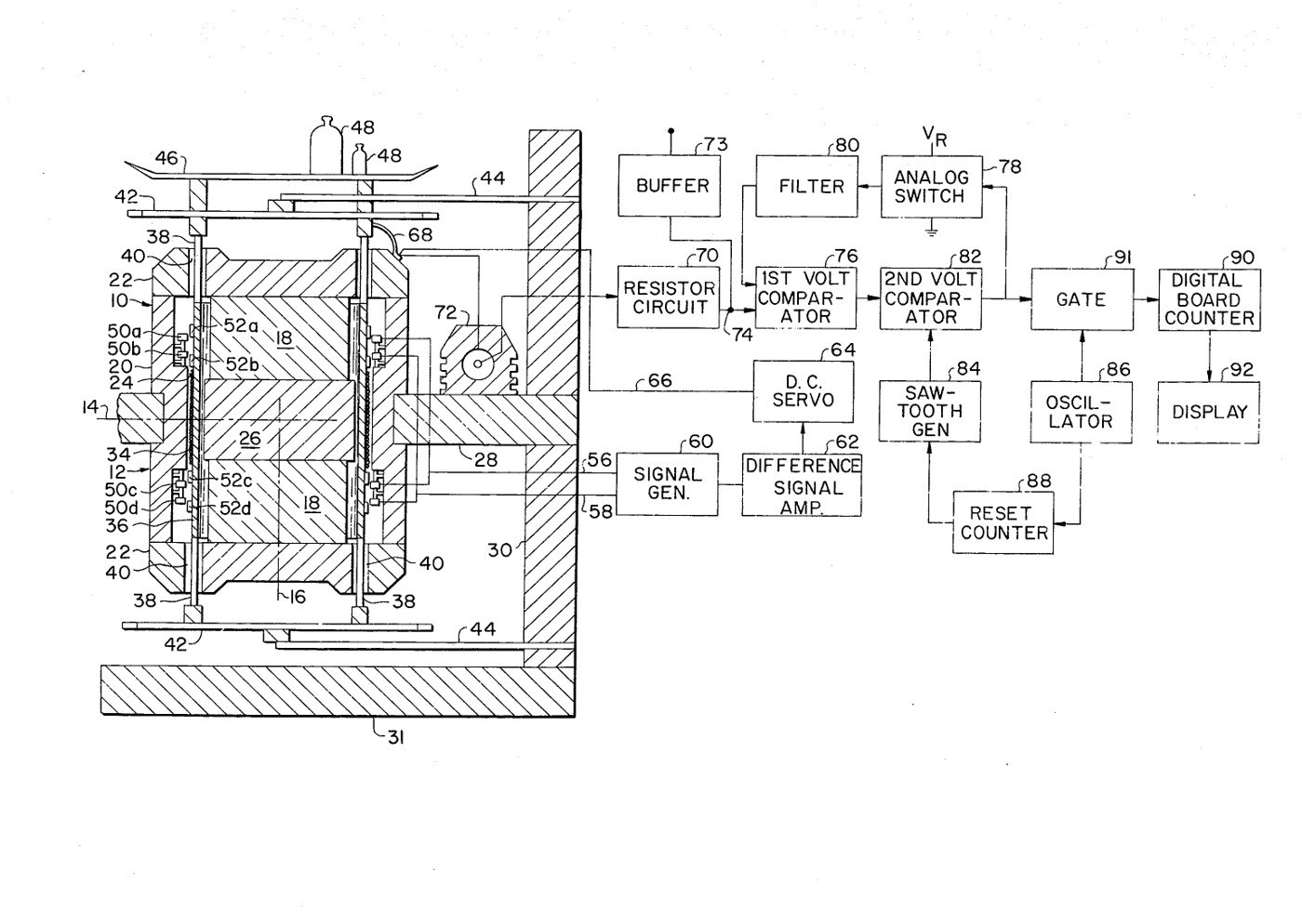


Electronic Analytical Balance: a Coil Current in Place of Weights (Akers et al., 1977)
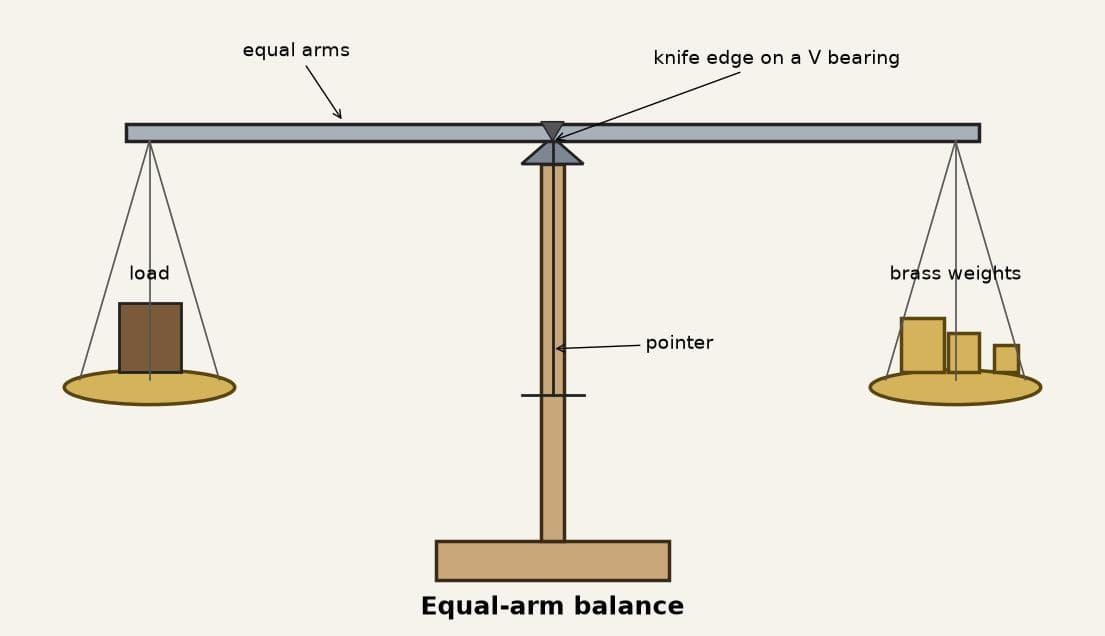
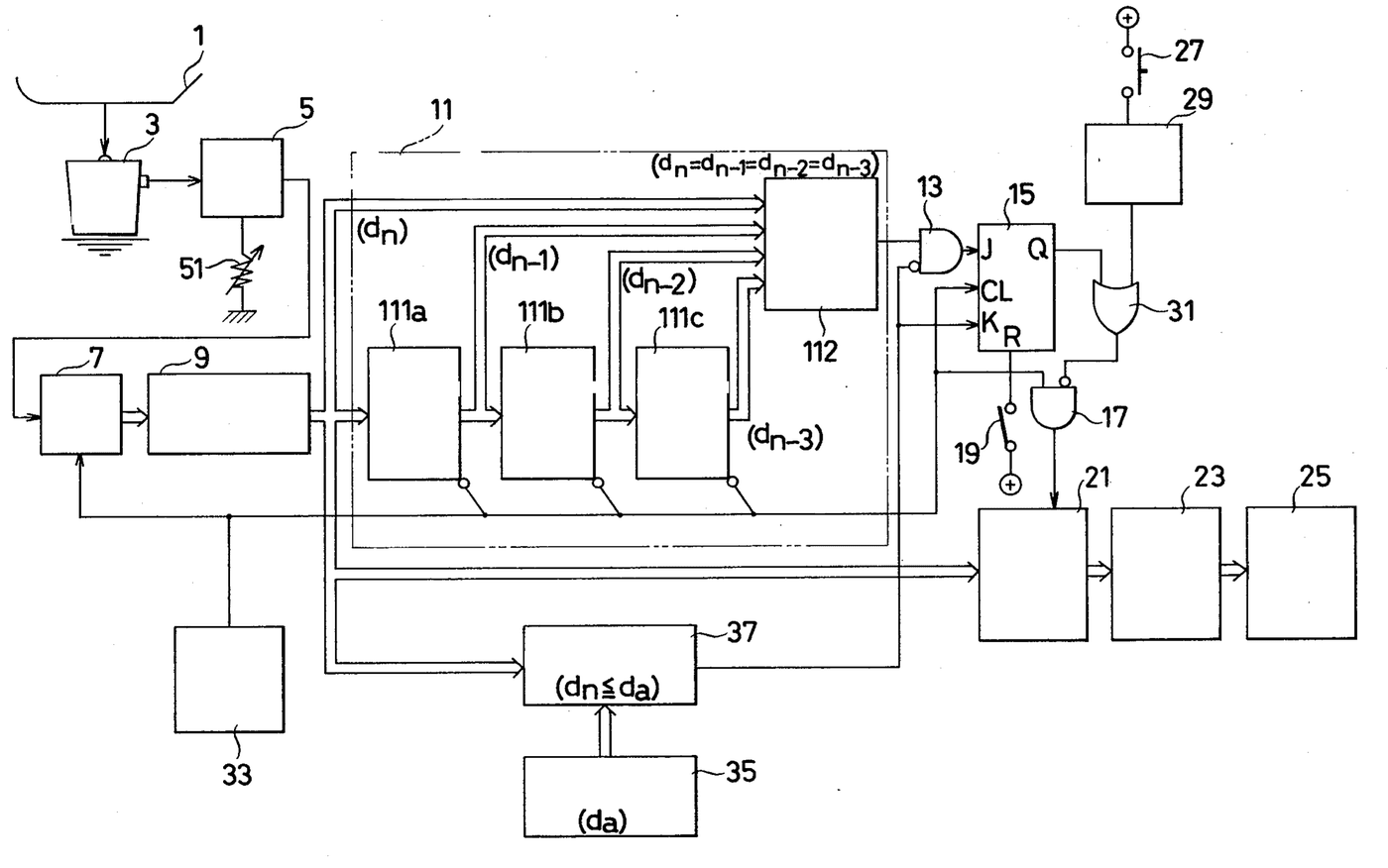
The equal-arm balance with its weights replaced by electricity. The pan sits on a coil in the gap of a permanent magnet. A load pushes it down; capacitor rings sense the smallest movement, and a servo drives just enough current through the coil to lift it back to its rest position. That current is the weight.
Result: a balance that reads the weight in grams or ounces on a digital display, with no weights to handle, and tare by its circuit.
Source: C. B. Akers and others (Arbor Laboratories), US Patent 4,034,819 (1977). Unknown: the resolution, capacity, magnet type, materials and sizes; the circuits are given as blocks only. Picture: patent drawing.
ขั้นสูง
2 weeks
คำแนะนำ
1
1
Build the magnet circuit
Build the magnet circuit
Stack permanent magnets into a column with a soft iron core. Enclose them in an annular outer housing with end caps, shaped so the field crosses a narrow annular air gap at a constriction. Keep the whole structure symmetrical about its vertical axis. Mount it on a support plate fixed to an upright, such as a housing panel on a base. Not given: the magnet type, materials and sizes.
วัสดุสำหรับขั้นตอนนี้:
 แม่เหล็กเล็ก1 column
 เหล็กเส้นกลม1 soft iron core
 โลหะที่ไม่ทราบ1 housing and end caps
 วัสดุที่ไม่ทราบ1 support plate, panel, base
เครื่องมือที่ต้องใช้:
 ชุดไขควง
 ขนาดที่ไม่ทราบ
2
2
Hang the coil in the gap
Hang the coil in the gap
Wind the coil tightly round the middle of a light bobbin that surrounds the core, the coil sitting in the air gap. Tabs at both ends of the bobbin pass out through holes in the end caps to suspension frames. Hang the frames from thin springy cantilevers fixed to the upright, so the bobbin can only move a short way straight up and down. Keep the bobbin and its suspension as light as possible. Put the weighing pan on top. Ours: enamelled wire.
วัสดุสำหรับขั้นตอนนี้:
 ลวดทองแดงอาบน้ำยา1 coilวัสดุที่ไม่ทราบ1 bobbin, frames, cantilevers
 จานชั่ง1 ชิ้น
เครื่องมือที่ต้องใช้:
ขนาดที่ไม่ทราบ3
3
Fit the capacitor rings
Fit the capacitor rings
Mount four capacitor rings inside the outer housing, two above and two below the air gap, facing matching rings on the bobbin. Cross-connect them so a tilt of the bobbin cancels out and only up-and-down movement shows. Connect them to a signal generator: as the bobbin moves, one set's capacitance rises and the other's falls, and the difference becomes the control voltage.
วัสดุสำหรับขั้นตอนนี้:
โลหะที่ไม่ทราบ1 rings วงจรรวม1 sensing circuit
 สายไฟต่อวงจร1 ชิ้น
 ลวดตะกั่วบัดกรี1 a little
เครื่องมือที่ต้องใช้:
 หัวแร้งบัดกรี
4
4
Close the servo loop and read the current
Close the servo loop and read the current
Feed the control voltage to a d.c. servo that drives current through the coil, through a flexible lead, until the bobbin is back at its rest position. Pass that current through a large stable resistor, a thermal resistor that corrects for temperature and a calibration potentiometer: the voltage across them stands for the weight. A separate circuit (comparators, saw-tooth generator, oscillator and counter) turns it into a count read out as grams or ounces. Tare is ordinary circuit logic. Ours: a segment LCD; check with calibration weights.
วัสดุสำหรับขั้นตอนนี้:
วงจรรวม1 servo and counting circuits ความต้านทาน2 stable resistor, thermal resistor
 โพเทนชิออมิเตอร์1 calibration
 จอแอลซีดีแบบเซกเมนต์1 displayลวดตะกั่วบัดกรี1 a little
เครื่องมือที่ต้องใช้:
หัวแร้งบัดกรี ชุดตุ้มน้ำหนักสอบเทียบ
วัสดุ
12- 1 columnตัวยึดตำแหน่ง
- 1 soft iron coreตัวยึดตำแหน่ง
- 1 ringsตัวยึดตำแหน่ง
- 1 bobbin, frames, cantileversตัวยึดตำแหน่ง
- 1 coilตัวยึดตำแหน่ง
- 1 ชิ้นตัวยึดตำแหน่ง
- 1 servo and counting circuitsตัวยึดตำแหน่ง
- 1 ชิ้นตัวยึดตำแหน่ง
- 2 a littleตัวยึดตำแหน่ง
- 2 stable resistor, thermal resistorตัวยึดตำแหน่ง
- ตัวยึดตำแหน่ง
- 1 displayตัวยึดตำแหน่ง
วัสดุจากพิมพ์เขียวที่เชื่อมต่อ
พิมพ์เขียวนี้สร้าง
บลูพริ้นท์ที่เกี่ยวข้อง
บลูพริ้นท์เหล่านี้แบ่งปันความรู้ — เทคนิค วัสดุ หรือหลักการ
CC0 สาธารณสมบัติ
พิมพ์เขียวนี้เผยแพร่ภายใต้ CC0 คุณสามารถคัดลอก แก้ไข แจกจ่าย และใช้งานผลงานนี้เพื่อวัตถุประสงค์ใดก็ได้ โดยไม่ต้องขออนุญาต
สนับสนุนเมกเกอร์โดยซื้อสินค้าผ่านพิมพ์เขียวของพวกเขา ซึ่งพวกเขาจะได้รับ ค่าคอมมิชชันเมกเกอร์ ที่ผู้ขายกำหนด หรือสร้างเวอร์ชันใหม่ของพิมพ์เขียวนี้และรวมเป็นการเชื่อมต่อในพิมพ์เขียวของคุณเพื่อแบ่งรายได้