ศิลปะ
ความงามและสุขภาพ
งานฝีมือ
วัฒนธรรมและประวัติศาสตร์
ความบันเทิง
สิ่งแวดล้อม
อาหารและเครื่องดื่ม
วิศวกรรมย้อนรอย
วิทยาศาสตร์
กีฬา
เทคโนโลยี
อุปกรณ์สวมใส่



Fillet and Butt: Sizing the Weld the Joint Actually Needs
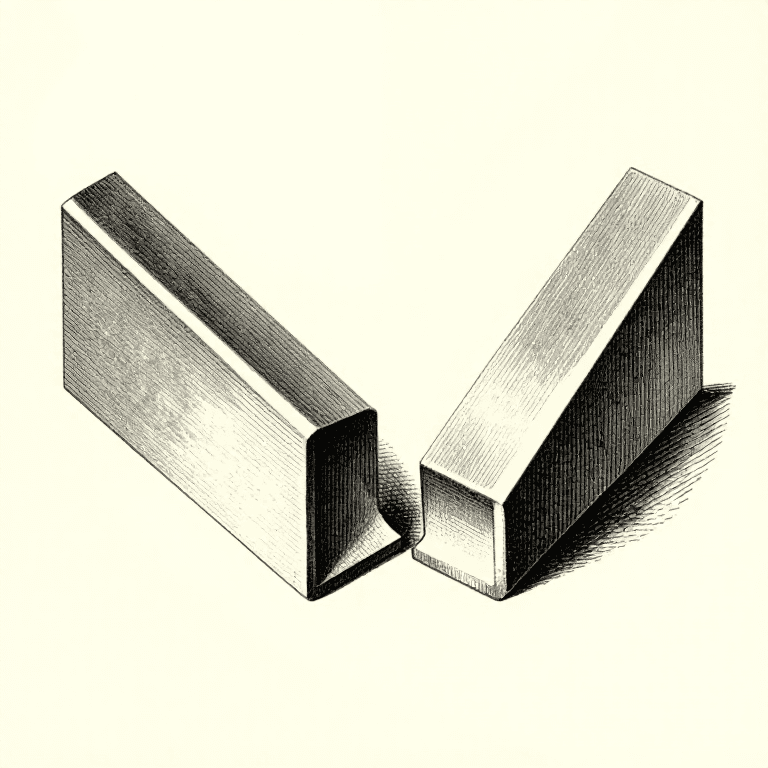
Welds come in two structural families. A **butt** weld replaces the parent section, so a full-penetration butt weld in sound metal is as strong as the plate and needs no sizing at all — it is either full penetration or it is not.
A **fillet** weld adds a triangle of metal in a corner, and it does need sizing, because its strength depends on how big that triangle is.
Almost every beginner sizes fillets by eye and almost every beginner makes them too big. That is worth a number, because a fillet's strength goes with its leg while the metal, the arc time and the distortion go with the leg squared.
ระดับกลาง
3 hours
คำแนะนำ
1
1
Leg, throat, and which one carries the load
Leg, throat, and which one carries the load
A fillet weld is quoted by its **leg length** — the distance it runs up each of the two members from the root. That is what you can measure with a gauge on a finished weld, which is why the trade quotes it.
What carries the load is the **throat**: the shortest distance from the root of the joint through the weld to its face. For a normal mitre fillet with equal legs and a flat or slightly concave face, the throat is the leg divided by the square root of two — about 0.707 of it.
A **convex** fillet, piled up proud, has the same throat as a flat one of the same legs. The extra metal on the face adds nothing to the strength and does add a sharp angle at the toes where fatigue cracks start.
A **concave** fillet, hollowed out, has a smaller throat than its legs suggest — so it is weaker than it is measured to be.
วัสดุสำหรับขั้นตอนนี้:
 แผ่นเหล็กกล้าละมุน1 ชิ้น
 เหล็กฉากเหล็กกล้าละมุน1 ชิ้น
เครื่องมือที่ต้องใช้:
 ไม้บรรทัด
 กล้องส่องขยาย
2
2
Sizing it
Sizing it
กำลังโหลดสมุด Jupyter…
เครื่องมือที่ต้องใช้:
 คอมพิวเตอร์ตั้งโต๊ะ
3
3
Multi-pass: root, fill, cap
Multi-pass: root, fill, cap
A joint too big for one pass is built up in runs, and the runs have different jobs.
**The root run** has one job: fuse the bottom of the joint. It is run with a smaller electrode at a lower current than the rest, because the root is the hardest place to reach and the easiest to blow through.
**The fill runs** put in volume. Bigger rod, more current, and each run must be chipped and wire-brushed before the next goes on top of it — every scrap of slag left behind becomes an inclusion buried in the finished weld.
**The cap** is the last run and the visible one. It should sit slightly proud and blend into the plate at both toes without a step.
Let each run cool to below about 250 C before the next. Piling runs on while the joint is still glowing puts far more total heat into the work than the same welds laid with a pause, and that is distortion you never have to take out.
วัสดุสำหรับขั้นตอนนี้:
แผ่นเหล็กกล้าละมุน2 ชิ้น ลวดเชื่อม2 แพ็ค
เครื่องมือที่ต้องใช้:
 เครื่องเชื่อมอาร์ก
 หน้ากากเชื่อมปรับความมืดอัตโนมัติ
 ถุงมืองานเชื่อม
 ค้อน
ค้อน ชุดแปรงลวด
 เหล็กแหย่ตะกรัน
4
4
Intermittent welding, and when it is not allowed
Intermittent welding, and when it is not allowed
A long fillet often does not need to be continuous. Short lengths of weld with gaps between them carry the same load if the total welded length is right, and they put in far less heat, so a long light frame stays much straighter.
The gaps are not free, though, and there are three cases where intermittent welding is wrong:
**Anything that must be sealed.** Tanks, pressure parts, anything holding liquid or gas. A gap is a leak.
**Anything outdoors or wet.** The unwelded crevice between the parts holds water by capillary action and rusts from the inside out. This is why intermittent welds on exposed steelwork are often specifically banned.
**Anything cycling under load.** Every weld end is a stress raiser, and intermittent welding multiplies the number of ends. In fatigue, a continuous fillet outlasts an intermittent one of the same total length.
วัสดุสำหรับขั้นตอนนี้:
 เหล็กแบนกล้าละมุน2 ชิ้นเหล็กฉากเหล็กกล้าละมุน1 ชิ้นลวดเชื่อม1 แพ็ค
เครื่องมือที่ต้องใช้:
เครื่องเชื่อมอาร์กหน้ากากเชื่อมปรับความมืดอัตโนมัติถุงมืองานเชื่อมไม้บรรทัด ก้อนหินสบู่
วัสดุ
4- 2 ชิ้นตัวยึดตำแหน่ง
- 1 ชิ้นตัวยึดตำแหน่ง
- 2 แพ็คตัวยึดตำแหน่ง
- 2 ชิ้นตัวยึดตำแหน่ง
เครื่องมือที่จำเป็น
10- ตัวยึดตำแหน่ง
- ตัวยึดตำแหน่ง
- ตัวยึดตำแหน่ง
- ตัวยึดตำแหน่ง
- ตัวยึดตำแหน่ง
- ตัวยึดตำแหน่ง
- ตัวยึดตำแหน่ง
- ตัวยึดตำแหน่ง
- ตัวยึดตำแหน่ง
- ตัวยึดตำแหน่ง
บลูพริ้นท์ที่เกี่ยวข้อง
บลูพริ้นท์เหล่านี้แบ่งปันความรู้ — เทคนิค วัสดุ หรือหลักการ
CC0 สาธารณสมบัติ
พิมพ์เขียวนี้เผยแพร่ภายใต้ CC0 คุณสามารถคัดลอก แก้ไข แจกจ่าย และใช้งานผลงานนี้เพื่อวัตถุประสงค์ใดก็ได้ โดยไม่ต้องขออนุญาต
สนับสนุนเมกเกอร์โดยซื้อสินค้าผ่านพิมพ์เขียวของพวกเขา ซึ่งพวกเขาจะได้รับ ค่าคอมมิชชันเมกเกอร์ ที่ผู้ขายกำหนด หรือสร้างเวอร์ชันใหม่ของพิมพ์เขียวนี้และรวมเป็นการเชื่อมต่อในพิมพ์เขียวของคุณเพื่อแบ่งรายได้