การทำงานร่วมกัน
ศิลปะ
ความงามและสุขภาพ
งานฝีมือ
วัฒนธรรมและประวัติศาสตร์
ความบันเทิง
สิ่งแวดล้อม
อาหารและเครื่องดื่ม
วิศวกรรมย้อนรอย
วิทยาศาสตร์
กีฬา
เทคโนโลยี
อุปกรณ์สวมใส่
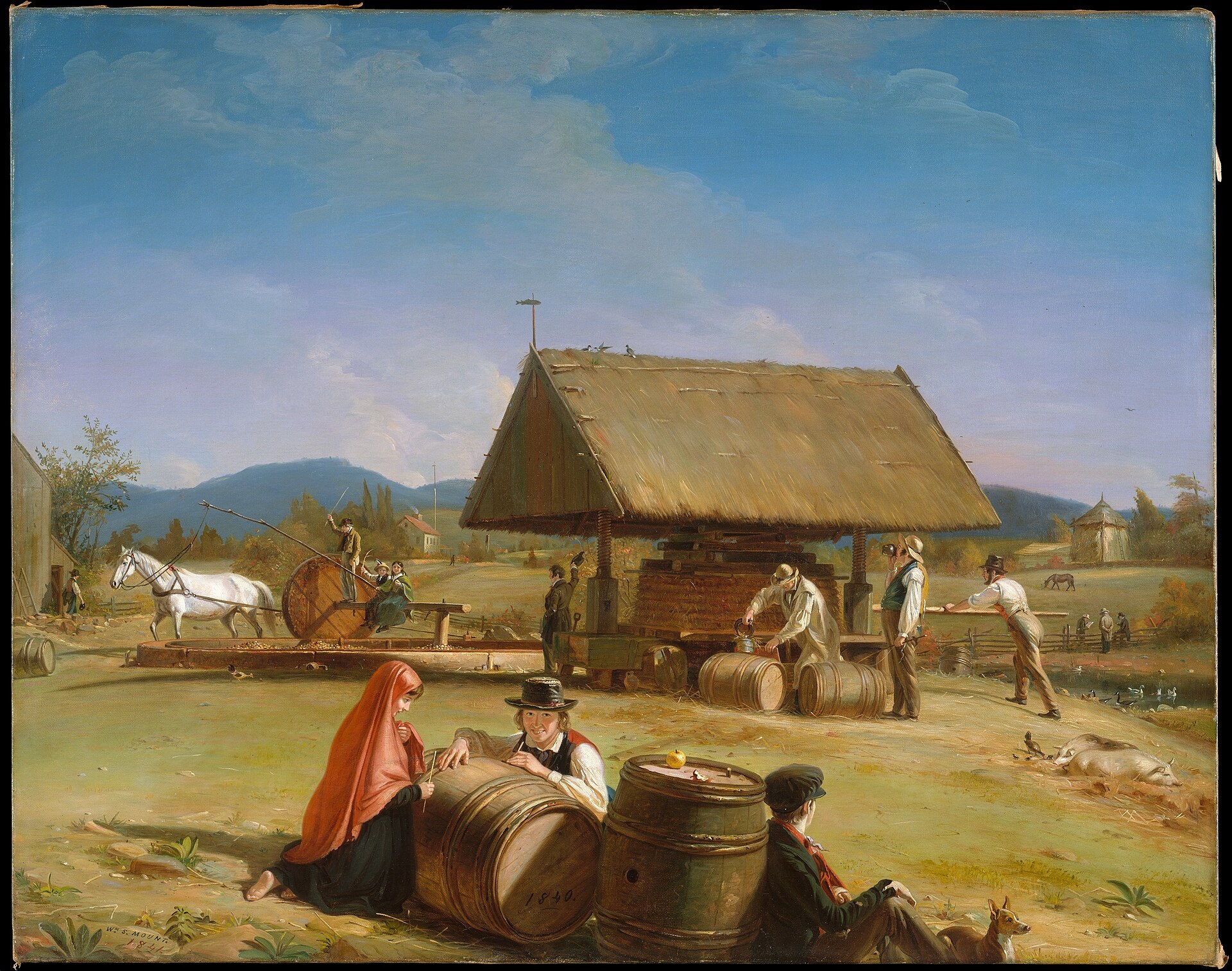

Hard Cider: Fresh Juice, a Pure Yeast Starter and a Cool Cellar (Alwood, USDA 1909)
William B. Alwood's cider for farm use, from the U.S. Department of Agriculture's Bulletin 129 (1909): juice straight from the press into clean casks, a pure yeast culture started three days before, a vent on the bung instead of a cotton plug, a cool cellar, one racking once the cider is bright, and bottling in June. He wrote that the results "establish clearly a method which any person of ordinary means can use".
ระดับกลาง
About 8 months
คำแนะนำ
1
1
His measures and gravities
His measures and gravities
กำลังโหลดสมุด Jupyter…
2
2
Read Alwood
Read Alwood
"The following notes give in detail the operation of making cider in the simplest possible manner after cold weather begins ... The work was intended to approximate as closely as possible the conditions under which a farmer might ferment his cider for family use." (Bulletin 129, p. 10.)
3
3
Press the juice
Press the juice
Alwood crushed and pressed 60 bushels of Winesap apples, "of a grade called unmerchantable, but ... not rotten nor soiled". His juice read 1.055 (13.6 Brix).
4
4
Prepare the casks
Prepare the casks
Steam each cask for twenty minutes, rinse with clean water and drain. Pour in one-half pint of 90 per cent alcohol, bung it tight, and leave it two weeks before use.
เครื่องมือที่ต้องใช้:
 ถังไม้
 หม้อไอน้ำ
 น้ำ
 เอทานอล - เกรดห้องปฏิบัติการ 95 %
 จุกไม้อุดถัง
5
5
Start the yeast
Start the yeast
Three days before pressing, boil 400 ml of apple juice in a flask in a water bath for fifteen minutes. Cool it and sow it with a pure wine yeast. It should be in full fermentation when used.
วัสดุสำหรับขั้นตอนนี้:
 น้ำแอปเปิลคั้นสด0.4 ลิตร
 ยีสต์ไวน์1 ชิ้น
เครื่องมือที่ต้องใช้:
 ขวดรูปกรวย
 อ่างน้ำ
6
6
Fill and pitch
Fill and pitch
Fill the casks straight from the press; do not sulphur them. Add the yeast culture at once. Read the gravity: his was 1.055.
วัสดุสำหรับขั้นตอนนี้:
น้ำแอปเปิลคั้นสด189 ลิตรเครื่องมือที่ต้องใช้:
ถังไม้ ไฮโดรมิเตอร์
7
7
Fit the vent
Fit the vent
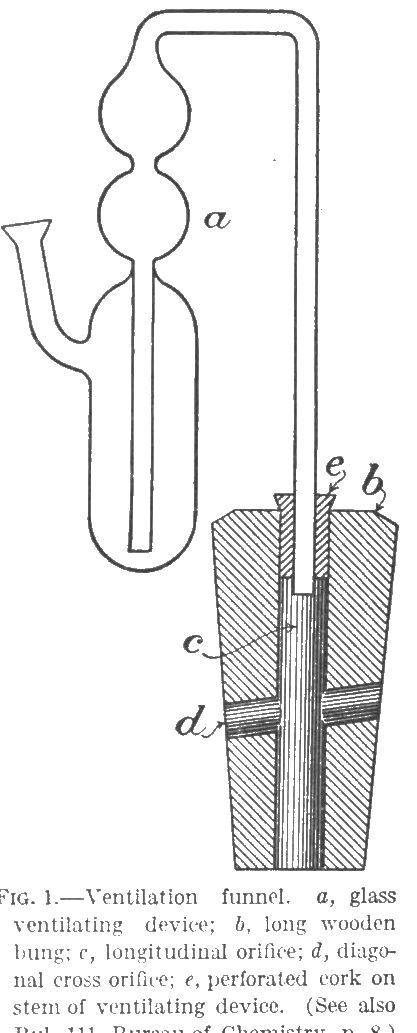
Do not plug with cotton: "if the cotton becomes the least bit damp, malferments readily find entrance". Put a vent funnel on a perforated cork in a long wooden bung, as his Fig. 1.
เครื่องมือที่ต้องใช้:
 แอร์ล็อกหมักจุกไม้อุดถัง
 จุกไม้ก๊อก
8
8
Keep it cool
Keep it cool
His cold storeroom stopped the fermentation; he moved the casks to a cellar at 13 to 14 °C. Through the winter he held the cellar at 11 to 14 °C. Check it with a thermometer.
เครื่องมือที่ต้องใช้:
 เทอร์โมมิเตอร์
9
9
Follow the gravity
Follow the gravity
Read the gravity every few weeks. His cask No. 3 went from 1.055 in October to 1.018 by 10 January.
เครื่องมือที่ต้องใช้:
ไฮโดรมิเตอร์เทอร์โมมิเตอร์10
10
Rack when bright
Rack when bright
Wait until the cider is "practically bright and free from sediment" (his: 13 January, at 10 °C). Wash fresh casks with warm water and burn one-third of a sulphur match in each; pour the cider in on the fumes.
เครื่องมือที่ต้องใช้:
ถังไม้น้ำ แถบกำมะถัน
11
11
Draw off the dregs
Draw off the dregs
Draw the cider down to within 1 inch (2.5 cm) of the bottom, through a funnel covered with a thin woven towel. Ours: with a siphon. About 2 quarts (1.9 litres) of dregs stayed in his cask.
เครื่องมือที่ต้องใช้:
 ท่อกาลักน้ำ
 กรวยครัว
 ผ้าขนหนูฝ้ายเช็ดหน้า
12
12
Keep the casks full
Keep the casks full
Top each cask up with cider of the same pressing. With the cask entirely full, a long bung bored crosswise under the vent funnel lets the gas out.
เครื่องมือที่ต้องใช้:
จุกไม้อุดถังแอร์ล็อกหมัก13
13
Bottle in June
Bottle in June
His final bottling was 25 June, at 1.006. Draw it into pint champagne bottles, cork them and tie the corks down. Use champagne bottles only: his unfiltered bottles opened "with high pressure".
วัสดุสำหรับขั้นตอนนี้:
 ขวดแชมเปญ1 ชิ้นจุกไม้ก๊อก1 ชิ้น
เครื่องมือที่ต้องใช้:
ท่อกาลักน้ำ เชือกฝ้าย
14
14
Troubleshooting
Troubleshooting
What went wrong in Alwood's casks, and the fix.
Flow
Loading...
15
15
History and honest limits
History and honest limits
**William B. Alwood**, *Enological Studies. I. Experiments in Cider Making Applicable to Farm Conditions*, USDA Bureau of Chemistry Bulletin No. 129 (1909), under H. W. Wiley. He filled three 50-gallon whisky barrels on 23 October 1907: No. 1 left to natural fermentation, No. 2 with yeast No. 73 (Sauternes), No. 3 with yeast No. 161 (Ahrweiler). He called No. 3 the "Finest cider ever handled here", and found the total acid "about right for a sprightly cider—namely, approximately 0.40 per cent". A 10-gallon keg left with a cotton plug turned to vinegar. His yeast cultures came from his own laboratory and are not sold today; a pure wine yeast takes their place. He does not say how he drew the cider off; ours is a siphon. The alcohol estimate in the notebook is ours.
วัสดุ
4- 189 ลิตรตัวยึดตำแหน่ง
- 1 ชิ้นตัวยึดตำแหน่ง
- 1 ชิ้นตัวยึดตำแหน่ง
- 1 ชิ้นตัวยึดตำแหน่ง
เครื่องมือที่จำเป็น
16- ตัวยึดตำแหน่ง
- ตัวยึดตำแหน่ง
- ตัวยึดตำแหน่ง
- ตัวยึดตำแหน่ง
- ตัวยึดตำแหน่ง
- ตัวยึดตำแหน่ง
- ตัวยึดตำแหน่ง
- ตัวยึดตำแหน่ง
- ตัวยึดตำแหน่ง
- ตัวยึดตำแหน่ง
- ตัวยึดตำแหน่ง
- ตัวยึดตำแหน่ง
- ตัวยึดตำแหน่ง
- ตัวยึดตำแหน่ง
- ตัวยึดตำแหน่ง
- ตัวยึดตำแหน่ง
วัสดุจากพิมพ์เขียวที่เชื่อมต่อ
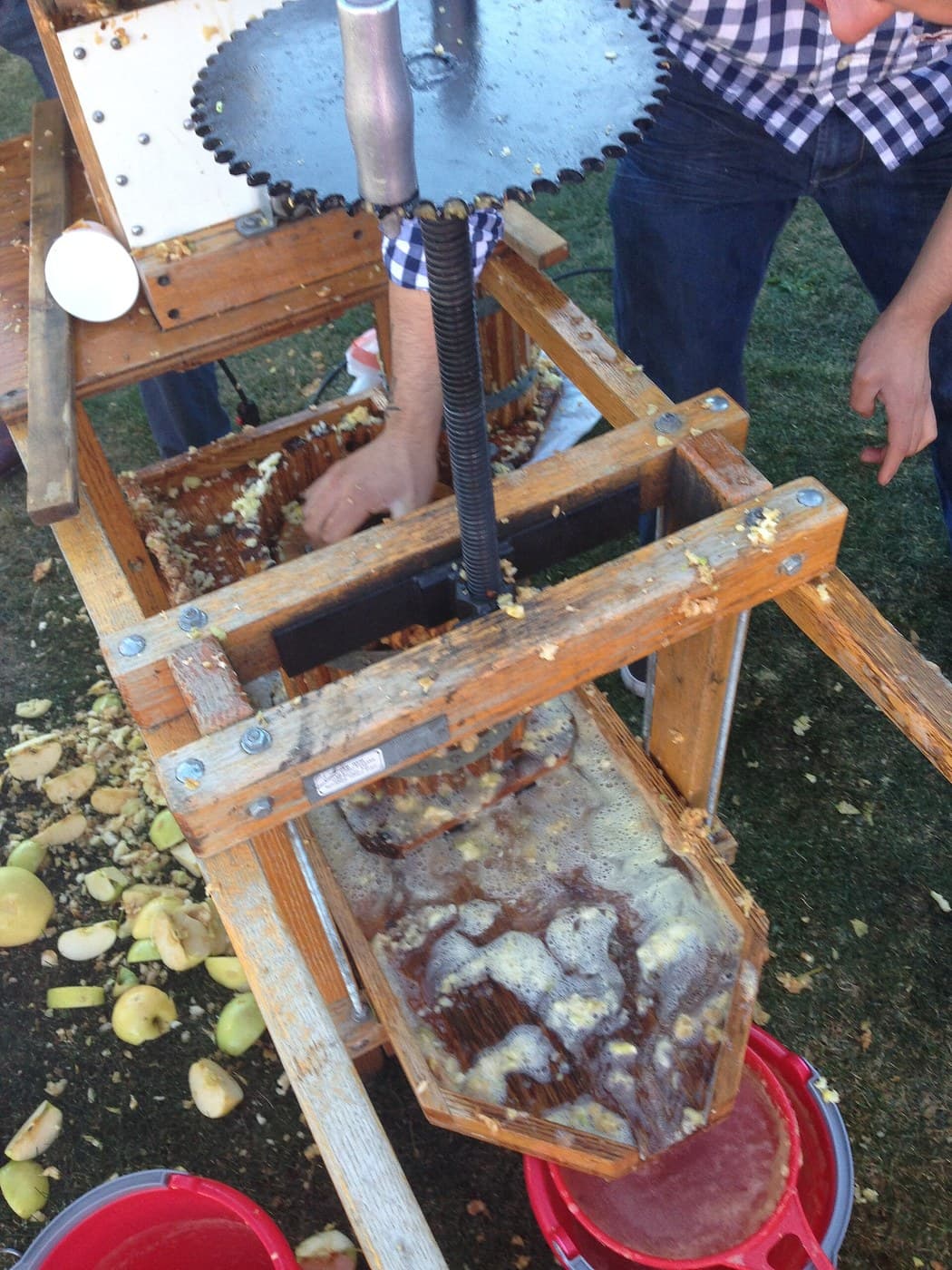
พิมพ์เขียวนี้สร้าง

บลูพริ้นท์ที่เกี่ยวข้อง
บลูพริ้นท์เหล่านี้แบ่งปันความรู้ — เทคนิค วัสดุ หรือหลักการ
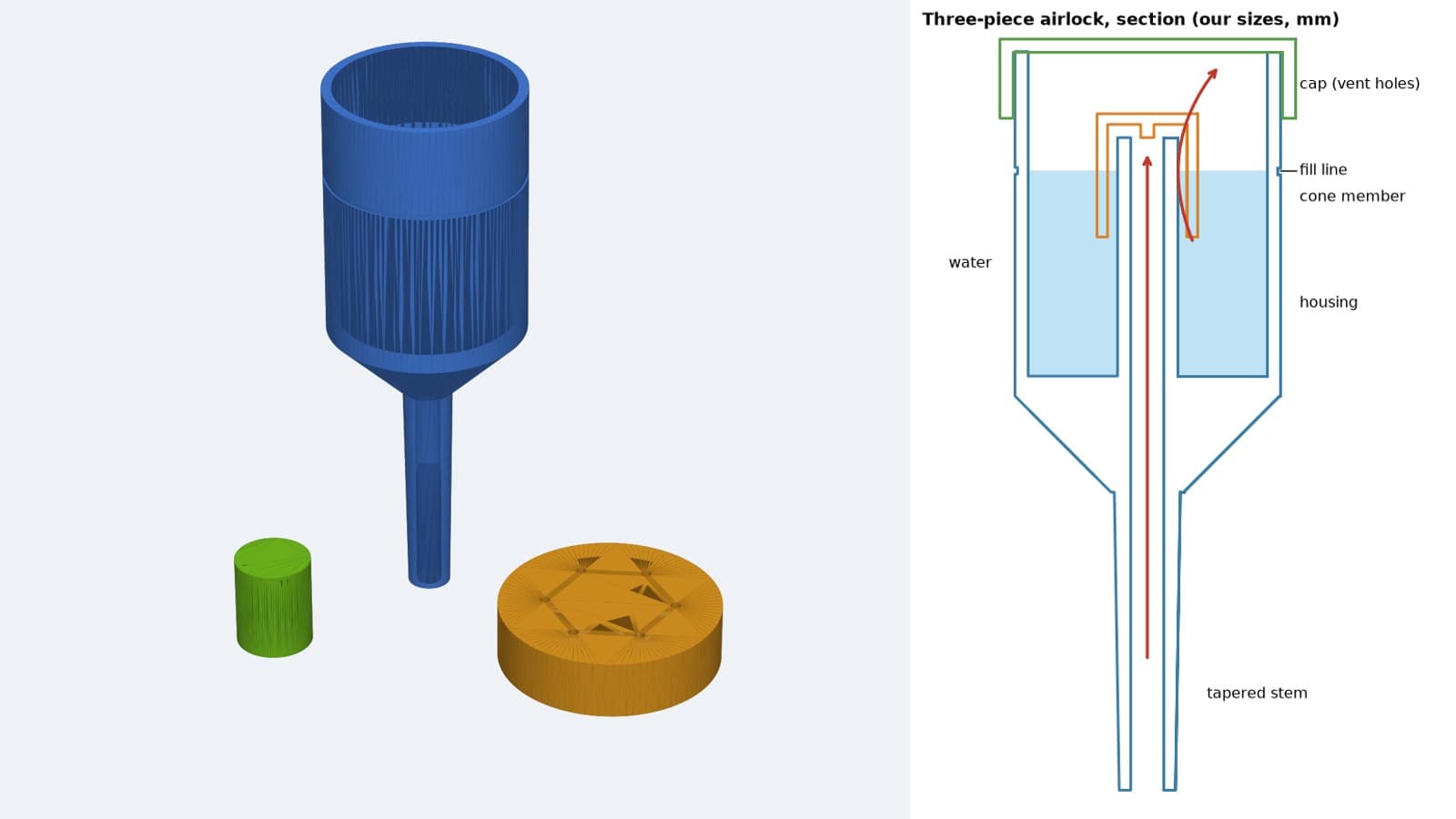
Three-Piece Airlock, 3D Printed in PETG
โดย 3DBonanza
เบียร์
1
0
0
0
1
0
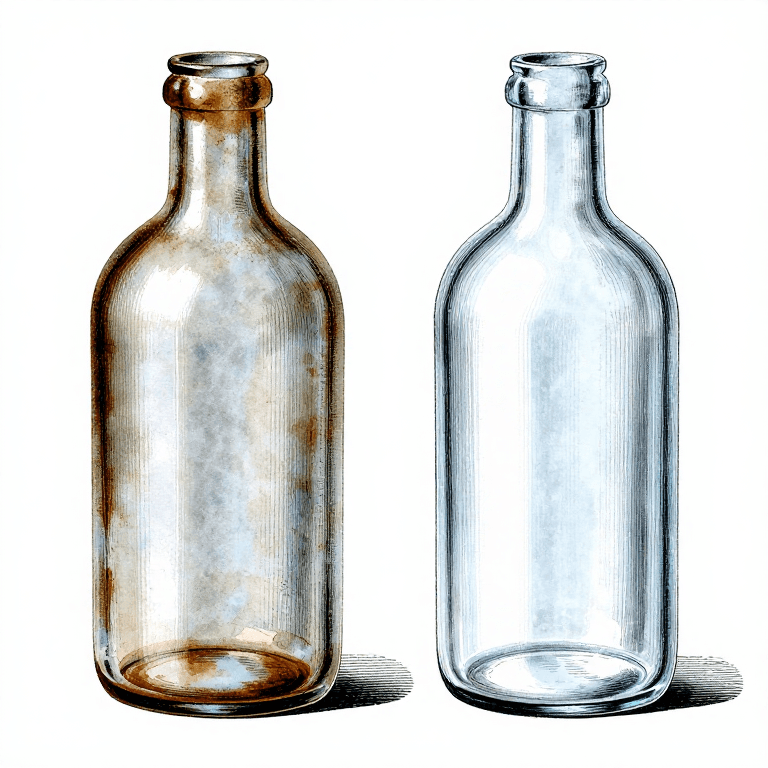
Sanitation Is Not Sterilisation: You Are Choosing Which Microbes Win
โดย Alchometer
การหมัก
41
0
0
0
0
0
Oxygen: Wanted for an Hour, Ruinous for Ever After
โดย Alchometer
การหมัก
38
0
0
0
0
0
Pitching Rate and Lag Phase: The First Day Decides the Flavour
โดย Alchometer
การหมัก
38
0
0
0
0
0
CC0 สาธารณสมบัติ
พิมพ์เขียวนี้เผยแพร่ภายใต้ CC0 คุณสามารถคัดลอก แก้ไข แจกจ่าย และใช้งานผลงานนี้เพื่อวัตถุประสงค์ใดก็ได้ โดยไม่ต้องขออนุญาต
สนับสนุนเมกเกอร์โดยซื้อสินค้าผ่านพิมพ์เขียวของพวกเขา ซึ่งพวกเขาจะได้รับ ค่าคอมมิชชันเมกเกอร์ ที่ผู้ขายกำหนด หรือสร้างเวอร์ชันใหม่ของพิมพ์เขียวนี้และรวมเป็นการเชื่อมต่อในพิมพ์เขียวของคุณเพื่อแบ่งรายได้