ศิลปะ
ความงามและสุขภาพ
งานฝีมือ
วัฒนธรรมและประวัติศาสตร์
ความบันเทิง
สิ่งแวดล้อม
อาหารและเครื่องดื่ม
วิศวกรรมย้อนรอย
วิทยาศาสตร์
กีฬา
เทคโนโลยี
อุปกรณ์สวมใส่
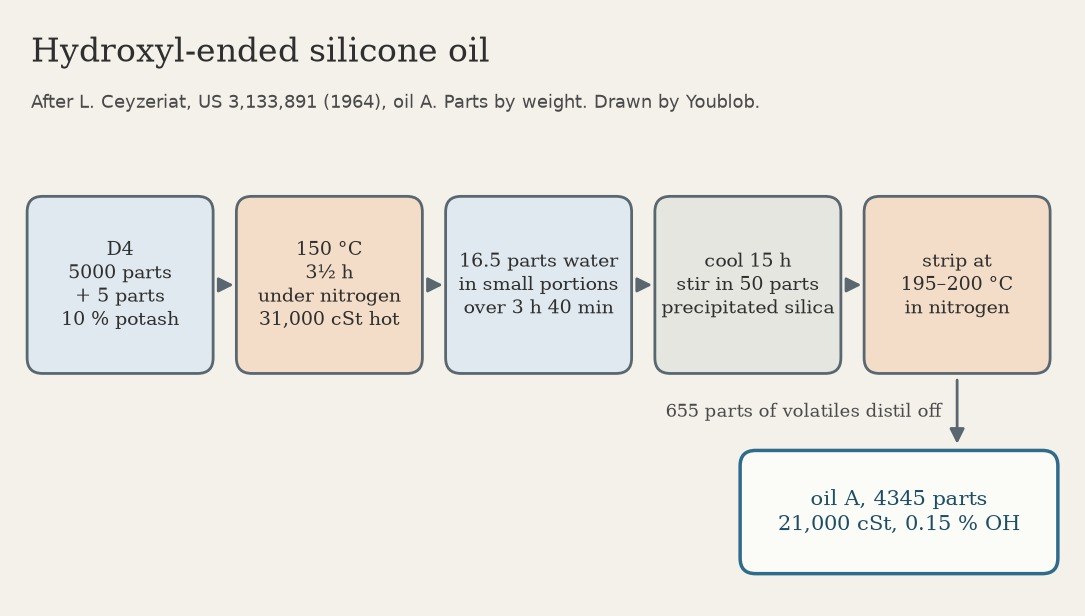
Youblob · CC0


Hydroxyl-Ended Silicone Oil: D4 Opened with Potash, Then Water (Ceyzeriat 1964)
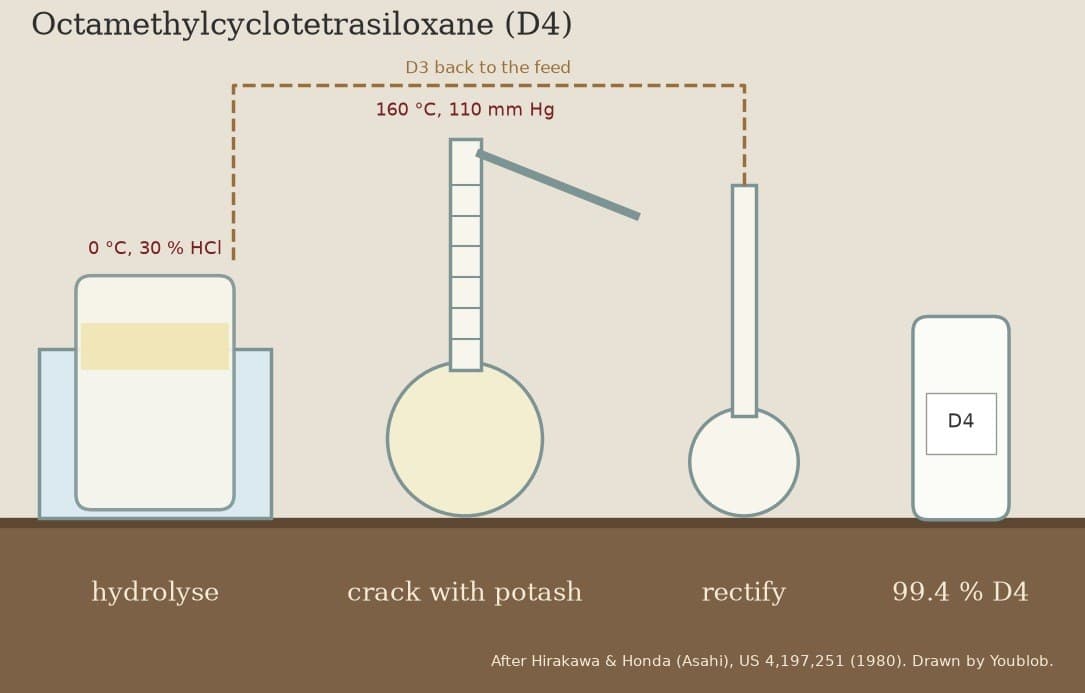
A trace of hot potash opens the ring of D4 and strings it into a long, thick chain. Water added a little at a time then cuts the chains back and leaves hydroxyl groups on their ends, which is what later lets the oil cure into rubber. This is Louis Ceyzeriat's oil A, the base of every sealant in his patent: 21,000 centistokes, 0.15 % hydroxyl.
Source: L. Ceyzeriat (Rhône-Poulenc), US 3,133,891 (1964), column 4. His neutraliser was the precipitated silica Hi-Sil X303; we use our precipitated silica in its place. The potash mix and the equipment are ours. Picture drawn by Youblob.
ขั้นสูง
2 days
คำแนะนำ
1
1
Make the 10 % potash
Make the 10 % potash
Dissolve 0.5 part of potassium hydroxide in 4.5 parts of water (our arithmetic for 5 parts of a 10 % solution). All parts are by weight.
วัสดุสำหรับขั้นตอนนี้:
 โพแทสเซียมไฮดรอกไซด์0.5 parts
 น้ำ4.5 parts
เครื่องมือที่ต้องใช้:
 ภาชนะแก้ว
 ตราชั่งสองแขน
2
2
Heat D4 with the potash under nitrogen
Heat D4 with the potash under nitrogen
Heat 5000 parts of octamethylcyclotetrasiloxane (it melts at 17.5 °C) with the 5 parts of 10 % potash at 150 °C for 3½ hours under nitrogen. The oil thickens to 31,000 centistokes while hot.
วัสดุสำหรับขั้นตอนนี้:
 ออกตะเมทิลไซโคลเตตระไซลอกเซน (D4)5000 parts
เครื่องมือที่ต้องใช้:
 ขวดกลั่นแก้ว
 แผ่นให้ความร้อน
 เทอร์โมมิเตอร์
 เครื่องกวน
 ถังแก๊สไนโตรเจน
3
3
Add water a little at a time
Add water a little at a time
Still hot, add 16.5 parts of water in small portions over 3 hours 40 minutes. The hot oil thins to 1730 centistokes.
วัสดุสำหรับขั้นตอนนี้:
น้ำ16.5 partsเครื่องมือที่ต้องใช้:
ขวดกลั่นแก้วแผ่นให้ความร้อนเทอร์โมมิเตอร์เครื่องกวน4
4
Cool, then neutralise with silica
Cool, then neutralise with silica
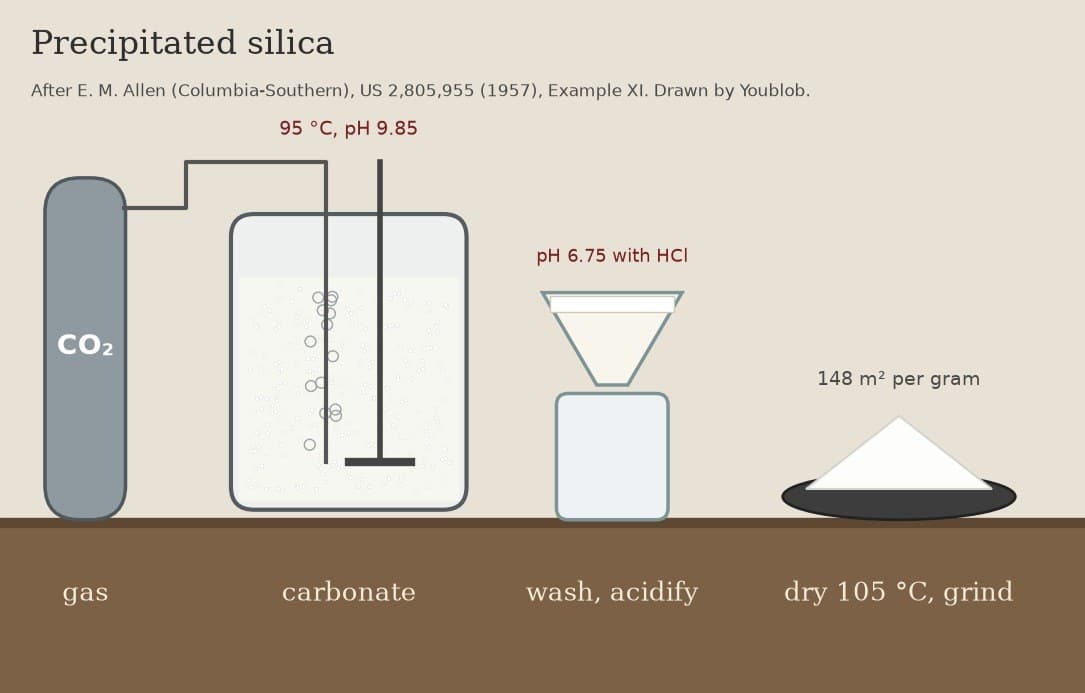
Let it cool for 15 hours. Then stir in 50 parts of precipitated silica to neutralise the potash. The liquid now measures 13,400 centistokes at 25 °C.
วัสดุสำหรับขั้นตอนนี้:
 ซิลิกาตกตะกอน50 parts
เครื่องมือที่ต้องใช้:
ขวดกลั่นแก้วเครื่องกวน5
5
Strip the volatiles at 195–200 °C
Strip the volatiles at 195–200 °C
Heat it to about 195–200 °C in a current of nitrogen, with a water condenser on the outlet. 655 parts of liquid distil over; 4345 parts of oil A stay in the boiler, 21,000 centistokes at 25 °C with 0.15 % hydroxyl groups.
เครื่องมือที่ต้องใช้:
ขวดกลั่นแก้ว ขดท่อคอนเดนเซอร์แผ่นให้ความร้อนเทอร์โมมิเตอร์ถังแก๊สไนโตรเจน
 ขวดแก้วมีฝา
วัสดุ
4- 0.5 partsตัวยึดตำแหน่ง
- 21 partsตัวยึดตำแหน่ง
- 5000 partsตัวยึดตำแหน่ง
- 50 partsตัวยึดตำแหน่ง
พิมพ์เขียวนี้สร้าง
บลูพริ้นท์ที่เกี่ยวข้อง
บลูพริ้นท์เหล่านี้แบ่งปันความรู้ — เทคนิค วัสดุ หรือหลักการ
CC0 สาธารณสมบัติ
พิมพ์เขียวนี้เผยแพร่ภายใต้ CC0 คุณสามารถคัดลอก แก้ไข แจกจ่าย และใช้งานผลงานนี้เพื่อวัตถุประสงค์ใดก็ได้ โดยไม่ต้องขออนุญาต
สนับสนุนเมกเกอร์โดยซื้อสินค้าผ่านพิมพ์เขียวของพวกเขา ซึ่งพวกเขาจะได้รับ ค่าคอมมิชชันเมกเกอร์ ที่ผู้ขายกำหนด หรือสร้างเวอร์ชันใหม่ของพิมพ์เขียวนี้และรวมเป็นการเชื่อมต่อในพิมพ์เขียวของคุณเพื่อแบ่งรายได้