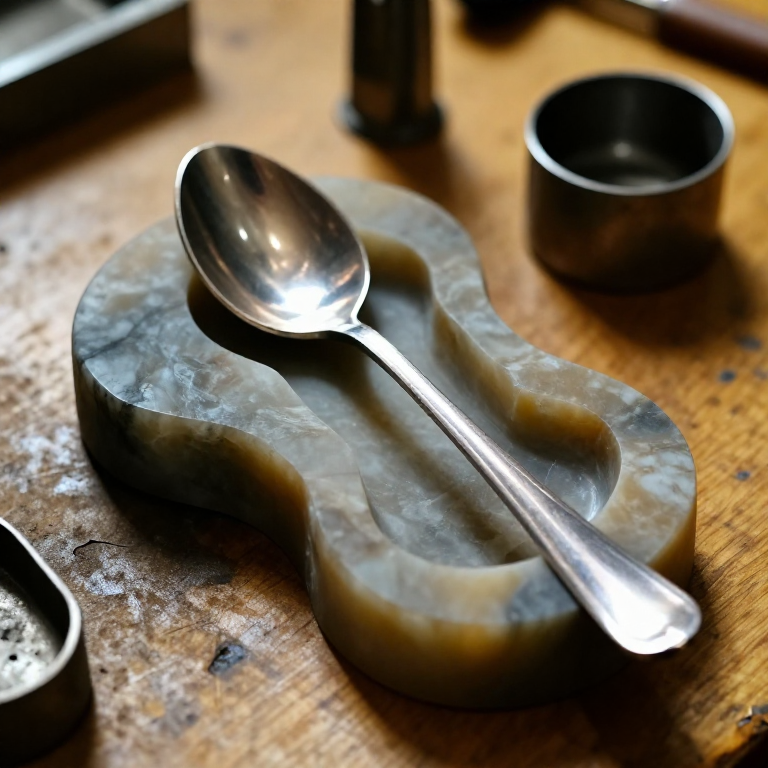


Casting a Pewter Spoon in a Soapstone Mould — Low-Temperature Metal Casting
Pewter — an alloy of roughly 92% tin with small amounts of antimony and copper — melts at just 230°C, making it the most accessible metal for casting. Medieval spoon-makers carved two-part moulds from soapstone, poured molten pewter, and finished the castings with files and burnishing. The result is a bright, food-safe utensil that lasts generations. This blueprint covers carving the soapstone mould, melting the pewter over a simple charcoal fire, casting, and finishing.
คำแนะนำ
Select the soapstone
Select the soapstone
วัสดุสำหรับขั้นตอนนี้:
 ก้อนหินสบู่1 ชิ้น
Flatten the mould faces
Flatten the mould faces
Draw the spoon pattern
Draw the spoon pattern
Carve the bowl cavity
Carve the bowl cavity
เครื่องมือที่ต้องใช้:
 สิ่วเล็บมือ
 มีดสโลยด์
Carve the matching half
Carve the matching half
Carve alignment keys and pour gate
Carve alignment keys and pour gate
Pre-heat the mould
Pre-heat the mould
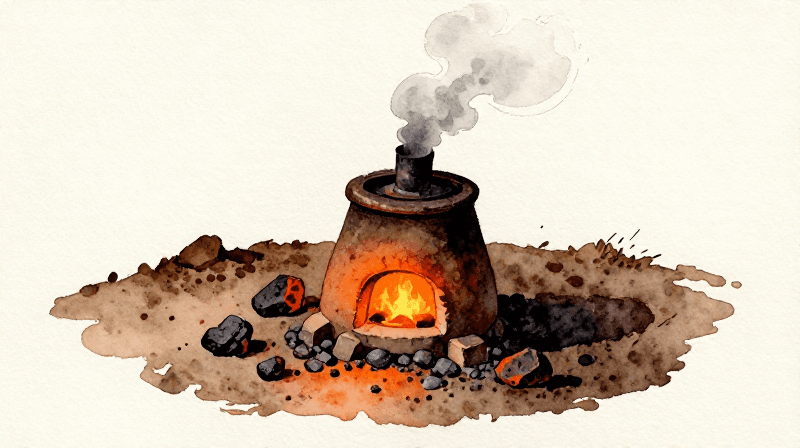
Melt the pewter
Melt the pewter
วัสดุสำหรับขั้นตอนนี้:
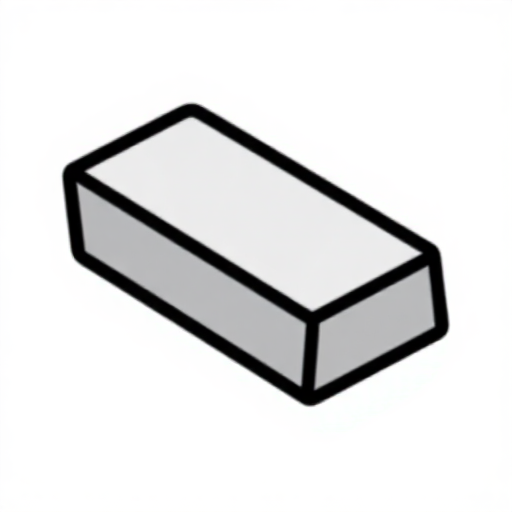 แท่งพิวเตอร์200 ก.
เครื่องมือที่ต้องใช้:
 เบ้าหลอมเหล็ก
 คีมคีบเบ้าหลอม
Pour the casting
Pour the casting
Cool and open the mould
Cool and open the mould
Remove the gate and flash
Remove the gate and flash
เครื่องมือที่ต้องใช้:
 ชุดตะไบเข็ม
Shape and refine the spoon
Shape and refine the spoon
Burnish to a bright finish
Burnish to a bright finish
วัสดุ
2- 1 ชิ้นตัวยึดตำแหน่ง
- 200 ก.ตัวยึดตำแหน่ง
เครื่องมือที่จำเป็น
5- ตัวยึดตำแหน่ง
- ตัวยึดตำแหน่ง
- ตัวยึดตำแหน่ง
- ตัวยึดตำแหน่ง
- ตัวยึดตำแหน่ง
วัสดุจากพิมพ์เขียวที่เชื่อมต่อ

บลูพริ้นท์ที่เกี่ยวข้อง
บลูพริ้นท์เหล่านี้แบ่งปันความรู้ — เทคนิค วัสดุ หรือหลักการ

CC0 สาธารณสมบัติ
พิมพ์เขียวนี้เผยแพร่ภายใต้ CC0 คุณสามารถคัดลอก แก้ไข แจกจ่าย และใช้งานผลงานนี้เพื่อวัตถุประสงค์ใดก็ได้ โดยไม่ต้องขออนุญาต
สนับสนุนเมกเกอร์โดยซื้อสินค้าผ่านพิมพ์เขียวของพวกเขา ซึ่งพวกเขาจะได้รับ ค่าคอมมิชชันเมกเกอร์ ที่ผู้ขายกำหนด หรือสร้างเวอร์ชันใหม่ของพิมพ์เขียวนี้และรวมเป็นการเชื่อมต่อในพิมพ์เขียวของคุณเพื่อแบ่งรายได้