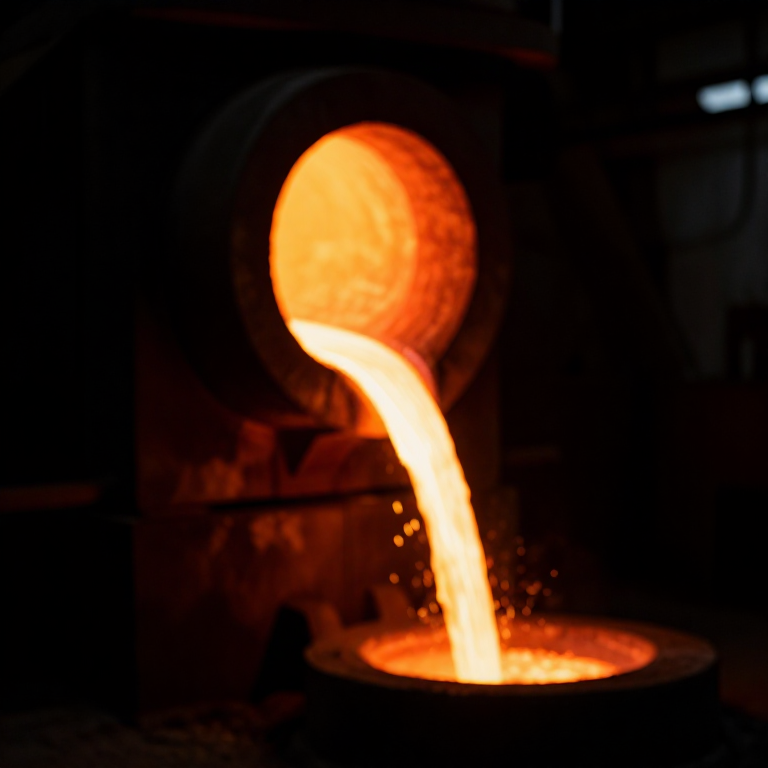


Smelting Pig Iron in a Coke Blast Furnace — Molten Iron at Industrial Scale
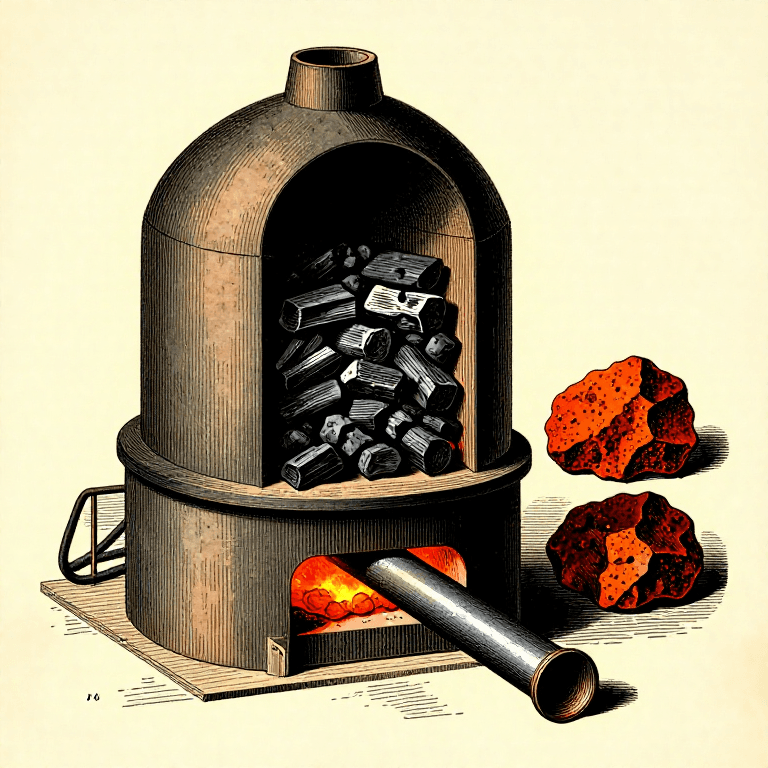
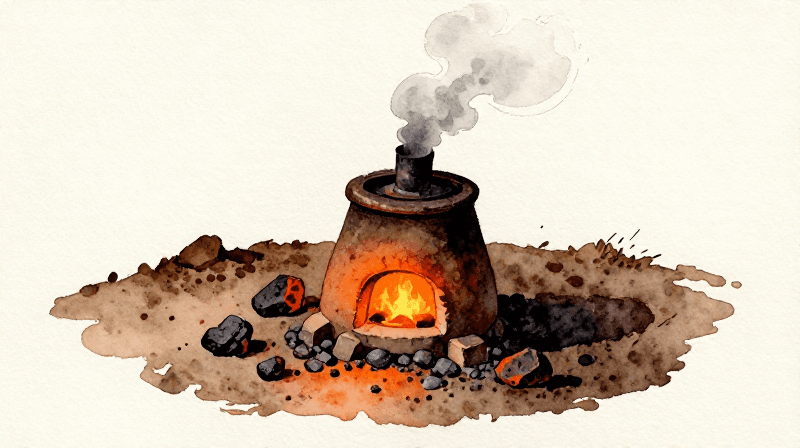
The bloomery gave the ancient world iron, but only in small spongy lumps, one slow batch at a time. The blast furnace changed everything: a tall shaft kept continuously charged and blown produces a steady river of molten iron. Where a bloomery never melts its metal, a blast furnace runs hot enough to liquefy iron entirely, letting it pool at the hearth and be tapped out by the tonne.
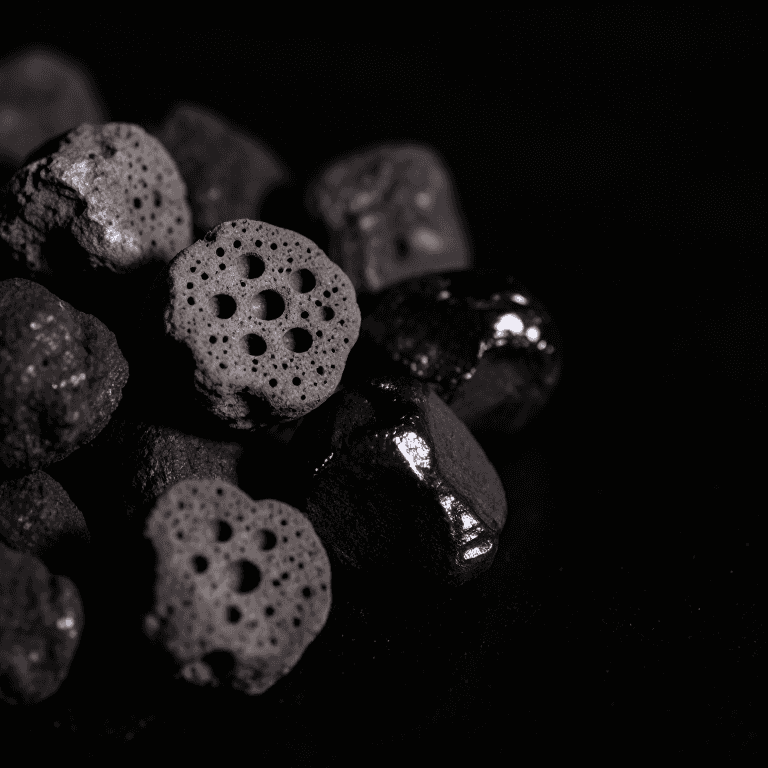
The key is heat and chemistry working together. A powerful air blast burns coke to carbon monoxide, which strips the oxygen from iron ore; meanwhile the descending iron soaks up carbon until it melts. Limestone added as flux carries off the stony impurities as a floating slag. What runs out of the tap hole is pig iron — iron saturated with about four percent carbon: hard, brittle, and perfect for casting or for refining into wrought iron and steel.
When coke replaced charcoal as the blast-furnace fuel in the early 1700s, iron could finally be made in unlimited quantity without consuming whole forests. Cheap pig iron became the raw material of the Industrial Revolution — the metal behind rails, bridges, engines, and machines.
คำแนะนำ
Understand pig iron
Understand pig iron
Build the shaft furnace
Build the shaft furnace
วัสดุสำหรับขั้นตอนนี้:
 อิฐทนไฟ80 ชิ้น
เครื่องมือที่ต้องใช้:
 เสียมมือ
Crush the ore and flux
Crush the ore and flux
วัสดุสำหรับขั้นตอนนี้:
 แร่เหล็กพรุตากแห้ง30 กก.
 แผ่นหินปูน8 กก.
เครื่องมือที่ต้องใช้:
 ค้อน
ค้อนSet up the air blast
Set up the air blast
เครื่องมือที่ต้องใช้:
 สูบลม (เครื่องเป่าลมมือ)
Light the coke bed
Light the coke bed
วัสดุสำหรับขั้นตอนนี้:
 ถ่านโค้กโลหการ40 กก.
Charge in layers
Charge in layers
วัสดุสำหรับขั้นตอนนี้:
ถ่านโค้กโลหการ40 กก.Reduce the ore
Reduce the ore
Melt and carburize
Melt and carburize
Form and tap the slag
Form and tap the slag
เครื่องมือที่ต้องใช้:
 เหล็กแทงเตา
Tap the molten iron
Tap the molten iron
เครื่องมือที่ต้องใช้:
เหล็กแทงเตาCast the pigs
Cast the pigs
วัสดุสำหรับขั้นตอนนี้:
 ทรายหล่อ50 กก.
Cool, break, and identify
Cool, break, and identify
เครื่องมือที่ต้องใช้:
ค้อนวัสดุ
5- 80 ชิ้นตัวยึดตำแหน่ง
- 30 กก.ตัวยึดตำแหน่ง
- 8 กก.ตัวยึดตำแหน่ง
- 40 กก.ตัวยึดตำแหน่ง
- 50 กก.ตัวยึดตำแหน่ง
วัสดุจากพิมพ์เขียวที่เชื่อมต่อ

บลูพริ้นท์ที่เกี่ยวข้อง
บลูพริ้นท์เหล่านี้แบ่งปันความรู้ — เทคนิค วัสดุ หรือหลักการ


CC0 สาธารณสมบัติ
พิมพ์เขียวนี้เผยแพร่ภายใต้ CC0 คุณสามารถคัดลอก แก้ไข แจกจ่าย และใช้งานผลงานนี้เพื่อวัตถุประสงค์ใดก็ได้ โดยไม่ต้องขออนุญาต
สนับสนุนเมกเกอร์โดยซื้อสินค้าผ่านพิมพ์เขียวของพวกเขา ซึ่งพวกเขาจะได้รับ ค่าคอมมิชชันเมกเกอร์ ที่ผู้ขายกำหนด หรือสร้างเวอร์ชันใหม่ของพิมพ์เขียวนี้และรวมเป็นการเชื่อมต่อในพิมพ์เขียวของคุณเพื่อแบ่งรายได้