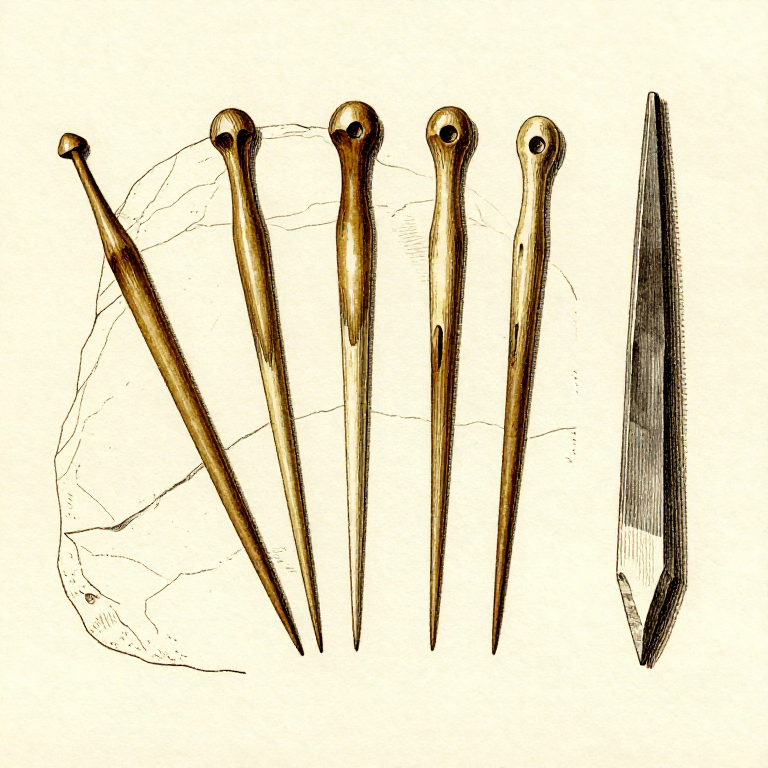


Making a Bone Sewing Needle — Splinter and Polish Technique
คำแนะนำ
Select and Splinter the Bone
Select and Splinter the Bone
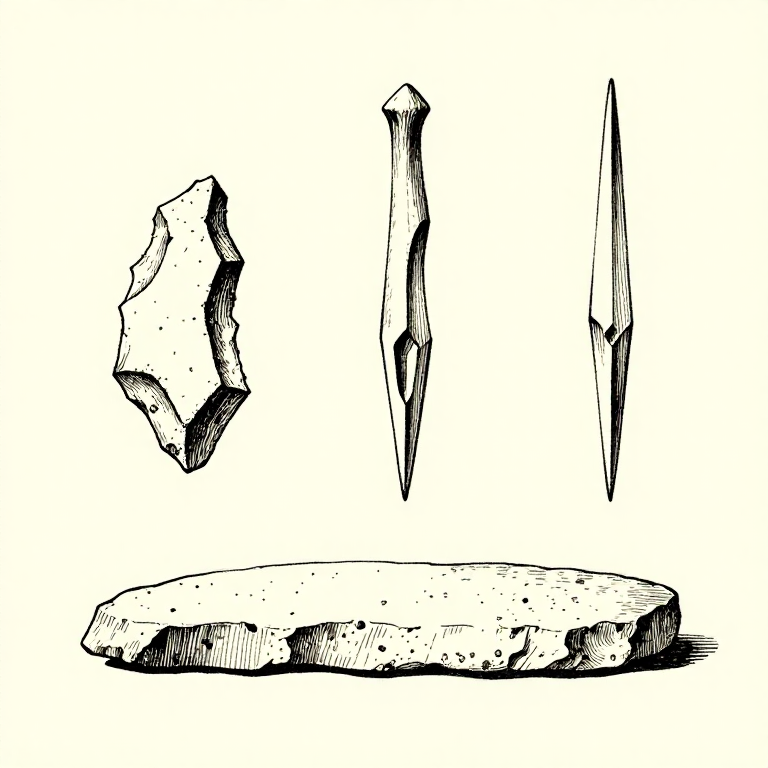
Choose a dense, straight bone — the fibula of a rabbit, the wing bone of a large bird, or a splinter from the long bone of a deer. Rabbit fibulae are ideal because they are naturally narrow and straight, requiring minimal shaping. For larger bones, score two parallel lines 3-5 mm apart along the length using a flint burin, then carefully snap out the splinter between the score lines. Fresh bone is easier to work than dry bone. The splinter should be at least 5-8 cm long and narrow enough to taper into a needle.
วัสดุสำหรับขั้นตอนนี้:
 กระดูกสัตว์ (ทำความสะอาดและไล่มันแล้ว)1 bone section ชิ้น
 แผ่นหินทราย1 flat piece ชิ้น
 น้ำsmall amount ชิ้น
เครื่องมือที่ต้องใช้:
 สิ่วสลักโลหะ
 หินทราย (วัสดุขัด)
 มีดหินเหล็กไฟ
Grind to Shape
Grind to Shape
Grind the bone splinter on a flat sandstone slab using water as a lubricant. Shape the body into a smooth, elongated taper — round or slightly oval in cross-section, about 2-3 mm diameter at the thickest point. The point should taper to a fine, sharp tip. Keep the proximal end (where the eye will be drilled) slightly thicker to prevent it from splitting when the eye is pierced. Grind both sides evenly, rotating the needle frequently to maintain a uniform cross-section. A single needle takes 20-30 minutes of grinding to achieve a smooth, polished surface.
Drill the Eye
Drill the Eye
The eye is the most delicate step — a poorly drilled eye cracks the needle and requires starting over. Use the tip of a flint burin to drill from both sides of the flat end, rotating the burin between your palms like a tiny bow drill. Work slowly, removing only a small amount of bone per rotation. Drilling from both sides ensures the holes meet in the middle without the exit hole blowing out a chip. The eye should be just large enough to pass a thread of sinew or plant fiber through — about 1-2 mm diameter. Smooth any rough edges inside the eye with the tip of the burin to prevent thread abrasion.
Final Polish
Final Polish
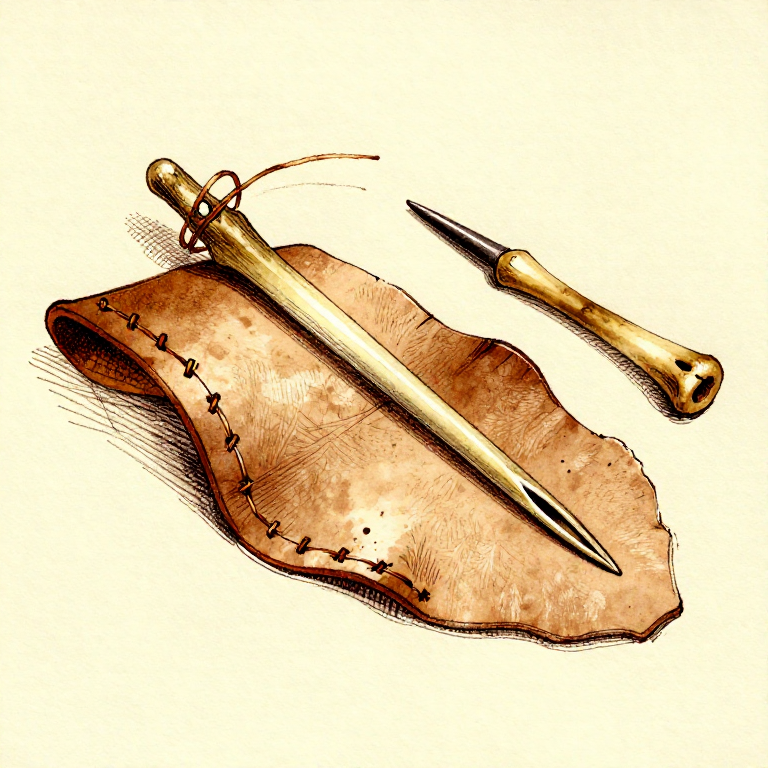
Give the needle a final polish on the finest-grained sandstone available, using water. This removes any remaining scratches or rough spots that could snag on leather or fabric. A highly polished surface dramatically reduces friction when pushing the needle through hide. Some prehistoric needles show a high-gloss polish from extended use — the natural oils in leather and sinew gradually burnish the bone surface. Test the point by pushing it through a piece of leather — it should penetrate with moderate pressure without bending or breaking.
Thread and Use
Thread and Use
Thread the needle with sinew (animal tendon fiber) or fine plant fiber cordage. Sinew is the ideal prehistoric sewing thread because it swells when wet and shrinks when dry, pulling stitches tight. Split a length of dried sinew from a deer leg tendon, moistening the end to stiffen it for threading through the eye. To sew leather, pre-punch holes with a bone awl at regular intervals, then pass the needle through each hole. For thinner materials like gut membrane or plant-fiber cloth, the needle can pierce directly. A well-made bone needle functions as effectively as a modern steel needle for hand sewing and lasts for months of regular use.
วัสดุ
4- 1 bone section ชิ้นตัวยึดตำแหน่ง
- 1 flat piece ชิ้นตัวยึดตำแหน่ง
- small amount ชิ้นตัวยึดตำแหน่ง
- 1 bone section ชิ้นตัวยึดตำแหน่ง
เครื่องมือที่จำเป็น
5- ตัวยึดตำแหน่ง
- ตัวยึดตำแหน่ง
- ตัวยึดตำแหน่ง
- ตัวยึดตำแหน่ง
- ตัวยึดตำแหน่ง
CC0 สาธารณสมบัติ
พิมพ์เขียวนี้เผยแพร่ภายใต้ CC0 คุณสามารถคัดลอก แก้ไข แจกจ่าย และใช้งานผลงานนี้เพื่อวัตถุประสงค์ใดก็ได้ โดยไม่ต้องขออนุญาต
สนับสนุนเมกเกอร์โดยซื้อสินค้าผ่านพิมพ์เขียวของพวกเขา ซึ่งพวกเขาจะได้รับ ค่าคอมมิชชันเมกเกอร์ ที่ผู้ขายกำหนด หรือสร้างเวอร์ชันใหม่ของพิมพ์เขียวนี้และรวมเป็นการเชื่อมต่อในพิมพ์เขียวของคุณเพื่อแบ่งรายได้