ศิลปะ
ความงามและสุขภาพ
งานฝีมือ
วัฒนธรรมและประวัติศาสตร์
ความบันเทิง
สิ่งแวดล้อม
อาหารและเครื่องดื่ม
วิศวกรรมย้อนรอย
วิทยาศาสตร์
กีฬา
เทคโนโลยี
อุปกรณ์สวมใส่
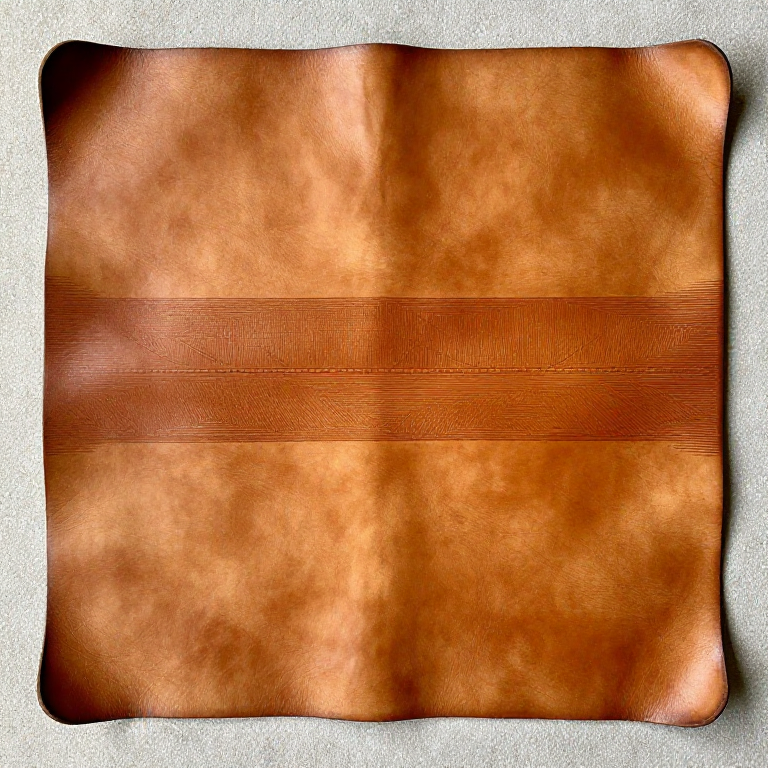


Reading a Hide: The Best Part Is Smaller Than You Think
A hide is not a uniform sheet. It is an animal, and it has a firm dense back, a loose stretchy belly, wrinkled shoulders and thin legs — and a strap cut from the wrong place will stretch out of shape within a month.
It also has two faces that behave completely differently, a thickness quoted in ounces that are not a weight, and a temper that decides whether it will mould, carve, drape or do none of those.
Choosing wrongly here cannot be corrected by any amount of skill afterwards. This rung is how to read what is in front of you before cutting into it.
เริ่มต้น
2 hours
คำแนะนำ
1
1
Tannage: what the hide was turned into
Tannage: what the hide was turned into
**Vegetable tanned.** Tanned with tannins from bark, as in the oak bark and bark tanning blueprints. Firm, dense, pale tan when new, darkens with use and light. It is the only leather that **wet forms, tools and burnishes**, and the only one worth using for a belt, a holster, a sheath or a moulded piece. It absorbs water, so it stains and it can be shaped.
**Chrome tanned.** Tanned with chromium salts, a nineteenth-century invention. Soft, supple, stable, water resistant, usually dyed through and often finished with a coating. Most shoe uppers, garment leather and upholstery. It will not tool, will not burnish and will not hold a moulded shape.
**Brain tanned and buckskin.** Soft, stretchy, suede-like on both faces, smoke-cured to stay soft after wetting. Superb for clothing and bags, useless for anything that must hold a shape.
**Rawhide.** Not tanned at all — dehaired and dried. Hard, translucent, and it shrinks hard as it dries, which is the whole point for drum heads, lacing and a parfleche.
Telling them apart: a drop of water beads and sits on chrome tan and soaks straight into vegetable tan, darkening it. That test takes five seconds and is the one that matters most.
วัสดุสำหรับขั้นตอนนี้:
 หนังฟอกฝาด1 ชิ้น
 หนังฟอกโครม1 ชิ้น
 หนังแพะ1 ชิ้น
2
2
Ounces, parts and yield
Ounces, parts and yield
กำลังโหลดสมุด Jupyter…
เครื่องมือที่ต้องใช้:
 คอมพิวเตอร์ตั้งโต๊ะ
 เวอร์เนียร์ดิจิทัล 6 นิ้ว
3
3
Grain and flesh: two faces, two jobs
Grain and flesh: two faces, two jobs
**The grain side** is the outside of the animal, where the hair was. It is smooth, dense, and the strongest part of the leather — the fibres are tightest just under the surface. It takes dye evenly, burnishes, and shows every scratch.
**The flesh side** is the inside. Fibrous, fuzzy, and much weaker on its own. It takes dye unevenly and drinks far more of it.
Three consequences for the maker:
**Never split away the grain if strength matters.** A piece sanded or split down from the grain side loses most of its strength for a small saving in thickness. "Genuine leather" and "bonded leather" are the flesh layers left over from exactly that operation.
**Glue to the flesh side.** Adhesive grips the fibrous side and slides off the grain. If two grain surfaces must be joined, roughen one first.
**Fold with the grain outside.** Leather bent grain-out is in tension on its strongest face. Bent the other way, the grain is in compression and wrinkles.
**Scars, brands and insect marks** are on the grain side and cannot be removed. Plan around them: a mark that would ruin a wallet front is invisible on a lining, and the hide's price already reflects them.
วัสดุสำหรับขั้นตอนนี้:
หนังฟอกฝาด1 ชิ้น หนังฟอก1 ชิ้น
เครื่องมือที่ต้องใช้:
เวอร์เนียร์ดิจิทัล 6 นิ้ว4
4
Temper, and testing a piece before committing to it
Temper, and testing a piece before committing to it
**Temper** is how firm or soft a leather is, independent of its thickness. The same 6 oz vegetable tan can be hard as board or as floppy as cloth, depending on how it was dried, rolled and stuffed with fat.
The shop names, from hardest: **firm** or **tooling** temper, **regular**, **soft**, **drummy**. A holster wants firm; a bag body wants regular; a garment wants soft.
Four tests, none of which cost anything:
**The drape test.** Hold a piece by one edge and see how far it falls. A firm temper stands out almost straight; a soft one hangs.
**The fold test.** Fold a scrap grain-out. Fine even wrinkles mean good tight grain; coarse deep creases mean loose, stretchy leather.
**The stretch test.** Pull a strip along its length and across it. Leather stretches far more ACROSS the backbone than along it, which is the other reason straps run along the spine.
**The water drop.** As above: soaks in and darkens on vegetable tan, beads on chrome tan or a finished surface.
Do all four on a scrap from the same hide before cutting the real piece. Every one of them tells you something no supplier's description will.
วัสดุสำหรับขั้นตอนนี้:
หนังฟอกฝาด1 ชิ้นหนังฟอกโครม1 ชิ้นเครื่องมือที่ต้องใช้:
 ไม้บรรทัดเวอร์เนียร์ดิจิทัล 6 นิ้ว
วัสดุ
4- 1 ชิ้นตัวยึดตำแหน่ง
- 2 ชิ้นตัวยึดตำแหน่ง
- 1 ชิ้นตัวยึดตำแหน่ง
- 1 ชิ้นตัวยึดตำแหน่ง
บลูพริ้นท์ที่เกี่ยวข้อง
บลูพริ้นท์เหล่านี้แบ่งปันความรู้ — เทคนิค วัสดุ หรือหลักการ

CC0 สาธารณสมบัติ
พิมพ์เขียวนี้เผยแพร่ภายใต้ CC0 คุณสามารถคัดลอก แก้ไข แจกจ่าย และใช้งานผลงานนี้เพื่อวัตถุประสงค์ใดก็ได้ โดยไม่ต้องขออนุญาต
สนับสนุนเมกเกอร์โดยซื้อสินค้าผ่านพิมพ์เขียวของพวกเขา ซึ่งพวกเขาจะได้รับ ค่าคอมมิชชันเมกเกอร์ ที่ผู้ขายกำหนด หรือสร้างเวอร์ชันใหม่ของพิมพ์เขียวนี้และรวมเป็นการเชื่อมต่อในพิมพ์เขียวของคุณเพื่อแบ่งรายได้