การทำงานร่วมกัน
ศิลปะ
ความงามและสุขภาพ
งานฝีมือ
วัฒนธรรมและประวัติศาสตร์
ความบันเทิง
สิ่งแวดล้อม
อาหารและเครื่องดื่ม
วิศวกรรมย้อนรอย
วิทยาศาสตร์
กีฬา
เทคโนโลยี
อุปกรณ์สวมใส่
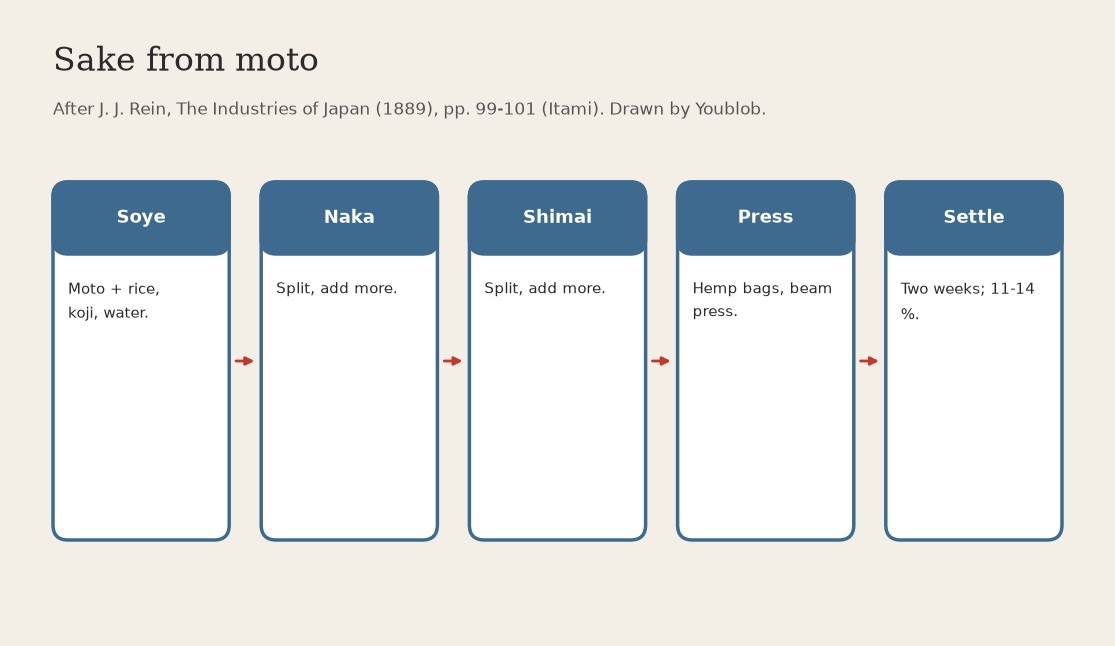


Sake from Moto: the Mash Built Up in Three Additions, Soye, Naka and Shimai, Pressed and Settled (Itami, after Rein 1889)
The brewers of Itami never put all the rice in at once. They fed the moto in three steps, roughly doubling the mash each time, so the yeast always stayed ahead of the sugar the koji made. Then they pressed the mash in a beam press and let the sake settle clear.
Result: sake of 11 to 14 % alcohol.
Source: J. J. Rein, The Industries of Japan (1889), pp. 99-101. The beam press is replaced by any press. Picture drawn by Youblob.
ขั้นสูง
4 weeks
คำแนะนำ
1
1
Soye: first addition
Soye: first addition
In a three-foot tub mix 1.30 koku steamed rice, 1.30 koku moto, 0.35 koku koji and 1.30 koku water (4.25 koku). Stir thoroughly every two hours for two or three days; it warms to about 20 C and smells pleasant and pungent. Ours: steam the rice over a pot.
วัสดุสำหรับขั้นตอนนี้:
 ข้าวญี่ปุ่นเมล็ดสั้น1.3 koku
 โมโตะ (หัวเชื้อสาเก)1.3 koku
 ข้าวโคจิ (Aspergillus oryzae)0.35 koku
 น้ำ1.3 koku
เครื่องมือที่ต้องใช้:
 อ่างไม้
 ไม้พายกวนด้ามยาว
 หม้อใบใหญ่
 เทอร์โมมิเตอร์
2
2
Naka: second addition
Naka: second addition
Split the soye between two tubs and add 2.00 koku steamed rice, 0.65 koku koji and 2.90 koku water (9.80 koku, 4.90 per tub). Stir vigorously every other hour for one day.
วัสดุสำหรับขั้นตอนนี้:
ข้าวญี่ปุ่นเมล็ดสั้น2 kokuข้าวโคจิ (Aspergillus oryzae)0.65 kokuน้ำ2.9 kokuเครื่องมือที่ต้องใช้:
อ่างไม้ไม้พายกวนด้ามยาวหม้อใบใหญ่3
3
Shimai: last addition
Shimai: last addition
Split again into four tubs and add 3.30 koku steamed rice, 1.00 koku koji and 4.20 koku water (Rein prints the naka here as 9.90; total 18.40 koku). Treat as before; keep tubs no more than half full.
วัสดุสำหรับขั้นตอนนี้:
ข้าวญี่ปุ่นเมล็ดสั้น3.3 kokuข้าวโคจิ (Aspergillus oryzae)1 kokuน้ำ4.2 kokuเครื่องมือที่ต้องใช้:
อ่างไม้ไม้พายกวนด้ามยาวหม้อใบใหญ่4
4
Main fermentation
Main fermentation
After three days pour all four tubs into one big six-foot tub. A brisk fermentation follows and eases in two or three days; the scum settles and the liquor is strongly alcoholic.
เครื่องมือที่ต้องใช้:
อ่างไม้5
5
Press
Press
Fill close-woven hemp bags with the mash, lay them crosswise in a strong box and press. Rein's press is a beam lever weighted with 600-900 kg; ours: any wine press. Collect the turbid sake.
เครื่องมือที่ต้องใช้:
 ถุงผ้าลินิน
 เครื่องบีบองุ่น
6
6
Settle and draw off
Settle and draw off
Let the sake stand quiet two weeks in a standing cask with two taps near the bottom, then draw it off clear by the upper tap. Store in barrels or closed tubs; heat it when warm weather comes to keep it.
เครื่องมือที่ต้องใช้:
 ถังไม้
วัสดุ
4- 3.3 kokuตัวยึดตำแหน่ง
- 1.3 kokuตัวยึดตำแหน่ง
- ตัวยึดตำแหน่ง
- 8.4 kokuตัวยึดตำแหน่ง
พิมพ์เขียวนี้สร้าง

บลูพริ้นท์ที่เกี่ยวข้อง
บลูพริ้นท์เหล่านี้แบ่งปันความรู้ — เทคนิค วัสดุ หรือหลักการ

CC0 สาธารณสมบัติ
พิมพ์เขียวนี้เผยแพร่ภายใต้ CC0 คุณสามารถคัดลอก แก้ไข แจกจ่าย และใช้งานผลงานนี้เพื่อวัตถุประสงค์ใดก็ได้ โดยไม่ต้องขออนุญาต
สนับสนุนเมกเกอร์โดยซื้อสินค้าผ่านพิมพ์เขียวของพวกเขา ซึ่งพวกเขาจะได้รับ ค่าคอมมิชชันเมกเกอร์ ที่ผู้ขายกำหนด หรือสร้างเวอร์ชันใหม่ของพิมพ์เขียวนี้และรวมเป็นการเชื่อมต่อในพิมพ์เขียวของคุณเพื่อแบ่งรายได้