ศิลปะ
ความงามและสุขภาพ
งานฝีมือ
วัฒนธรรมและประวัติศาสตร์
ความบันเทิง
สิ่งแวดล้อม
อาหารและเครื่องดื่ม
วิศวกรรมย้อนรอย
วิทยาศาสตร์
กีฬา
เทคโนโลยี
อุปกรณ์สวมใส่
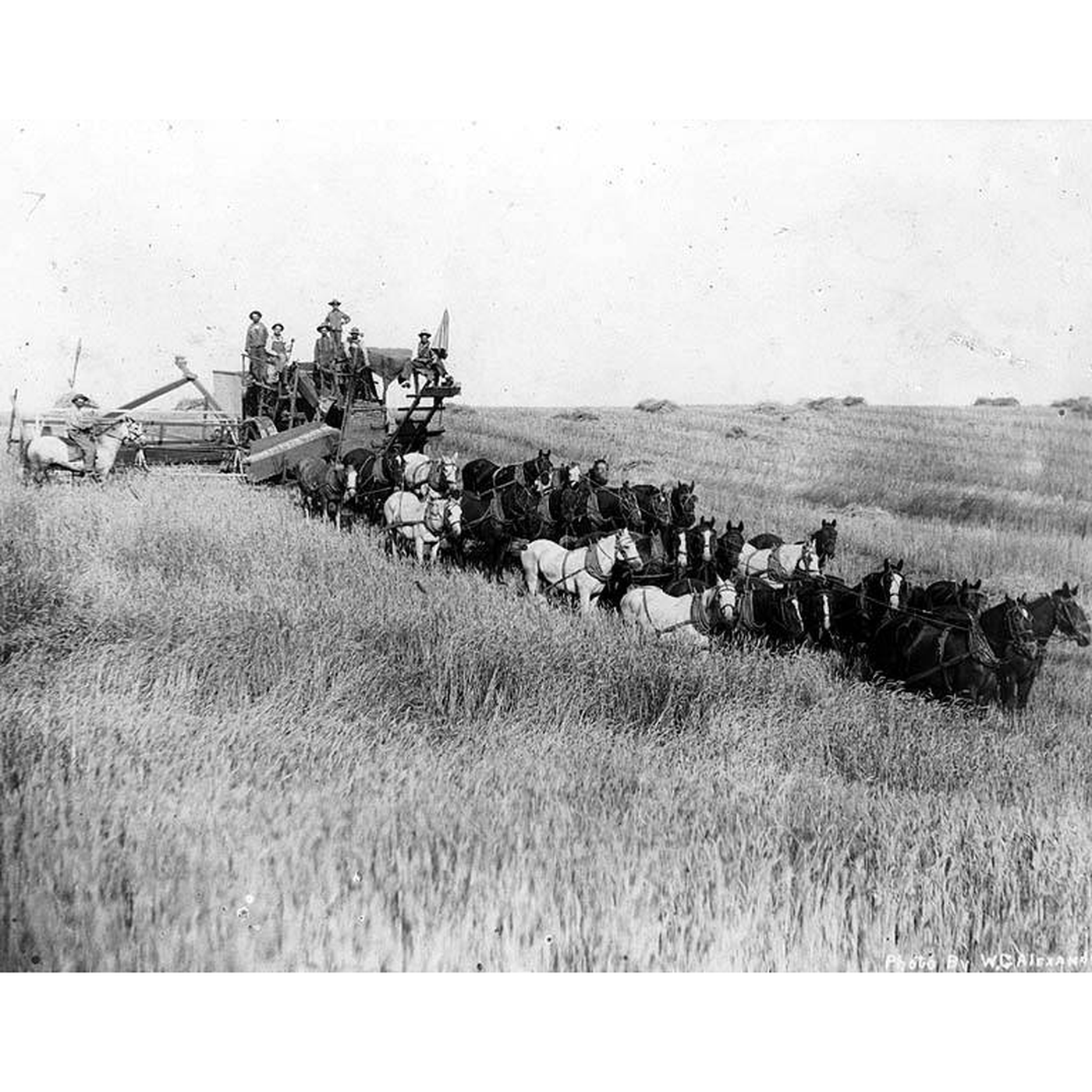

The Combine Harvester: Cut, Thresh, Separate and Clean in One Pass
Grain harvest was once a chain of separate jobs: cut with the reaper, bind and stook the sheaves, carry them to the threshing machine, winnow what it gave. The combine joins them: it cuts the standing crop, threshes the grain out, separates it from the straw, cleans off the chaff and carries the grain to a tank, while the straw goes out of the back.
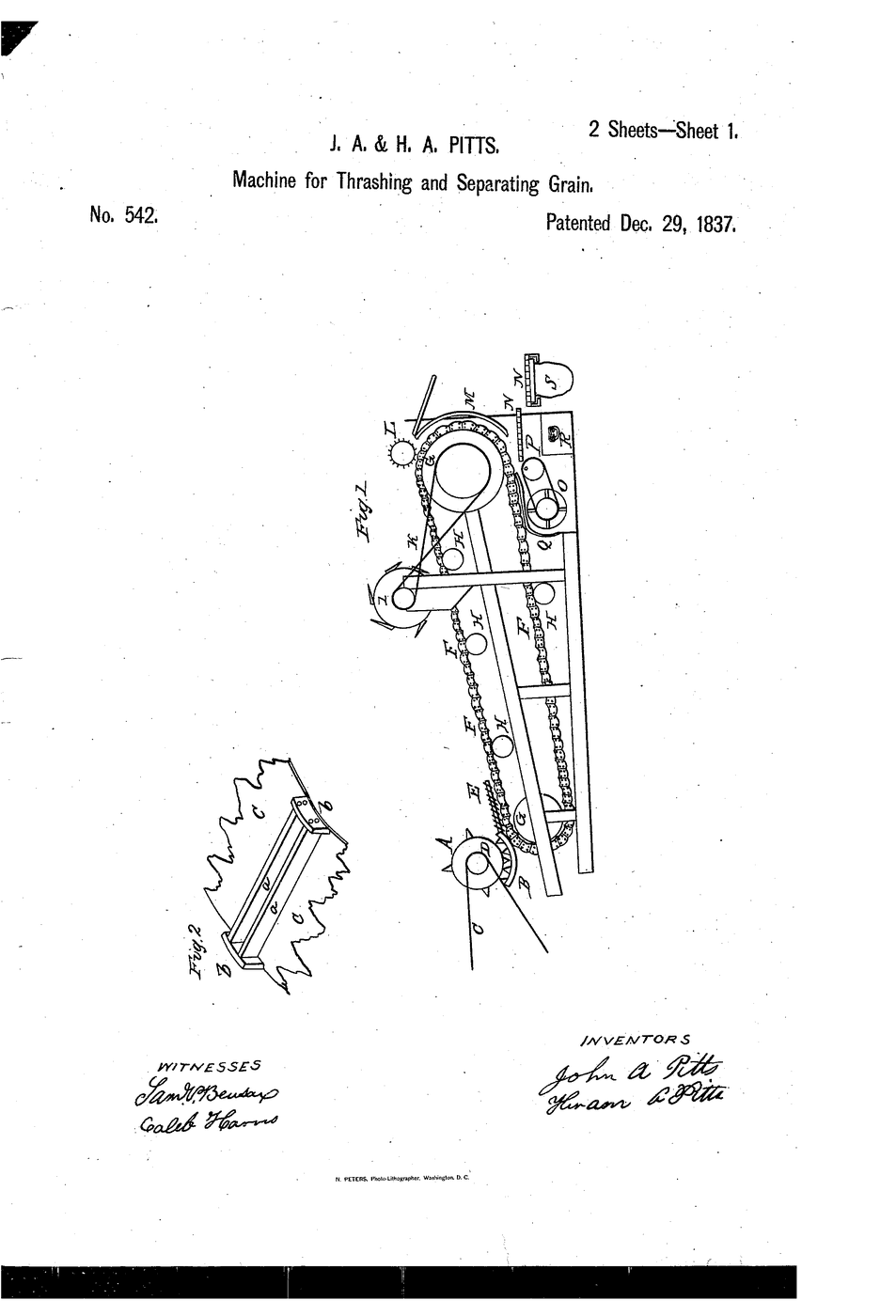
Hiram Moore of Kalamazoo County, Michigan, backed by his neighbour John Hascall, built a working combined harvester in the mid-1830s and patented it in 1836. In California, Benjamin Holt's combines of 1886 drove their mechanisms by link belts rather than gears, so a jolt broke a belt instead of stripping a gear; the machine cut, threshed, cleaned and bagged the grain.
This rung works out the threshing impact and the air speed that cleans, and separates grain from straw and chaff with a fan on the bench.
ระดับกลาง
About 4 hours
คำแนะนำ
1
1
Threshing speed and cleaning air
Threshing speed and cleaning air
กำลังโหลดสมุด Jupyter…
2
2
What happens to one handful of crop
What happens to one handful of crop
พื้นที่ทำงาน Blockly
Loading Blockly workspace...
3
3
Cleaning by air, before the combine
Cleaning by air, before the combine
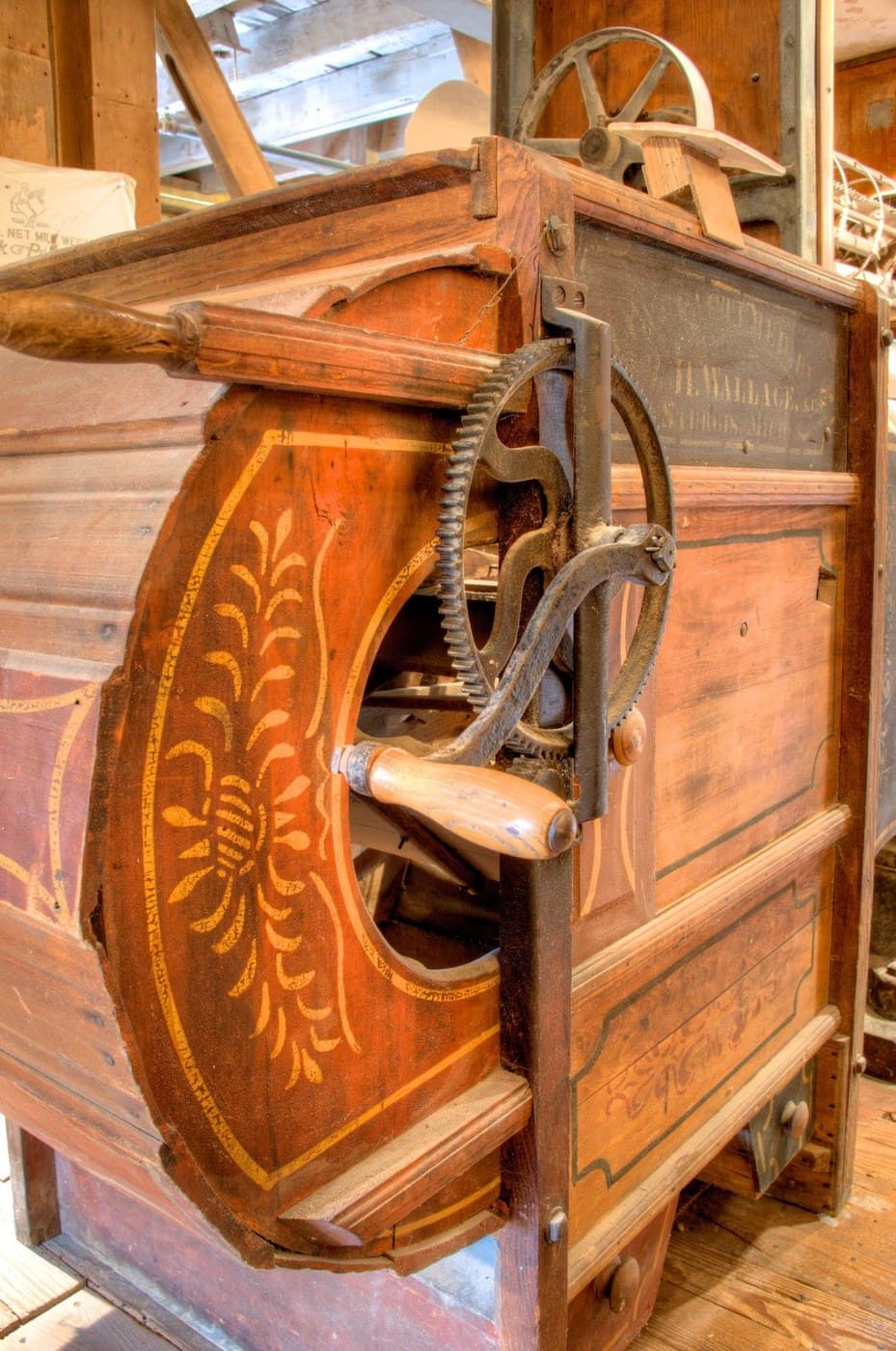
The combine's cleaning shoe is a winnowing machine built in. The embedded blueprint shows the fan-and-riddle cleaner it descends from.
4
4
Separate grain from straw and chaff by air
Separate grain from straw and chaff by air
Mix 200 g of wheat berries with 20 g of chopped straw and 10 g of wheat bran, which stands in here for chaff (both are light, flat husk). Stand a variable-speed box fan on its back so it blows straight up, and fit a 300 mm cardboard chimney on top so the air rises evenly. Measure the air speed at the top of the chimney with the anemometer at each fan setting.
Hold a sieve over the chimney and trickle the mix slowly into the rising air from 200 mm above it. Catch what falls onto the sieve and what blows away on a sheet of paper downwind. Weigh each fraction at each fan speed.
Plot the percentage of grain lost and of chaff left against air speed. Find the band where the chaff goes and the grain stays, and compare it with the notebook's terminal velocities.
วัสดุสำหรับขั้นตอนนี้:
 เมล็ดข้าวสาลีเต็มเมล็ด1 kilogram
 ฟางสับ1 ชิ้น
 รำข้าวสาลี1 ชิ้น
 แผ่นกระดาษลูกฟูก1 ชิ้น
เครื่องมือที่ต้องใช้:
 พัดลมกล่อง (ปรับความเร็วได้)
 เครื่องวัดลมแบบมือถือ
 เครื่องชั่งดิจิทัลสำหรับครัว
 ตะแกรงร่อน 60 เมช
 ไม้บรรทัด
5
5
A combine losing grain
A combine losing grain
Where the grain goes when it is not in the tank.
Flow
Loading...
6
6
History and honest limits
History and honest limits
**Hiram Moore** and **John Hascall** of Michigan built a combined harvester in the mid-1830s, patented in 1836; the Smithsonian holds Moore's papers. **Benjamin Holt**'s combine of 1886 used link belts instead of gears; Holt went on to build the crawler tractor. Horse-drawn combines needed large teams; tractor-drawn and then self-propelled combines made them a machine for every grain farm.
**Honest limits.** The notebook's particle masses and shapes are illustrative — real chaff, straw and grain vary widely, and the fan is set by watching losses, not by calculation. A combine is the most dangerous machine on many farms: never clear a blockage with the machine running.
วัสดุ
4- 1 kilogramตัวยึดตำแหน่ง
- 1 ชิ้นตัวยึดตำแหน่ง
- 1 ชิ้นตัวยึดตำแหน่ง
- 1 ชิ้นตัวยึดตำแหน่ง
เครื่องมือที่จำเป็น
5- ตัวยึดตำแหน่ง
- ตัวยึดตำแหน่ง
- ตัวยึดตำแหน่ง
- ตัวยึดตำแหน่ง
- ตัวยึดตำแหน่ง
บลูพริ้นท์ที่เกี่ยวข้อง
บลูพริ้นท์เหล่านี้แบ่งปันความรู้ — เทคนิค วัสดุ หรือหลักการ
McCormick Reaper
โดย Martin
สิ่งแวดล้อม
42
0
0
0
0
0
Threshing Machine
โดย Martin
กลศาสตร์
29
0
0
0
0
0
Winnowing Machine
โดย Karen
สิ่งแวดล้อม
46
0
0
0
0
0
Building a Viking Threshing Flail — Separating Grain from Husk
โดย Woody
งานไม้
72
0
0
0
0
0

The Sirocco Fan: Many Shallow Forward-Curved Blades
โดย Emma
กลศาสตร์
12
0
0
0
0
0
The Bucket Elevator: Lifting Grain by the Bucketful, and Where It Lands
โดย Martin
กลศาสตร์
18
0
0
0
0
0
CC0 สาธารณสมบัติ
พิมพ์เขียวนี้เผยแพร่ภายใต้ CC0 คุณสามารถคัดลอก แก้ไข แจกจ่าย และใช้งานผลงานนี้เพื่อวัตถุประสงค์ใดก็ได้ โดยไม่ต้องขออนุญาต
สนับสนุนเมกเกอร์โดยซื้อสินค้าผ่านพิมพ์เขียวของพวกเขา ซึ่งพวกเขาจะได้รับ ค่าคอมมิชชันเมกเกอร์ ที่ผู้ขายกำหนด หรือสร้างเวอร์ชันใหม่ของพิมพ์เขียวนี้และรวมเป็นการเชื่อมต่อในพิมพ์เขียวของคุณเพื่อแบ่งรายได้