ศิลปะ
ความงามและสุขภาพ
งานฝีมือ
วัฒนธรรมและประวัติศาสตร์
ความบันเทิง
สิ่งแวดล้อม
อาหารและเครื่องดื่ม
วิศวกรรมย้อนรอย
วิทยาศาสตร์
กีฬา
เทคโนโลยี
อุปกรณ์สวมใส่
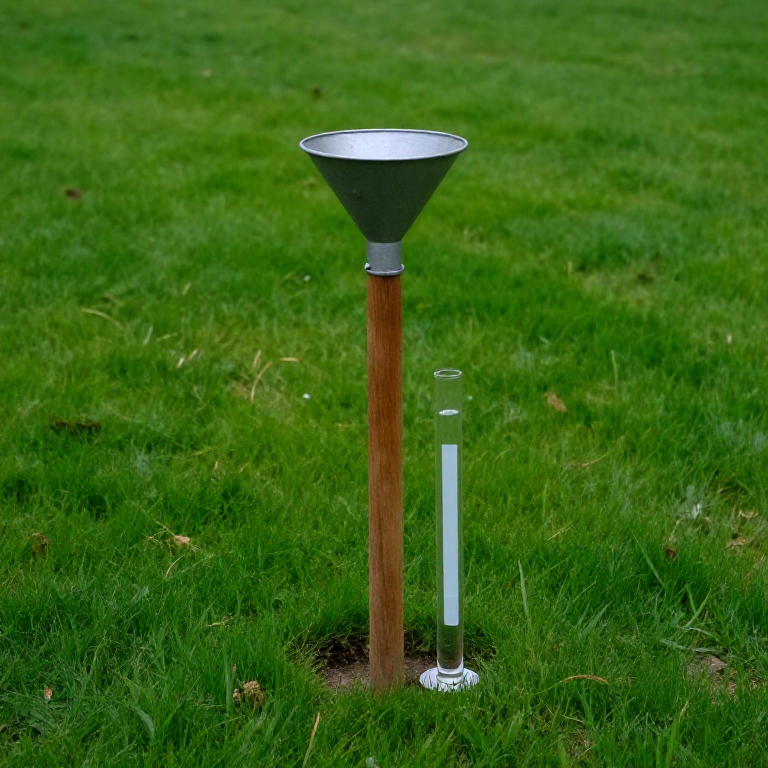


The Rain Gauge
In 1441 the Korean court under King Sejong issued a standard bronze rain gauge, the cheugugi, to every province, with a fixed diameter and a fixed height, and required officials to report the depth after every storm. It is the oldest standardised weather instrument in the world and the records it produced still run in an unbroken series.
What made it work was not the bronze. It was the standardisation: every gauge the same size, mounted the same way, read the same way, so numbers from two hundred miles apart meant the same thing. That is the whole idea of a measuring network, four centuries before anyone else built one.
A rain gauge is the easiest instrument in this batch to build and the easiest to site badly. Most of this blueprint is about the siting, because a gauge under a tree is not a less accurate gauge — it is an instrument measuring something else.
เริ่มต้น
3 hours
คำแนะนำ
1
1
Make the collector: a sharp rim and a steep funnel
Make the collector: a sharp rim and a steep funnel
Fit a funnel into the mouth of a straight-sided cylinder. The rim must be a clean, level circle with a sharp edge, and the funnel's sides must be steep — at least 45 degrees.
A thick or rounded rim catches an unpredictable extra sliver of rain and splashes drops both in and out. A shallow funnel lets raindrops bounce back out, and in heavy rain that loss is easily a tenth of the total. Measure the rim's internal diameter and write it down; every reading you take depends on it.
วัสดุสำหรับขั้นตอนนี้:
 กรวย (ห้องปฏิบัติการ)1 ชิ้น
 กระบอกตวง1 ชิ้น
เครื่องมือที่ต้องใช้:
 ไม้บรรทัด
 ซิลิโคนยาแนว
2
2
Read depth, not volume
Read depth, not volume
Rainfall is quoted as a DEPTH in millimetres — the depth the water would stand if none ran away — not as a volume. So either your measuring cylinder must be calibrated for your funnel's area, or you convert.
The advantage of depth is that it is independent of the gauge: 12 mm means the same thing whatever size your collector is, which is exactly why the cheugugi standard worked. A narrow measuring tube under a wide funnel multiplies the depth you can read, which is how a gauge resolves 0.2 mm without a microscope.
เครื่องมือที่ต้องใช้:
กระบอกตวง3
3
Site it in the open, at a standard height
Site it in the open, at a standard height
Set the rim level, 300 mm above the ground, and no closer to any obstacle than TWICE that obstacle's height — four times is better.
Too low and splash from the ground adds rain that never fell into it. Too high and the wind blowing over the rim carries drops past it. An obstacle upwind shelters the gauge and one downwind creates eddies that do the same; a gauge against a house wall can read half of true. This single rule matters more than every other decision in the build.
วัสดุสำหรับขั้นตอนนี้:
 เดือยไม้2 ชิ้น
 ตะปูชุบสังกะสี20 ชิ้น
เครื่องมือที่ต้องใช้:
 ตลับเมตร
 ค้อนหงอน
4
4
Read at a fixed time, every day
Read at a fixed time, every day
Read and empty it at the same time each day — 09:00 is the meteorological convention — and record the reading against the day it ENDED, noting your convention in the front of the book.
Rainfall is meaningless without a period attached, and 'yesterday' is ambiguous once you read at nine in the morning. Record zero as an explicit 0.0, never as a blank: a blank means you did not read it, and a series that cannot distinguish 'no rain' from 'no observer' cannot be totalled.
5
5
Stop evaporation stealing your small readings
Stop evaporation stealing your small readings
Keep the collecting vessel narrow-necked and shaded inside the outer cylinder, and in hot weather float a little oil on the water or read more often.
A 1 mm shower in an open jar on a summer day can be gone before evening, and the record then says it did not rain. This is the error that quietly destroys long-run totals, because it only removes SMALL readings — so the record ends up biased toward heavy rain, which is exactly the wrong way round for anyone planning irrigation.
วัสดุสำหรับขั้นตอนนี้:
 แผ่นฟอยล์อะลูมิเนียม1 ม้วน
6
6
From depth to what it means
From depth to what it means
กำลังโหลดสมุด Jupyter…
เครื่องมือที่ต้องใช้:
ไม้บรรทัด7
7
Keep the record where it can be used
Keep the record where it can be used
Rule a page per month: day, reading, and a column for notes such as snow, hail or a missed observation. Total each month and carry a running annual figure.
A rainfall record earns its value from LENGTH — one year tells you almost nothing, five years tells you what is normal, and only then can you say a season was dry. Note missed days explicitly rather than leaving gaps, because a month with three unrecorded days has an unknown total, not a low one.
วัสดุสำหรับขั้นตอนนี้:
 กระดาษกราฟ10 ชิ้น
วัสดุ
6- 1 ชิ้นตัวยึดตำแหน่ง
- 1 ชิ้นตัวยึดตำแหน่ง
- 2 ชิ้นตัวยึดตำแหน่ง
- 20 ชิ้นตัวยึดตำแหน่ง
- 1 ม้วนตัวยึดตำแหน่ง
- 10 ชิ้นตัวยึดตำแหน่ง
บลูพริ้นท์ที่เกี่ยวข้อง
บลูพริ้นท์เหล่านี้แบ่งปันความรู้ — เทคนิค วัสดุ หรือหลักการ
CC0 สาธารณสมบัติ
พิมพ์เขียวนี้เผยแพร่ภายใต้ CC0 คุณสามารถคัดลอก แก้ไข แจกจ่าย และใช้งานผลงานนี้เพื่อวัตถุประสงค์ใดก็ได้ โดยไม่ต้องขออนุญาต
สนับสนุนเมกเกอร์โดยซื้อสินค้าผ่านพิมพ์เขียวของพวกเขา ซึ่งพวกเขาจะได้รับ ค่าคอมมิชชันเมกเกอร์ ที่ผู้ขายกำหนด หรือสร้างเวอร์ชันใหม่ของพิมพ์เขียวนี้และรวมเป็นการเชื่อมต่อในพิมพ์เขียวของคุณเพื่อแบ่งรายได้