การทำงานร่วมกัน
ศิลปะ
ความงามและสุขภาพ
งานฝีมือ
วัฒนธรรมและประวัติศาสตร์
ความบันเทิง
สิ่งแวดล้อม
อาหารและเครื่องดื่ม
วิศวกรรมย้อนรอย
วิทยาศาสตร์
กีฬา
เทคโนโลยี
อุปกรณ์สวมใส่
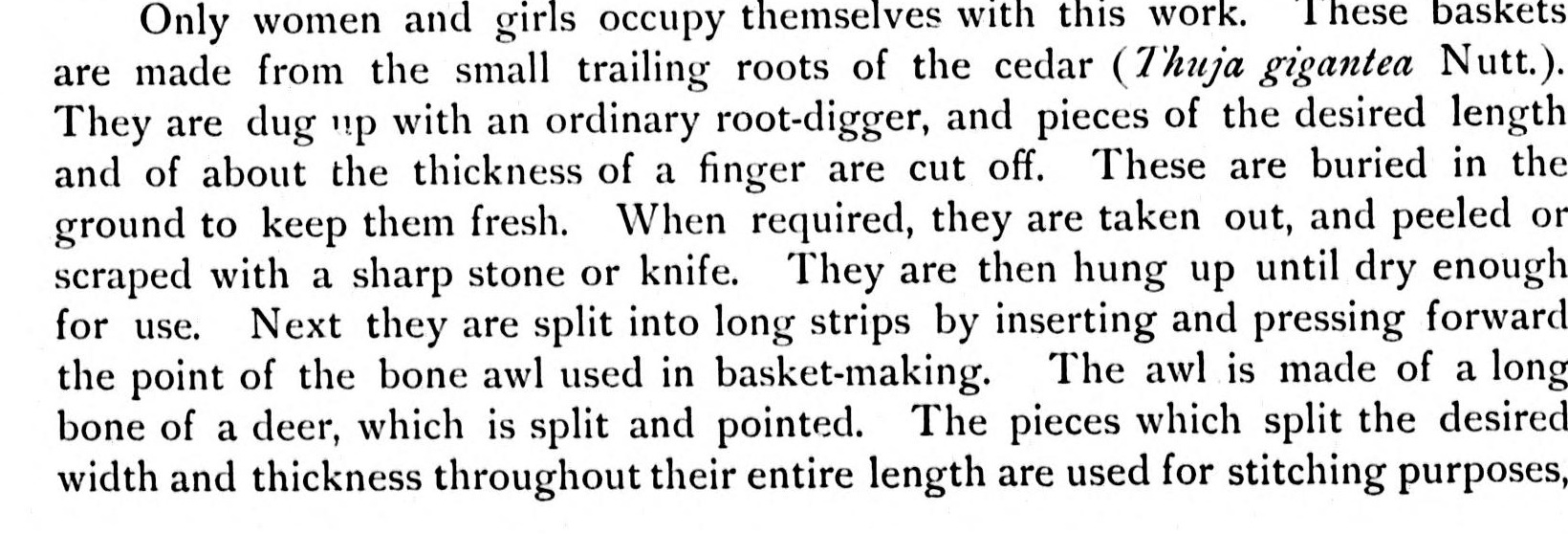


Thompson (Nlaka'pamux) Split Cedar Roots: Finger-Thick Roots Dug, Buried Fresh, Peeled, Dried and Split with a Bone Awl (Teit, 1900)
How Thompson (Nlaka'pamux) women got their cedar-root sewing splints, as James Teit recorded them: the small trailing roots of the red cedar dug with a root-digger, cut in finger-thick lengths, buried to keep fresh, peeled with a sharp stone or knife, dried, and split into long strips by pushing a deer-bone awl along them; even splints sew, the rest become coil.
เริ่มต้น
A day, plus drying
คำแนะนำ
1
1
Read Teit
Read Teit
"Next they are split into long strips by inserting and pressing forward the point of the bone awl used in basket-making."
2
2
Dig the roots
Dig the roots
Dig the small trailing roots of a red cedar with a root-digger and cut pieces of the length you need, about as thick as a finger. Take only a few roots from each tree (ours).
วัสดุสำหรับขั้นตอนนี้:
 ซุงซีดาร์แดง1 ชิ้น
เครื่องมือที่ต้องใช้:
 ไม้ขุด
 มีด
3
3
Keep them fresh
Keep them fresh
Bury the pieces in the ground to keep them fresh until you need them.
เครื่องมือที่ต้องใช้:
 พลั่ว
4
4
Peel and dry
Peel and dry
Take them out, peel or scrape them with a sharp stone or knife, and hang them up until dry enough to work.
วัสดุสำหรับขั้นตอนนี้:
 เชือก1 ชิ้น
เครื่องมือที่ต้องใช้:
มีด5
5
Split
Split
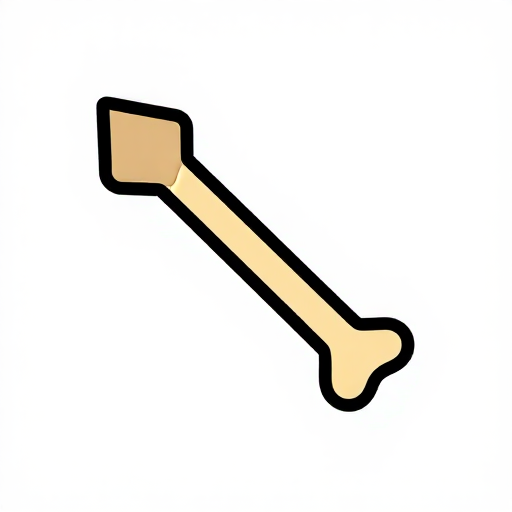
Push the point of a deer-bone awl into the end and press it forward along the root to split off long strips. Keep those that come out even in width and thickness along their whole length for sewing; tie the irregular, short or thin ones in bundles of about a dozen for coiling.
เครื่องมือที่ต้องใช้:
 เหล็กหมาดกระดูกมีด
6
6
Troubleshooting
Troubleshooting
Root splitting troubleshooting.
Flow
Loading...
7
7
History and honest limits
History and honest limits
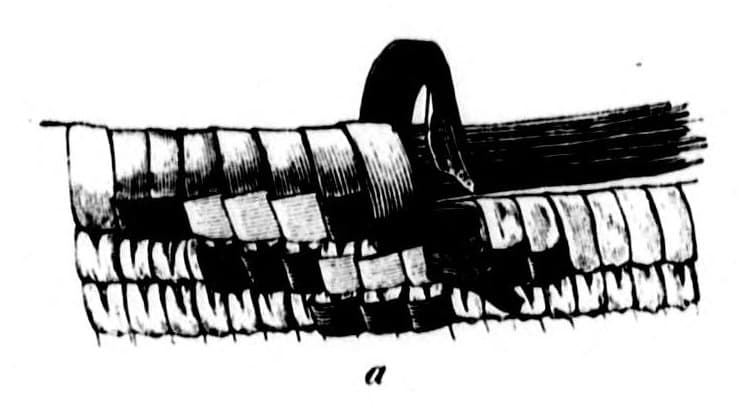
From James Teit, *The Thompson Indians of British Columbia*, **Memoirs of the American Museum of Natural History, Jesup North Pacific Expedition** vol. I part IV (1900), pp. 187-188 (checked on the archive.org scan cihm_16242). Only women and girls did this work; the splints went into watertight coiled baskets (see the coiled-basket blueprint). Lengths and taking only a few roots per tree are ours.
พิมพ์เขียวนี้สร้าง
บลูพริ้นท์ที่เกี่ยวข้อง
บลูพริ้นท์เหล่านี้แบ่งปันความรู้ — เทคนิค วัสดุ หรือหลักการ


CC0 สาธารณสมบัติ
พิมพ์เขียวนี้เผยแพร่ภายใต้ CC0 คุณสามารถคัดลอก แก้ไข แจกจ่าย และใช้งานผลงานนี้เพื่อวัตถุประสงค์ใดก็ได้ โดยไม่ต้องขออนุญาต
สนับสนุนเมกเกอร์โดยซื้อสินค้าผ่านพิมพ์เขียวของพวกเขา ซึ่งพวกเขาจะได้รับ ค่าคอมมิชชันเมกเกอร์ ที่ผู้ขายกำหนด หรือสร้างเวอร์ชันใหม่ของพิมพ์เขียวนี้และรวมเป็นการเชื่อมต่อในพิมพ์เขียวของคุณเพื่อแบ่งรายได้