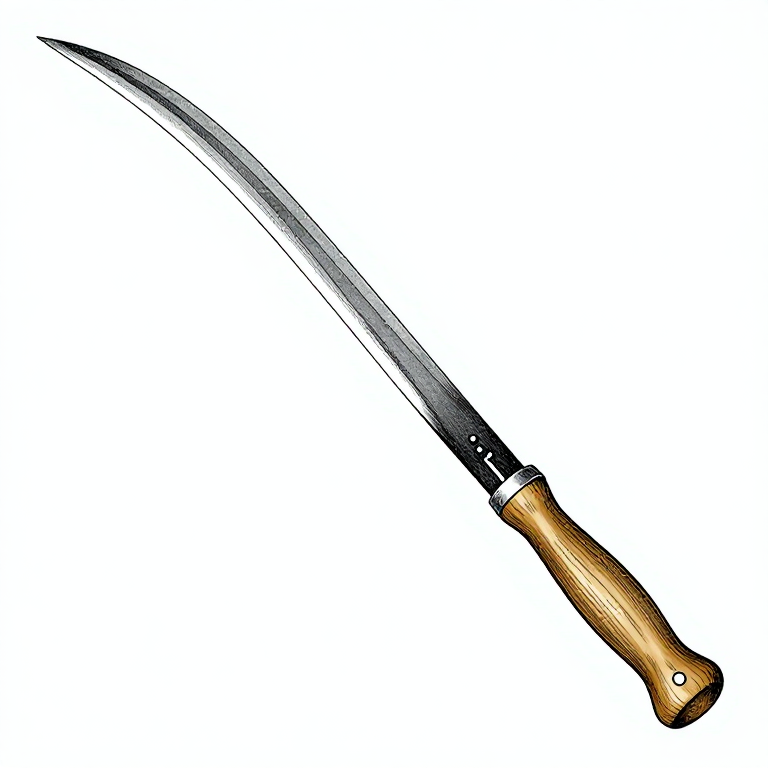


Forging a Viking Iron Sickle — The Grain Harvester
คำแนะนำ
Prepare the Bloom Iron
Prepare the Bloom Iron
Heat a bloom iron bar in the forge until it reaches orange-hot (approximately 900-1000°C). The iron should be glowing brightly. Using a cross-peen hammer on the anvil, draw the iron out into a flat stock approximately 30cm long, 3cm wide, and 5-6mm thick. Work with steady, overlapping blows, flipping the stock regularly to maintain even thickness. Reheat as needed — bloom iron cools quickly and becomes unworkable below red heat.
Bloom iron contains slag inclusions from the bloomery process. As you draw out the stock, these inclusions will break apart and some will be expelled. This initial forging also consolidates the iron, improving its quality.
วัสดุสำหรับขั้นตอนนี้:
 เหล็กบลูม (เหล็กฟองน้ำ)1 bar (~500g) ก.
 ถ่านไม้บด500g for carburizing ก.
 ไม้เนื้อแข็งสำหรับทำด้าม1 piece (30-40cm) ซม.
 สายหนัง1 strip (30cm) ซม.
 น้ำBucket for quenching ชิ้น
เครื่องมือที่ต้องใช้:
 เตาไฟ (ไฟช่างตีเหล็ก)
 ทั่ง
ทั่ง เตาตีเหล็ก
 คีมช่างตีเหล็ก
 สูบลม (เครื่องเป่าลมมือ)
 ถังชุบน้ำ
Forge the Curved Blade
Forge the Curved Blade
With the flat stock at forging heat (orange-hot), begin bending the blade into its characteristic crescent curve. Use the horn of the anvil as a bending form — lay the stock across the horn and hammer the ends downward to create a smooth, even curve. The inside radius should be approximately 15-20cm.
Maintain even thickness along the entire blade length as you curve it. The blade should taper slightly toward the cutting edge (thinner) and remain thicker along the spine (back edge). This geometry gives the sickle its strength while allowing a keen cutting edge.
Forge the Tang
Forge the Tang
Draw out one end of the blade into a narrow tang — a straight extension approximately 8-10cm long and 1cm wide. This tang will insert into the wooden handle. Taper it slightly toward the end so it wedges tightly into the handle.
Alternatively, for a socket-type attachment (common in some Viking-era finds), forge the end into a flat tab and curl it around a mandrel to form a conical socket that the handle slides into. The tang method is simpler and more common for sickles.
Carburize the Cutting Edge
Carburize the Cutting Edge
Pack the sickle blade edge in crushed charcoal inside a clay-lined trough or sealed clay container. Only the cutting edge needs exposure to charcoal — wrap or coat the spine with clay to protect it from carburization.
Place the packed assembly in the forge and maintain a steady high heat (bright orange, ~900°C) for 1-2 hours. Carbon from the charcoal diffuses into the iron surface, converting it to steel to a depth of approximately 1-2mm. This process — called case-hardening or cementation — was the Viking-era method for creating steel cutting edges from soft bloom iron.
Quench and Temper
Quench and Temper
Remove the blade from the charcoal pack and heat the edge uniformly to cherry-red (~800°C). Plunge the cutting edge into a bucket of water, quenching rapidly. This hardens the carburized steel layer. Quench only the edge — keep the spine softer for flexibility.
The quenched edge is now very hard but brittle. Temper it by cleaning the surface bright and gently reheating the spine with the forge or a torch. Watch the heat colors migrate toward the edge: straw-yellow (220°C) is the target for a sickle — hard enough to hold an edge but with enough toughness to resist chipping in use. Quench again when the straw color reaches the edge.
Fit the Wooden Handle
Fit the Wooden Handle
Select a straight-grained hardwood piece (ash or birch, 30-40cm long) for the handle. Drill or burn a hole into one end sized to receive the tang snugly. Drive the tang into the handle — it should fit tightly by friction.
For additional security, wrap the junction of blade and handle with a wet leather strap. As the leather dries, it shrinks and tightens, locking the tang firmly in place. Some Viking-era sickles also used an iron ferrule (a metal ring) around the handle end to prevent splitting.
Sharpen the cutting edge on a whetstone, stroking along the inside curve. The sickle is now ready for harvesting grain — grip the handle firmly and sweep the blade through the stalks close to the ground.
วัสดุ
5- 1 bar (~500g) ก.ตัวยึดตำแหน่ง
- 500g for carburizing ก.ตัวยึดตำแหน่ง
- 1 piece (30-40cm) ซม.ตัวยึดตำแหน่ง
- 1 strip (30cm) ซม.ตัวยึดตำแหน่ง
- Bucket for quenching ชิ้นตัวยึดตำแหน่ง
เครื่องมือที่จำเป็น
7- ตัวยึดตำแหน่ง
- ตัวยึดตำแหน่ง
- ตัวยึดตำแหน่ง
- ตัวยึดตำแหน่ง
- ตัวยึดตำแหน่ง
- ตัวยึดตำแหน่ง
- ตัวยึดตำแหน่ง
CC0 สาธารณสมบัติ
พิมพ์เขียวนี้เผยแพร่ภายใต้ CC0 คุณสามารถคัดลอก แก้ไข แจกจ่าย และใช้งานผลงานนี้เพื่อวัตถุประสงค์ใดก็ได้ โดยไม่ต้องขออนุญาต
สนับสนุนเมกเกอร์โดยซื้อสินค้าผ่านพิมพ์เขียวของพวกเขา ซึ่งพวกเขาจะได้รับ ค่าคอมมิชชันเมกเกอร์ ที่ผู้ขายกำหนด หรือสร้างเวอร์ชันใหม่ของพิมพ์เขียวนี้และรวมเป็นการเชื่อมต่อในพิมพ์เขียวของคุณเพื่อแบ่งรายได้