SANAT
GÜZELLİK & SAĞLIK
ZANAAT
KÜLTÜR & TARİH
EĞLENCE
ÇEVRE
YİYECEK & İÇECEK
TERS MÜHENDİSLİK
BİLİMLER
SPOR
TEKNOLOJİ
GİYİLEBİLİR ÜRÜNLER
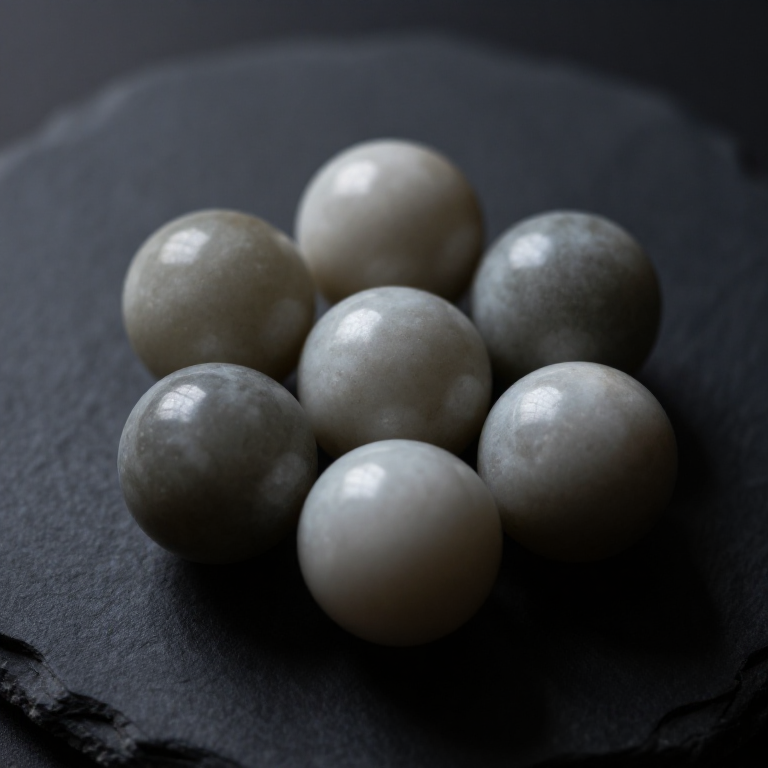


Perfect Numbers — Find the Numbers That Equal Their Own Parts
A hands-on maths project: take 6 counters, find every way to divide them into equal groups, and discover that the group-sizes add back up to 6 -- a 'perfect' number. A Python cell checks 6 and 28, and a compendium reaches a 2,300-year-old unsolved mystery.
Başlangıç
30 minutes
Talimatlar
1
1
A number equal to its parts
A number equal to its parts
Some numbers have a magical property: add up all the smaller numbers that divide them, and you get the number back. The Greeks called these 'perfect'. You will find one with a handful of counters.
2
2
Lay out six counters
Lay out six counters
Take 6 counters (beads, buttons or coins). Find every way to divide them into equal groups: one group of 6, or 2 groups of 3, or 3 groups of 2, or 6 groups of 1. The group-SIZES that work (the divisors smaller than 6) are 1, 2 and 3.
Bu adım için malzemeler:
 Cam boncuk1 adet
3
3
Add up the parts
Add up the parts
Add those divisors: 1 + 2 + 3 = 6. The parts add back up to the number itself -- 6 is perfect! Now try 28 with 28 counters: its divisors are 1, 2, 4, 7 and 14, and they add to 28. Try 10 or 12 and you will find they do NOT work, which is why perfect numbers are so rare.
4
4
Check with the computer
Check with the computer
Jupyter defteri yükleniyor…
Gerekli aletler:
 Masaüstü Bilgisayar
5
5
Compendium: an unsolved mystery
Compendium: an unsolved mystery
What your counters lead to. (1) The perfect numbers are strikingly rare: 6, 28, 496, 8128, then none until 33,550,336. (2) Around 300 BC Euclid found a recipe: whenever 2-to-the-power-p minus 1 is prime, you can build a perfect number from it -- which links them to the famous 'Mersenne primes' that a worldwide computer project still hunts today. (3) Every perfect number ever found is EVEN. (4) After 2,300 years, two questions Euclid could have asked remain unanswered: are there infinitely many, and does an ODD perfect number exist? Nobody has ever found one -- or proved one cannot exist. You have just handled the front edge of an open problem in mathematics.
Malzemeler
2- 1 adetYer Tutucu
- 1 yaprakYer Tutucu
Gerekli Aletler
2- Yer Tutucu
- Yer Tutucu
İlgili Blueprint'ler
Bu blueprint'ler bilgi paylaşır — teknikler, malzemeler veya ilkeler

CC0 Kamu Malı
Bu plan CC0 lisansıyla yayınlanmıştır. İzin almadan kopyalayabilir, değiştirebilir, dağıtabilir ve herhangi bir amaçla kullanabilirsiniz.
Planı üzerinden ürün satın alarak Maker'ı destekleyin, böylece Maker Komisyonu Satıcılar tarafından belirlenen komisyonu kazanırlar veya bu Planın yeni bir versiyonunu oluşturun ve gelir paylaşımı için kendi Planınıza bağlantı olarak ekleyin.