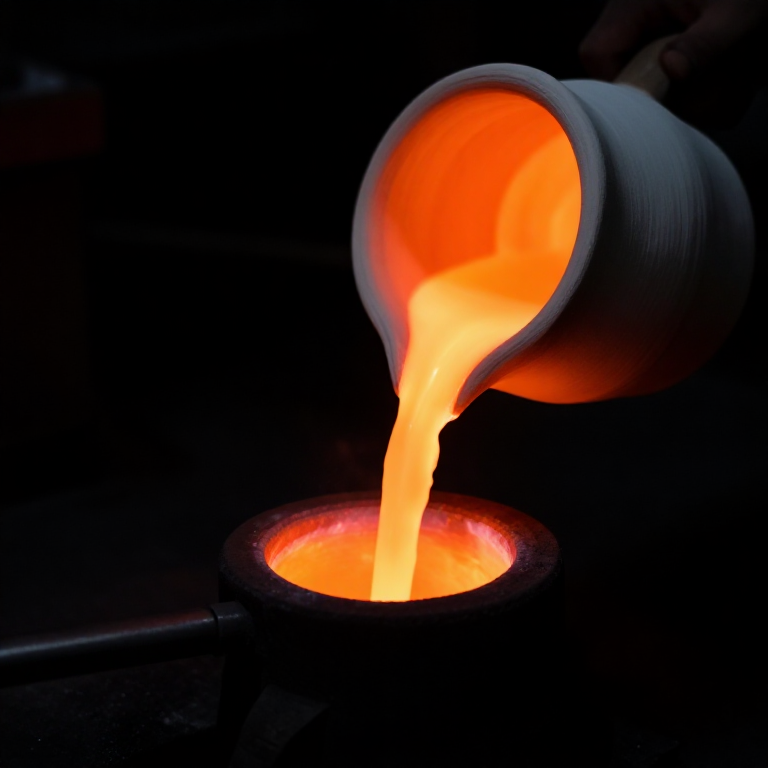


Crucible Cast Steel by the Huntsman Process — Remelting Blister Steel into Flawless Ingots
Blister steel was a triumph, but it had a flaw: its carbon was uneven, rich at the surface of each bar and poor in the core. For fine springs, watch parts, and razors, smiths needed steel that was the same all the way through. In 1740 the Sheffield clockmaker Benjamin Huntsman found the answer — melt the steel completely.
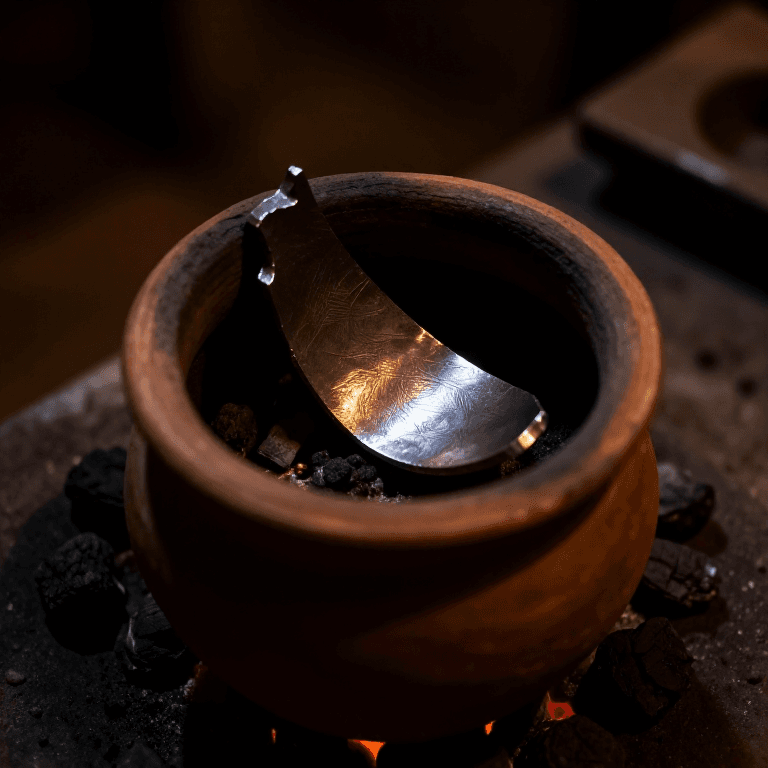
No furnace of the day could melt steel, so Huntsman built one that could. He broke blister steel into small pieces, sealed them in a covered clay crucible, and drove a coke fire hot enough — around 1600 degrees Celsius — to turn the solid steel into a clear liquid. Fully molten, the carbon spread perfectly evenly through the metal and the impurities floated off as slag. Poured into a mould, it set into a flawless ingot of cast steel.
Huntsman's crucible steel was the finest in the world and made Sheffield the steel capital of the age. The principle — melt it to make it uniform — is the same one that still underlies steelmaking today, and it sits at the very top of the iron-and-steel chain that runs from ore to coke to pig iron to wrought iron to blister steel to this.
Talimatlar
Understand the goal
Understand the goal
Break up the blister steel
Break up the blister steel
Bu adım için malzemeler:
 Kabarcıklı çelik çubuklar12 kg
Gerekli aletler:
 Çekiç
ÇekiçPrepare a clay crucible
Prepare a clay crucible
Bu adım için malzemeler:
 Derin Kil Pota1 adet
Charge the crucible
Charge the crucible
Bu adım için malzemeler:
 Kireçtaşı levha1 kg
Build a coke melting furnace
Build a coke melting furnace
Bu adım için malzemeler:
 Metalurjik kok50 kg
Gerekli aletler:
 Körük
KörükMelt the steel fully
Melt the steel fully
Gerekli aletler:
 Pota Maşası
Let the carbon even out
Let the carbon even out
Let the slag rise
Let the slag rise
Lift the crucible
Lift the crucible
Gerekli aletler:
Pota MaşasıCast the ingot
Cast the ingot
Gerekli aletler:
 Külçe kalıbı
Cool and strip
Cool and strip
Gerekli aletler:
ÇekiçIdentify cast steel
Identify cast steel
Gerekli aletler:
 Eğe Takımı
Malzemeler
4- Yer Tutucu
- 1 adetYer Tutucu
- 1 kgYer Tutucu
- 50 kgYer Tutucu
Bağlı Plan Malzemeleri
İlgili Blueprint'ler
Bu blueprint'ler bilgi paylaşır — teknikler, malzemeler veya ilkeler

CC0 Kamu Malı
Bu plan CC0 lisansıyla yayınlanmıştır. İzin almadan kopyalayabilir, değiştirebilir, dağıtabilir ve herhangi bir amaçla kullanabilirsiniz.
Planı üzerinden ürün satın alarak Maker'ı destekleyin, böylece Maker Komisyonu Satıcılar tarafından belirlenen komisyonu kazanırlar veya bu Planın yeni bir versiyonunu oluşturun ve gelir paylaşımı için kendi Planınıza bağlantı olarak ekleyin.