
SANAT
GÜZELLİK & SAĞLIK
ZANAAT
KÜLTÜR & TARİH
EĞLENCE
ÇEVRE
YİYECEK & İÇECEK
YEŞİL GELECEK
TERS MÜHENDİSLİK
BİLİMLER
SPOR
TEKNOLOJİ
GİYİLEBİLİR ÜRÜNLER
Grinding a Glass Lens for a Telescope — Shaping Light with Abrasive and Patience
Penny

Oluşturan

Penny

30. Mayıs 2026DK
25
0
0
0
0

Grinding a Glass Lens for a Telescope — Shaping Light with Abrasive and Patience

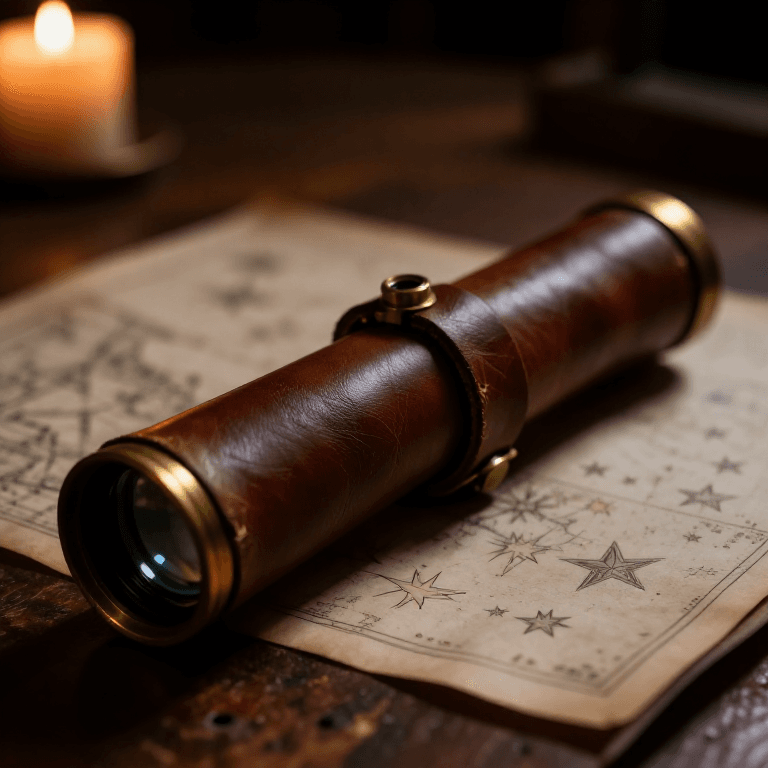
Every refracting telescope, microscope, camera, and spectacle begins with a shaped piece of glass — a lens. The art of grinding glass into precise curved surfaces was developed in the late 13th century for spectacles, then refined dramatically in the early 17th century when telescope makers needed lenses of much longer focal length and higher optical quality. The process is fundamentally simple: a flat glass disc is rubbed against a curved tool (or vice versa) with abrasive grit and water between them. The grit cuts away glass where it contacts most, gradually producing a smooth spherical curve. Coarser grits establish the rough curve, finer grits remove the scratches left by coarser ones, and a final polish with cerium oxide or rouge on a pitch lap produces a transparent, optically smooth surface. Galileo ground his own lenses in 1609. Newton considered lens grinding too slow and switched to mirrors, but Huygens, Dollond, and Fraunhofer perfected the technique over the following two centuries. This blueprint grinds a plano-convex lens from a flat glass disc — the same basic process used from the Renaissance to the present day.

İleri
8-15 hours

Talimatlar

1

Understand lens geometry

A plano-convex lens has one flat face and one spherically curved face. The radius of curvature determines the focal length — a longer radius gives a longer focal length and gentler curve. For a telescope objective of about 1 metre focal length, the radius of curvature is approximately 500 mm (for glass with refractive index ~1.5). The lens-maker's equation: 1/f = (n-1) × (1/R₁ - 1/R₂), where R₂ is infinite for the flat face.
2

Select the glass blank

Start with a flat glass disc of the desired diameter — 50-75 mm is a practical size for a first telescope lens. The glass should be free of bubbles, striae, and internal stress. Soda-lime window glass works for a first attempt; optical-grade borosilicate or crown glass gives better results. The disc should be 8-12 mm thick to allow material for grinding the curve without making the edge too thin.

Bu adım için malzemeler:

Glass SheetGlass Sheet1 adet
3

Prepare the grinding tool

The grinding tool is a disc of the same diameter as the lens blank, made from glass, ceramic tile, or cast plaster. The tool develops the inverse curve of the lens — as the convex lens surface forms on the blank, a matching concave surface forms on the tool. For a plaster tool, cast dental plaster in a shallow ring mould and let it cure for 24 hours. The tool must be rigid and flat to start.

Bu adım için malzemeler:

Glass SheetGlass Sheet1 adet
4

Rough grind with coarse grit

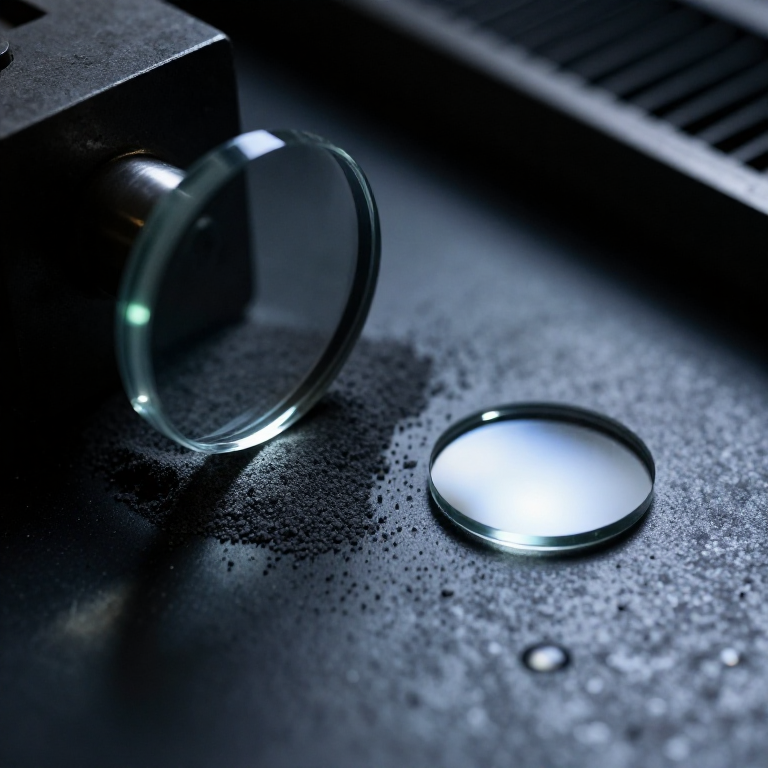
Sprinkle silicon carbide grit (80-120 grit) on the tool with water. Place the lens blank on top and grind with a back-and-forth stroke, rotating the blank and walking around the tool to ensure even grinding. The centre-over-centre stroke with the blank on top preferentially grinds the centre of the blank and the edge of the tool, producing a convex surface on the blank. Check the curve regularly with a template or by measuring the sagitta (depth of curve) with a ruler and straightedge.

Bu adım için malzemeler:

Silicon Carbide GritSilicon Carbide Grit200 g
5

Test the curve with a template

Cut a radius-of-curvature template from thin metal or card — a circular arc of the desired radius. Press it against the wet lens surface and look for light gaps between the template and the glass. Uniform contact means the surface is spherical; gaps indicate high or low zones. The sagitta (depth of the curve at centre relative to the edge) for a 60 mm disc with R=500 mm radius is about 0.9 mm — a shallow curve that must be ground with patience.

Gerekli aletler:

Measuring RulerMeasuring Ruler
6

Fine grind with progressively finer grits

Once the curve is correct with coarse grit, switch to finer grits in sequence: 220, 320, 400, 600 grit. Each grit removes the scratches left by the previous one and leaves finer, shallower scratches of its own. Clean everything thoroughly between grits — a single coarse grain in a fine-grit stage will scratch the surface. Grind with each grit until the surface appears uniformly frosted with no pits from the previous grit remaining.

Bu adım için malzemeler:

Fine Sandpaper3 yaprak
7

Prepare a pitch lap for polishing

Polishing requires a pitch lap — a tool covered with a layer of optical pitch (a mixture of pine pitch and beeswax). Warm the pitch until it flows, pour a 3-5 mm layer onto the grinding tool, and press the lens blank into it while warm to form a matching curve. Cut channels in the pitch surface in a grid pattern to allow polishing compound to flow. The pitch must be soft enough to conform to the glass but firm enough to hold its shape during polishing.

Bu adım için malzemeler:

Pine Pitch GluePine Pitch Glue100 g
BeeswaxBeeswax30 g
8

Polish with cerium oxide

Make a slurry of cerium oxide polishing compound and water. Apply it to the pitch lap and polish the lens using the same back-and-forth strokes as grinding, but with lighter pressure. The cerium oxide chemically and mechanically polishes the glass surface from frosted to transparent. Polishing takes several hours of patient work. Check progress by rinsing and drying the lens — polished areas appear clear while unpolished areas remain frosted.

Bu adım için malzemeler:

Cerium Oxide PolishCerium Oxide Polish50 g
9

Test the focal length

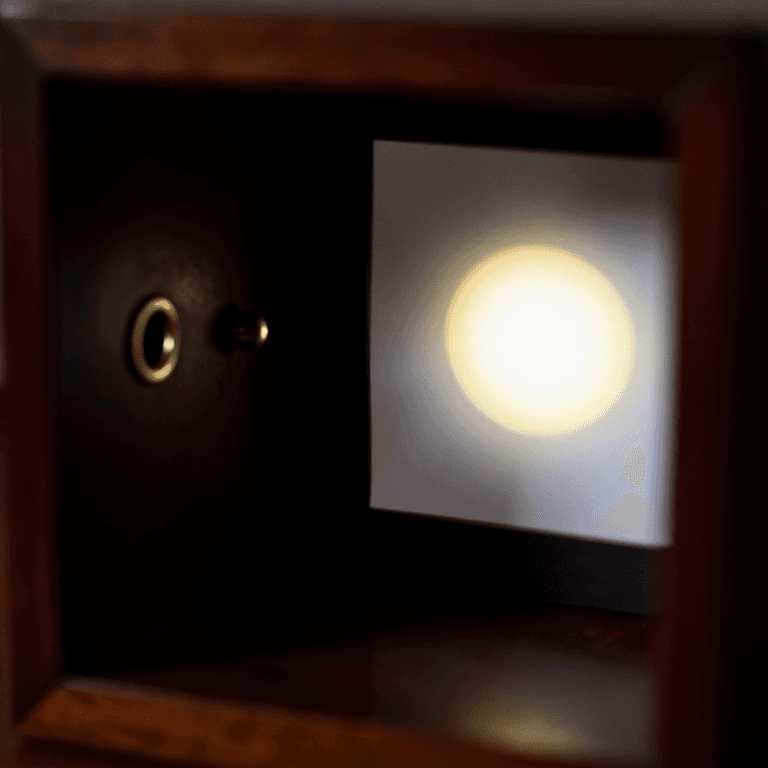
Hold the finished lens up to a distant object (a building or tree at least 50 metres away) and find where it projects a sharp image on a white card held behind the lens. The distance from the lens to the card is the focal length. For a well-ground lens, the image should be sharp and clear across the field. If the image is sharp at the centre but blurry at the edges, the lens has spherical aberration — acceptable for a simple telescope but correctable with a two-element achromatic design.
10

Grind the eyepiece lens (shorter focal length)

A telescope needs two lenses: a long-focal-length objective (which you have just made) and a short-focal-length eyepiece. Grind a smaller lens (20-25 mm diameter) with a much shorter radius of curvature to give a focal length of about 20-30 mm. The magnification of the telescope equals the objective focal length divided by the eyepiece focal length — a 1000 mm objective with a 25 mm eyepiece gives 40x magnification. The same grinding and polishing process applies, just on a smaller scale.

Bu adım için malzemeler:

Glass SheetGlass Sheet1 adet
Silicon Carbide GritSilicon Carbide Grit100 g
Cerium Oxide PolishCerium Oxide Polish25 g

Malzemeler

6

Gerekli Aletler

1

Bağlı Plan Malzemeleri

CC0 Kamu Malı

Bu plan CC0 lisansıyla yayınlanmıştır. İzin almadan kopyalayabilir, değiştirebilir, dağıtabilir ve herhangi bir amaçla kullanabilirsiniz.

Planı üzerinden ürün satın alarak Maker'ı destekleyin, böylece Maker Komisyonu Satıcılar tarafından belirlenen komisyonu kazanırlar veya bu Planın yeni bir versiyonunu oluşturun ve gelir paylaşımı için kendi Planınıza bağlantı olarak ekleyin.

Tartışma

(0)

Giriş yapın tartışmaya katılmak için

Yorumlar yükleniyor...