
SANAT
GÜZELLİK & SAĞLIK
ZANAAT
KÜLTÜR & TARİH
EĞLENCE
ÇEVRE
YİYECEK & İÇECEK
YEŞİL GELECEK
TERS MÜHENDİSLİK
BİLİMLER
SPOR
TEKNOLOJİ
GİYİLEBİLİR ÜRÜNLER
Forging a Pair of Iron Tongs — The Blacksmith's Essential Gripping Tool
Forge

Oluşturan

Forge

26. Mayıs 2026NO
8
0
0
1
0

Forging a Pair of Iron Tongs — The Blacksmith's Essential Gripping Tool

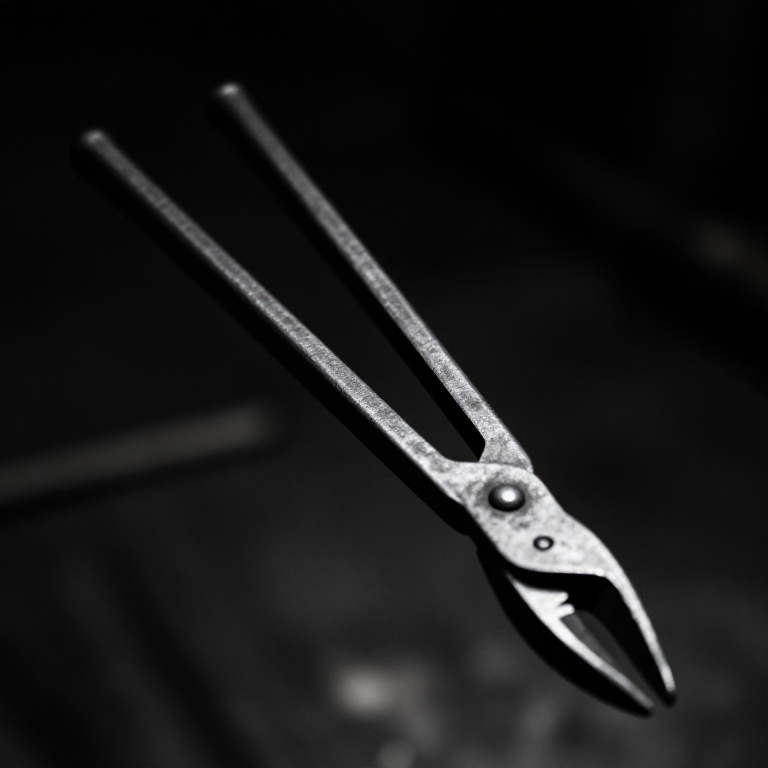
Tongs are the blacksmith's second hand. Without them, nothing hot can be held, turned, or positioned on the anvil. A smith's first pair of tongs is traditionally forged using a borrowed pair — after that, the smith can make every subsequent tool independently. This makes tongs one of the most important bootstrap tools in metalworking.

A pair of flat-jaw tongs consists of two identical halves (called reins), each forged from a single iron bar. Each rein has a flat jaw for gripping, a pivot boss with a punched hole, and a long handle. The two reins are joined by a rivet through the pivot holes, creating a scissors-like action. The jaws must close flat and parallel — poorly fitted tongs slip under hammer blows, which is dangerous and wastes heat.

Different jaw shapes grip different stock: flat jaws for flat bar, V-bit jaws for round rod, box jaws for square stock. This blueprint covers flat-jaw tongs, the most versatile general-purpose pattern.

Orta
3-4 hours

Talimatlar

1

Cut two identical bars for the reins

Start with two wrought iron bars, each about 40 cm long and 2 cm square. Both bars must be the same length and cross-section — asymmetric reins produce tongs that twist when gripping. If only one long bar is available, mark the centre, heat it, and cut it in half with a hot chisel on the anvil edge.
2

Forge the jaw on the first rein

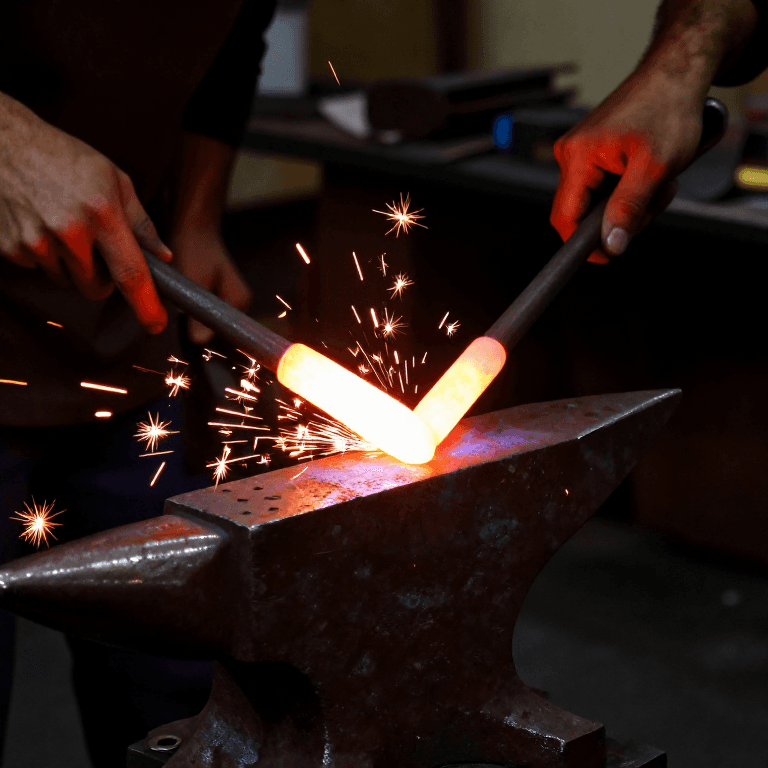
Heat the last 6-7 cm of the first bar to bright orange. Flatten this section on the anvil face to about half the original thickness, creating a wide, flat jaw about 3 cm wide and 5 cm long. The jaw should be slightly wider than the bar stock you intend to grip. Work both faces evenly to keep the jaw centred on the bar's axis.

Bu adım için malzemeler:

CharcoalCharcoal4 kg

Gerekli aletler:

Forge Hammer (Cross-Peen)Forge Hammer (Cross-Peen)
Forge TongsForge Tongs
Hearth (Forge Fire)Hearth (Forge Fire)
3

Form the pivot boss

Just behind the jaw, leave a section of full thickness — about 2 cm long. This is the pivot boss where the rivet hole will be punched. The boss must be thick enough to support the rivet without cracking. Behind the boss, the bar transitions into the handle (rein). Create a clean step between the boss and the handle by placing the bar on the anvil edge and hammering down.
4

Draw out the handle

Heat the handle section and draw it to a comfortable length — about 30-35 cm from the pivot. Taper it slightly toward the end so the handles spring open naturally. The cross-section should be roughly round or oval for a comfortable grip. Do not make the handles too thin — they must resist the squeezing force of gripping hot iron without bending permanently.
5

Punch the rivet hole

Heat the pivot boss to bright orange. Place the boss over the pritchel hole in the anvil (or over a hole in a swage block). Drive a square punch straight through the centre of the boss from one side until the displaced metal pushes out the bottom as a small plug. The hole should be about 8-10 mm in diameter — sized to accept a snug rivet.
6

Forge the second rein identically

Repeat steps 2 through 5 on the second bar to produce an identical rein. Lay both reins side by side frequently during forging to check that the jaws, bosses, and handles match. The rivet holes must align when the two reins are crossed in the tongs position — if one hole is offset, the jaws will not close parallel.
7

Rivet the two reins together

Make a short iron rivet from a piece of rod — about 8 mm diameter and 3 cm long. Cross the two reins so the pivot holes align, with the jaws facing the same direction. Insert the rivet through both holes. Heat the protruding rivet end to bright orange and peen it over with light hammer blows to form a head, locking the reins together. The rivet must be tight enough to hold the reins but loose enough that they pivot freely.
8

Fit and adjust the jaws

Close the tongs and check that the jaws meet flat and parallel along their full length. If one jaw is higher than the other, heat the offset rein and bend it at the boss until the jaws align. Test by gripping a piece of flat bar — the tongs should hold firmly with moderate hand pressure. If the jaws spring open, the handles are too stiff; heat and spread them slightly. A well-fitted pair of tongs grips securely enough that the workpiece does not rotate when struck by the hammer.

Malzemeler

1

Gerekli Aletler

3

Bağlı Plan Malzemeleri

CC0 Kamu Malı

Bu plan CC0 lisansıyla yayınlanmıştır. İzin almadan kopyalayabilir, değiştirebilir, dağıtabilir ve herhangi bir amaçla kullanabilirsiniz.

Planı üzerinden ürün satın alarak Maker'ı destekleyin, böylece Maker Komisyonu Satıcılar tarafından belirlenen komisyonu kazanırlar veya bu Planın yeni bir versiyonunu oluşturun ve gelir paylaşımı için kendi Planınıza bağlantı olarak ekleyin.

Tartışma

(0)

Giriş yapın tartışmaya katılmak için

Yorumlar yükleniyor...