


Riving Planks from a Log — Splitting Timber Along the Grain with Wedges
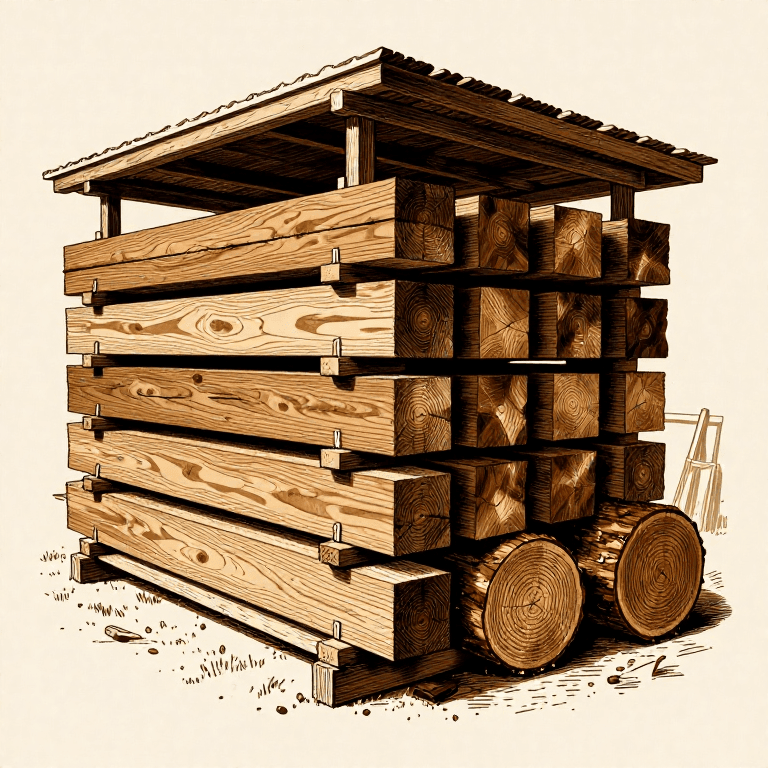
Before sawmills, every plank was riven — split from a log using wedges and mallets. Riving exploits the natural grain of the wood: a wedge driven into the end grain propagates a crack that follows the fibres, producing a plank that is stronger than any sawn board because no fibres are cut across. Every Viking longship, every medieval roof, and every Iron Age door was built from riven timber.
The technique is simple but requires reading the wood. A straight-grained log splits cleanly into halves, quarters, and eighths. Each successive split reduces the section until planks of the desired thickness are reached. Crooked grain, knots, or spiral growth cause the split to run off-line, ruining the plank. Selecting the right log is half the skill.
Iron wedges transformed riving from a slow stone-age process into an efficient production method. A smith's iron wedge driven by a wooden maul splits a log in minutes. Combined with an iron drawknife for smoothing, riving produces finished planks faster than pit-sawing and with superior strength.
Talimatlar
Select a straight-grained log
Select a straight-grained log
Bu adım için malzemeler:
 Meşe tahtası (kırmızı)1 adet
Split the log in half
Split the log in half
Gerekli aletler:
 Dövme Çekici
 Çelik kama takımı
 Balyoz
Quarter each half
Quarter each half
Rive planks from the quarters
Rive planks from the quarters
Gerekli aletler:
 Yarma bıçağı (froe)
 Ahşap Tokmak
Correct wandering splits
Correct wandering splits
Smooth the riven surface
Smooth the riven surface
Gerekli aletler:
 İki Saplı Yontma Bıçağı
 Yontma tezgâhı
 Keser
KeserMalzemeler
1- 1 adetYer Tutucu
Gerekli Aletler
8- Yer Tutucu
- Yer Tutucu
- Yer Tutucu
- Yer Tutucu
- Yer Tutucu
- Yer Tutucu
- Yer Tutucu
- Yer Tutucu
Bağlı Plan Malzemeleri
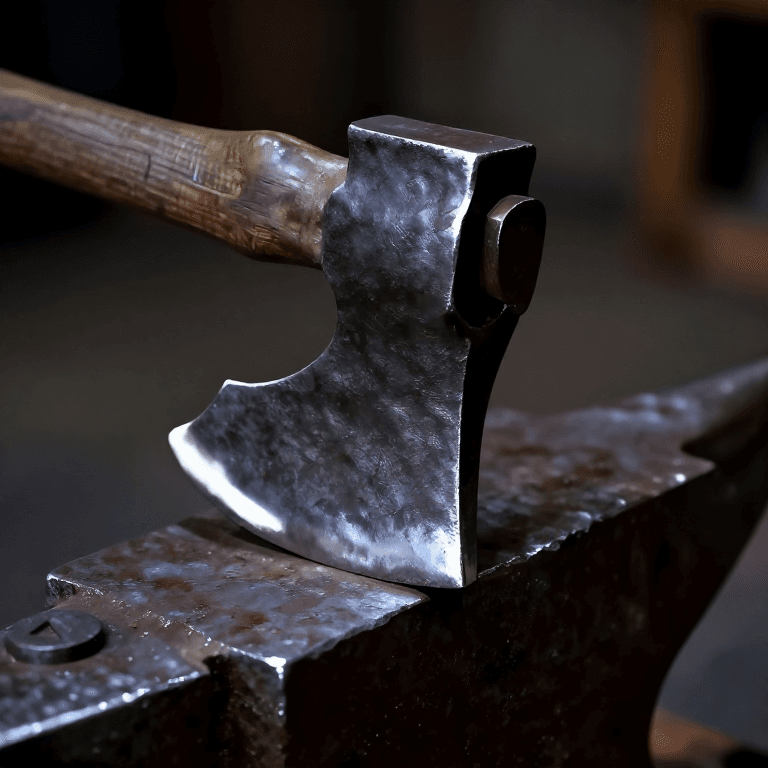
Bu planla yapılan



İlgili Blueprint'ler
Bu blueprint'ler bilgi paylaşır — teknikler, malzemeler veya ilkeler

CC0 Kamu Malı
Bu plan CC0 lisansıyla yayınlanmıştır. İzin almadan kopyalayabilir, değiştirebilir, dağıtabilir ve herhangi bir amaçla kullanabilirsiniz.
Planı üzerinden ürün satın alarak Maker'ı destekleyin, böylece Maker Komisyonu Satıcılar tarafından belirlenen komisyonu kazanırlar veya bu Planın yeni bir versiyonunu oluşturun ve gelir paylaşımı için kendi Planınıza bağlantı olarak ekleyin.