SANAT
GÜZELLİK & SAĞLIK
ZANAAT
KÜLTÜR & TARİH
EĞLENCE
ÇEVRE
YİYECEK & İÇECEK
TERS MÜHENDİSLİK
BİLİMLER
SPOR
TEKNOLOJİ
GİYİLEBİLİR ÜRÜNLER
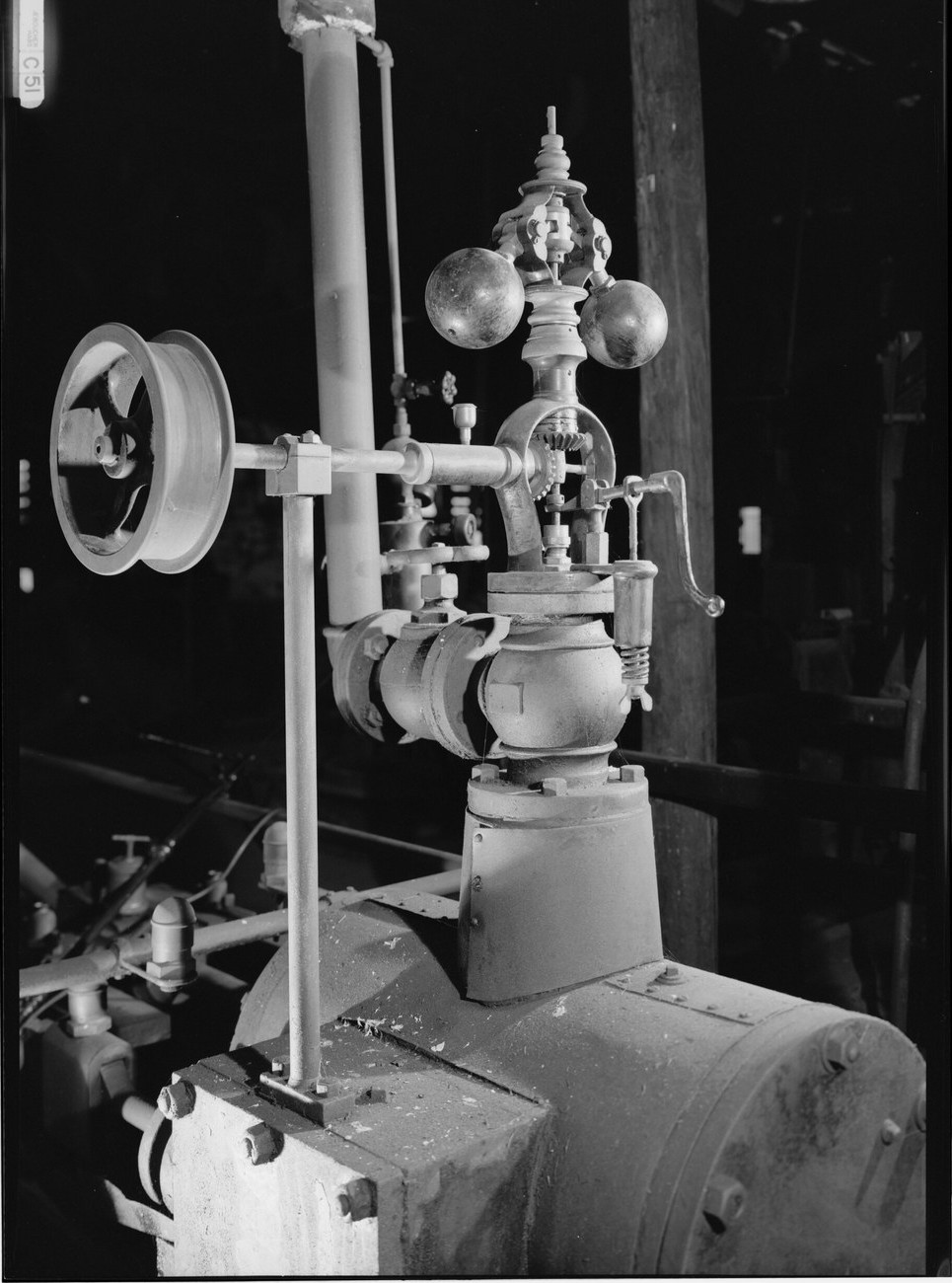


Maxwell on Governors
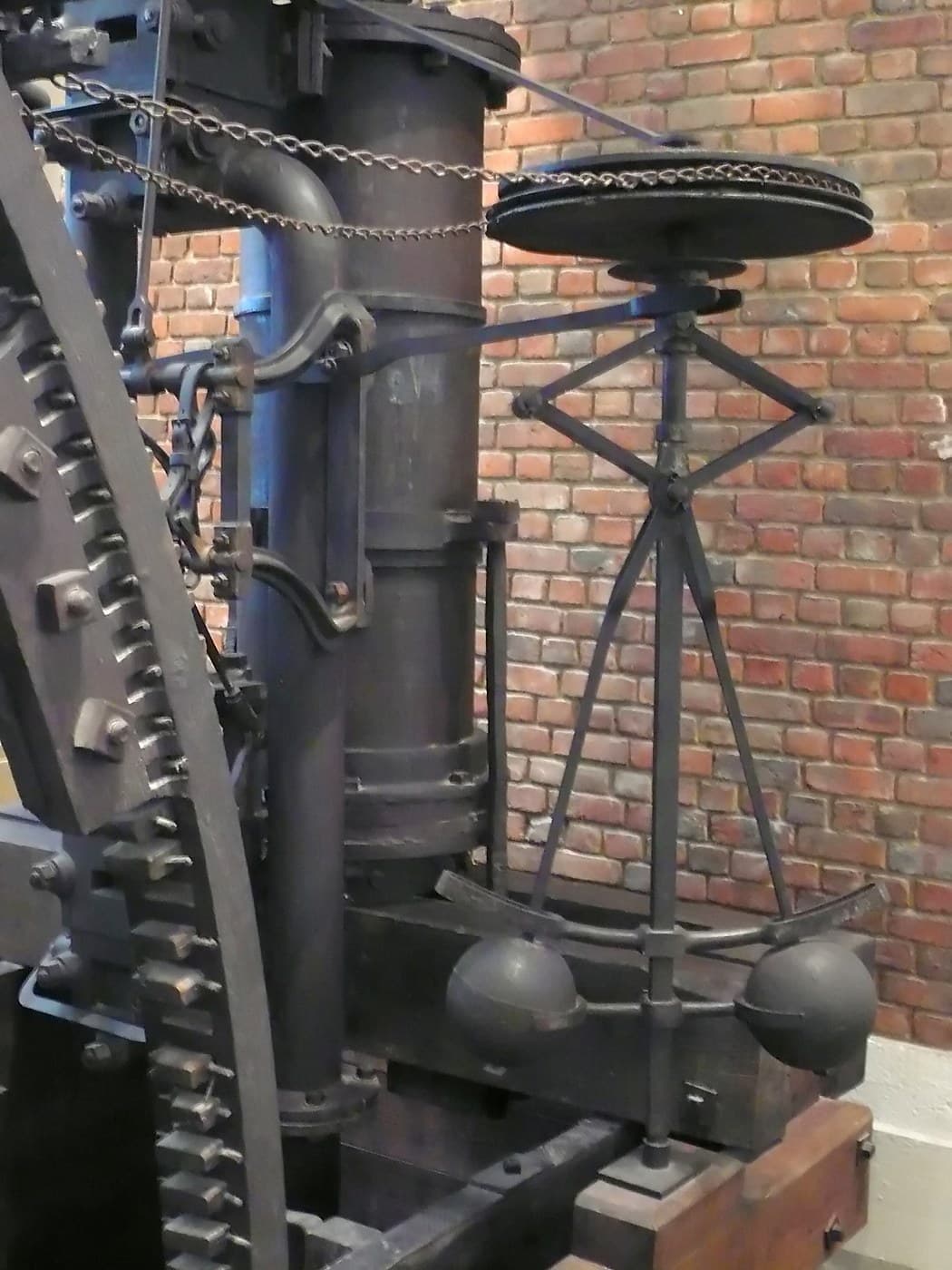
Watt's governor had been spinning on engines for eighty years and nobody could say why some of them held a steady speed while others swung back and forth for ever. Engineers knew the cures by feel - add friction, lighten the balls, shorten the linkage - and had no way to tell which cure a given engine needed, or whether a new design would hunt before it was built.
James Clerk Maxwell's paper of 1868 stopped describing the mechanism and wrote down its equation. The governor is a mass on a spring with damping, pushed outwards by speed; the engine is an inertia whose acceleration depends on where the governor has moved the throttle. Put the two together and the loop is THIRD order - which is the lowest order that can oscillate while every individual part of it looks perfectly stable on its own.
The answer is then a sign. Solve for the roots of the characteristic equation and the machine settles if every root has a negative real part, and swings for ever if any of them does not. For the cubic that condition reduces to something you can read out loud: damping times stiffness times engine inertia must beat gain times governor mass. Maxwell solved the third and fourth order cases and left the general one open; Routh took it in 1876 and Hurwitz in 1895, and the whole of stability theory is downstream.
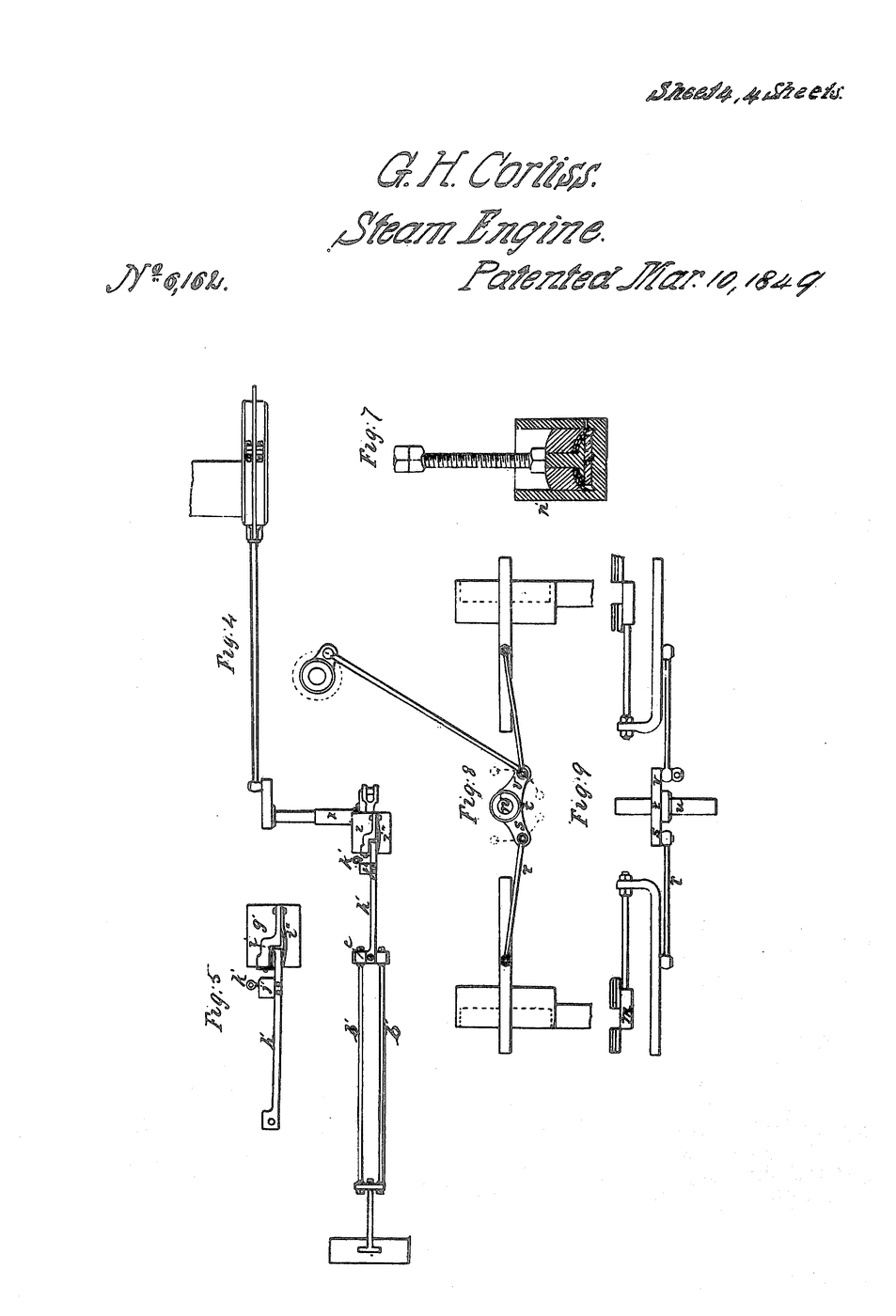
The paper also draws a distinction that is still the first thing anyone learns about controllers. A flyball device only MODERATES - after a load change it settles to a new speed that is permanently a few per cent wrong. Maxwell refused to call that a governor. A real governor keeps moving the throttle while any error remains, which means it acts on the accumulated error: integral action, ninety years before anybody painted PID on a panel.
Orta
3 hours
Talimatlar
1
1
Build a governor you can destabilise
Build a governor you can destabilise
Hang two masses on hinged arms from a vertical shaft in the drill chuck, linked to a sliding collar. Spin it up and mark the collar height against speed on the tachometer - that is your sensor calibration.
Now let the collar drive a light card flap into the airstream, and let the flap's position feed back to the drill trigger through a rubber band. You have closed a loop.
Bu adım için malzemeler:
 Yumuşak Çelik Çubuk300 mm
 Altıgen Somun6 adet
 Lastik bantlar1 bag
 Oluklu Mukavva Levhalar1 paket
Gerekli aletler:
 Kablosuz Matkap
 Dijital Takometre
 Cetvel
 İletki
2
2
Find the hunting threshold with a paddle
Find the hunting threshold with a paddle
Hang a small card paddle from the collar into a jar of water. That is your damping, and you can vary it by how deep the paddle sits.
Start deep and lift the paddle a few millimetres at a time. There is a depth at which the swing stops dying away and holds a steady amplitude. Time ten swings there: the period is the one the notebook predicts from the spring and the mass alone.
Bu adım için malzemeler:
Oluklu Mukavva Levhalar1 paket Su500 ml
Gerekli aletler:
 Kronometre
 Isıya Dayanıklı Cam BeherCetvelDijital Takometre
3
3
The cubic, the sign of its roots, and four ways to hold a speed
The cubic, the sign of its roots, and four ways to hold a speed
Jupyter defteri yükleniyor…
Gerekli aletler:
 Masaüstü Bilgisayar
4
4
Compendium: what Maxwell could not finish, and who did
Compendium: what Maxwell could not finish, and who did
Maxwell solved the cubic and the quartic by hand and then stopped, writing that he had not found the general condition for an equation of any degree. He put the problem to the mathematicians, and Edward Routh took the 1877 Adams Prize with a recursive table that answers it for any order without ever computing a root - you build a triangular array from the coefficients and count sign changes in the first column. Adolf Hurwitz reached the same result independently in 1895 from a set of determinants, which is why the criterion carries both names. Routh's table is still the cheapest stability test there is, and it is the only one in this batch that needs no plot, no measurement and no computer.
The reason the question was urgent in 1868 is not steam engines. Maxwell had been asked about the governor on the British Association's apparatus for measuring electrical resistance in absolute units, where a coil had to be spun at an exactly constant rate and the existing regulator would not stop hunting. The whole of stability theory begins with a metrology problem - somebody needing a machine to hold a number steady enough to define an ohm - and only afterwards became the thing that flies aircraft.
Malzemeler
5- 300 mmYer Tutucu
- 6 adetYer Tutucu
- 1 bagYer Tutucu
- 2 paketYer Tutucu
- 500 mlYer Tutucu
Gerekli Aletler
7- 1 vendor sell this, none ship to you yetYer Tutucu
- Yer Tutucu
- Yer Tutucu
- Yer Tutucu
- Yer Tutucu
- Yer Tutucu
- Yer Tutucu
İlgili Blueprint'ler
Bu blueprint'ler bilgi paylaşır — teknikler, malzemeler veya ilkeler




CC0 Kamu Malı
Bu plan CC0 lisansıyla yayınlanmıştır. İzin almadan kopyalayabilir, değiştirebilir, dağıtabilir ve herhangi bir amaçla kullanabilirsiniz.
Planı üzerinden ürün satın alarak Maker'ı destekleyin, böylece Maker Komisyonu Satıcılar tarafından belirlenen komisyonu kazanırlar veya bu Planın yeni bir versiyonunu oluşturun ve gelir paylaşımı için kendi Planınıza bağlantı olarak ekleyin.