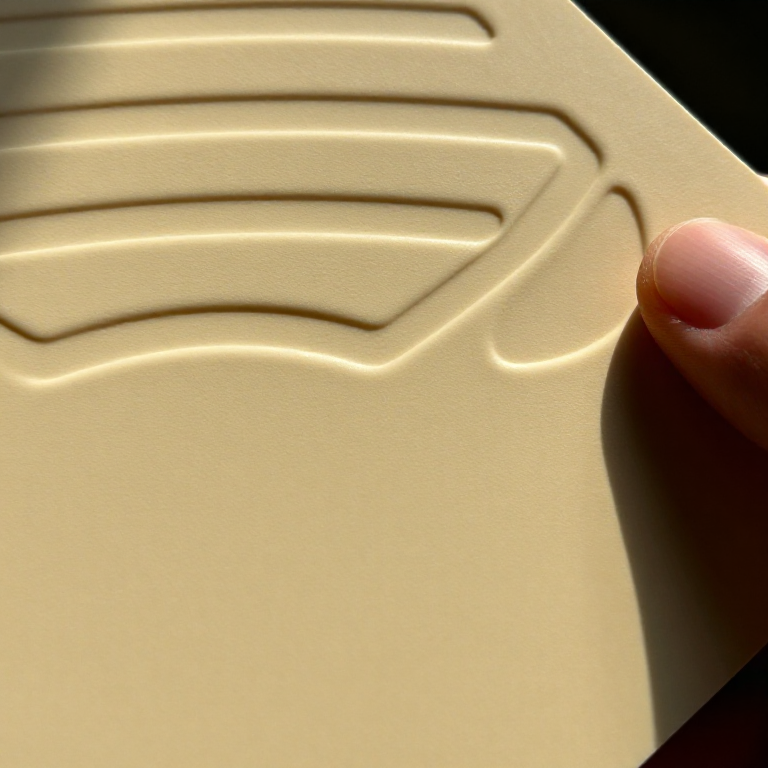


Moon Type
Talimatlar
Feel the problem the system solves
Feel the problem the system solves
Establish why a second tactile alphabet exists at all.
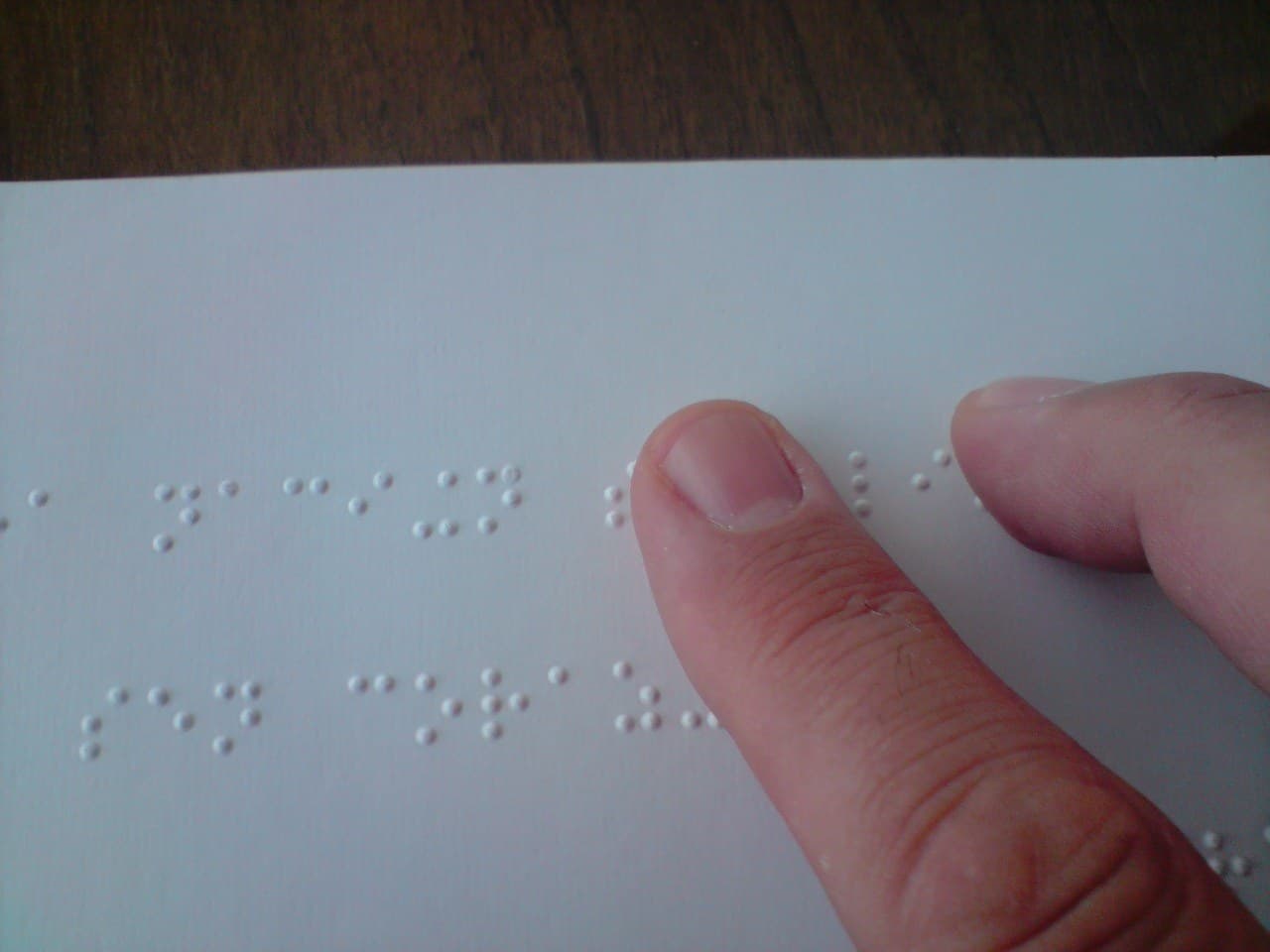
- Emboss a row of small dots into card and try to read them by touch with your eyes closed.
- Now emboss a row of bold curves and straight lines and try again.
- Repeat both with cold hands.
Bu adım için malzemeler:
 Bristol Karton1 paket
 Biz1 adet
Build the fourteen shapes
Build the fourteen shapes
The alphabet is a small set of forms, reused by rotation.
- Draw the basic strokes: a straight line, a hook, an open curve, an angle, a closed loop.
- Rotate each through the four quarter turns to generate the letters.
- Lay the full alphabet out on one sheet for reference.
Bu adım için malzemeler:
 Cetvel1 adet
 Grafit Kalem Takımı1 takım
Emboss a line and add the return turn
Emboss a line and add the return turn
The boustrophedon layout is a real usability decision.
- Emboss a short sentence left to right by pressing from the reverse side of the card.
- At the line end, emboss a raised turn mark.
- Emboss the NEXT line right to left, with every letter mirrored.
Measure both systems on the axes that differ
Measure both systems on the axes that differ
Compare fairly — on several axes, not one.
- Emboss the same sentence in Moon and in Braille. Measure the space each takes.
- Time how long it takes an untrained person to learn five letters in each.
- Time a practised reader on each.
Bu adım için malzemeler:
 Kronometre1 adet
History and context
History and context
William Moon (1818-1894) lost the sight of one eye to scarlet fever as a child and of the other by the age of twenty-one. Teaching blind children in Brighton, he found that his adult pupils could not manage the dot-based systems then in use, and in 1845 he published his embossed alphabet. He built a printing operation for it and it spread widely — Moon material has been produced in some 400 languages.
Both systems came out of the same decade of experiment, and neither won outright. Louis Braille published in 1829; his system's compactness and writability made it the standard for education, and it can be WRITTEN by hand with a slate and stylus, which Moon effectively cannot. Moon persisted for exactly the population Braille serves worst, and RNIB and others still produce it today.
Why keep both in a catalogue of approaches: this is the clearest case that "best" is meaningless without naming the user. A system optimised for lifetime fluency and one optimised for late-life accessibility are not competitors to be ranked; they cover different regions of the same problem. Discarding the less popular one would delete the only option that works for a substantial group of people.
An honest note on its limits: Moon's bulk is not a small matter — a book can run to many volumes — and the difficulty of writing it by hand means readers are usually consumers of Moon rather than producers. Those are conditions of use, and they are precisely what a maker choosing between the two needs to know.
Malzemeler
5- 1 paketYer Tutucu
- 1 adetYer Tutucu
- 1 adetYer Tutucu
- 1 takımYer Tutucu
- 1 adetYer Tutucu
İlgili Blueprint'ler
Bu blueprint'ler bilgi paylaşır — teknikler, malzemeler veya ilkeler

CC0 Kamu Malı
Bu plan CC0 lisansıyla yayınlanmıştır. İzin almadan kopyalayabilir, değiştirebilir, dağıtabilir ve herhangi bir amaçla kullanabilirsiniz.
Planı üzerinden ürün satın alarak Maker'ı destekleyin, böylece Maker Komisyonu Satıcılar tarafından belirlenen komisyonu kazanırlar veya bu Planın yeni bir versiyonunu oluşturun ve gelir paylaşımı için kendi Planınıza bağlantı olarak ekleyin.