SANAT
GÜZELLİK & SAĞLIK
ZANAAT
KÜLTÜR & TARİH
EĞLENCE
ÇEVRE
YİYECEK & İÇECEK
TERS MÜHENDİSLİK
BİLİMLER
SPOR
TEKNOLOJİ
GİYİLEBİLİR ÜRÜNLER
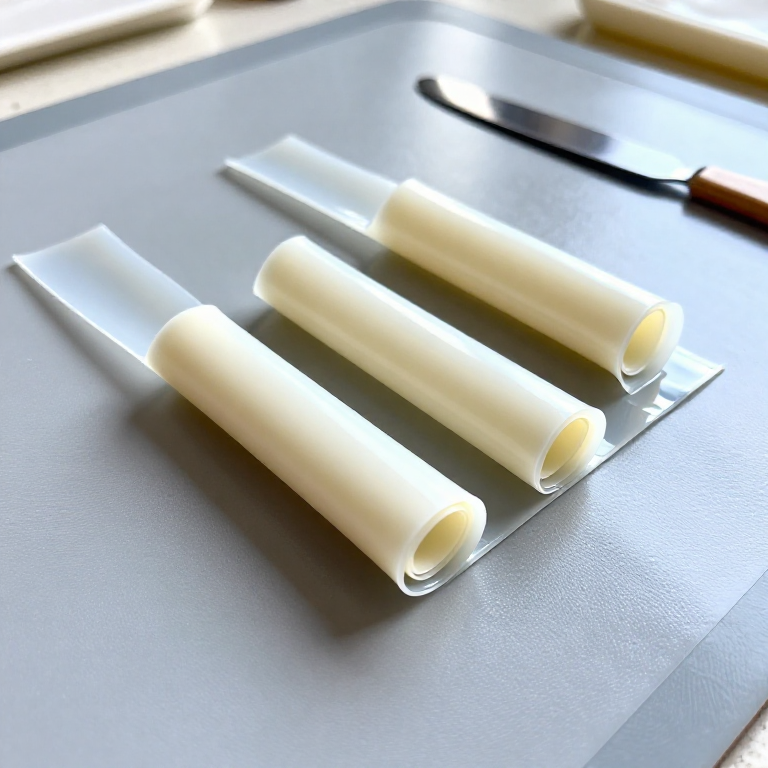


Plasticised PVC (Plastisol)
PVC was known for decades as a hard, brittle powder nobody could use. In 1926 Waldo Semon at B.F. Goodrich found that certain liquids dissolve it only when hot, and that the hot solution sets on cooling into a soft, rubber-like gel - flexible PVC.
**US 1,929,453**, "Synthetic rubber-like composition and method of making same", Semon, assigned to B.F. Goodrich, granted 10. October 1933, claims dissolving "an insoluble polymerized vinyl halide at an elevated temperature" in a liquid that dissolves it only well above room temperature, and gelling it by cooling. One example: 8 parts PVC, 8 parts tricresyl phosphate, 3 parts dibutyl phthalate.
**Plastisol is that idea in a bottle**: PVC grains suspended, undissolved, in plasticiser. Heat makes the liquid dissolve the grains and fuse into solid flexible PVC. You bake test films at three temperatures and pull them apart to find where it truly fuses.
Başlangıç
2 hours
Talimatlar
1
1
Ventilate and set the oven
Ventilate and set the oven
Use a toaster oven kept for crafts, never food, by an open window. Put the probe thermometer inside - dial settings are rarely accurate.
Gerekli aletler:
 Mini fırın
 Takılı kalan problu termometre
 N95 solunum maskesi
2
2
Stir the plastisol
Stir the plastisol
The PVC grains settle. Stir the plastisol from the bottom for 2 minutes until even. Read the label's fusion temperature.
Bu adım için malzemeler:
 Plastisol150 ml
Gerekli aletler:
 Karıştırma Çubuğu
3
3
Spread three films
Spread three films
On the silicone mat, spread three 100 x 40 mm films about 1.5 mm thick with the palette knife.
Bu adım için malzemeler:
Plastisol50 mlGerekli aletler:
 Silikon pişirme matı
 Palet bıçağı takımı
 Çelik Cetvel
4
4
Bake at three temperatures
Bake at three temperatures
Bake one film 10 minutes each at 130 °C, 150 °C and the label's fusion temperature (commonly 160–180 °C). Never exceed the label maximum.
Gerekli aletler:
Mini fırın Kızılötesi Termometre
 Kaynak eldivenleri
5
5
Cool and cut strips
Cool and cut strips
Cool 10 minutes. Peel each film and cut a 10 mm strip from its centre. Mark its temperature.
Gerekli aletler:
 Maket bıçağıÇelik Cetvel
6
6
Stretch and pull
Stretch and pull
Clamp one end in the vise. Hook the spring scale to the other and pull slowly. Record the peak force and how it failed.
Gerekli aletler:
 Kuvvet Ölçer (Yaylı Terazi)
 Tezgah Mengenesi
 Şeffaf Koruyucu Gözlük
7
7
Recipe, cure curve, siblings
Recipe, cure curve, siblings
Jupyter defteri yükleniyor…
8
8
History & Context
History & Context
**What the patent specifies:** gelling PVC in high-boiling liquids such as tricresyl phosphate and dibutyl phthalate. **Modern build (derived):** a commercial plastisol; many now use phthalate-free plasticisers.
Flexible PVC became cable insulation, shower curtains, hoses and flooring. Its limits: the plasticiser slowly migrates out, so old soft PVC stiffens and turns sticky; and overheated PVC yellows and releases hydrogen chloride, which is why the label's maximum temperature matters.
Gerekli Aletler
13- Yer Tutucu
- Yer Tutucu
- Yer Tutucu
- Yer Tutucu
- Yer Tutucu
- Yer Tutucu
- Yer Tutucu
- Yer Tutucu
- Kaynak eldivenleri%10 komisyonYer Tutucu
- Yer Tutucu
- Yer Tutucu
- Yer Tutucu
- Yer Tutucu
İlgili Blueprint'ler
Bu blueprint'ler bilgi paylaşır — teknikler, malzemeler veya ilkeler
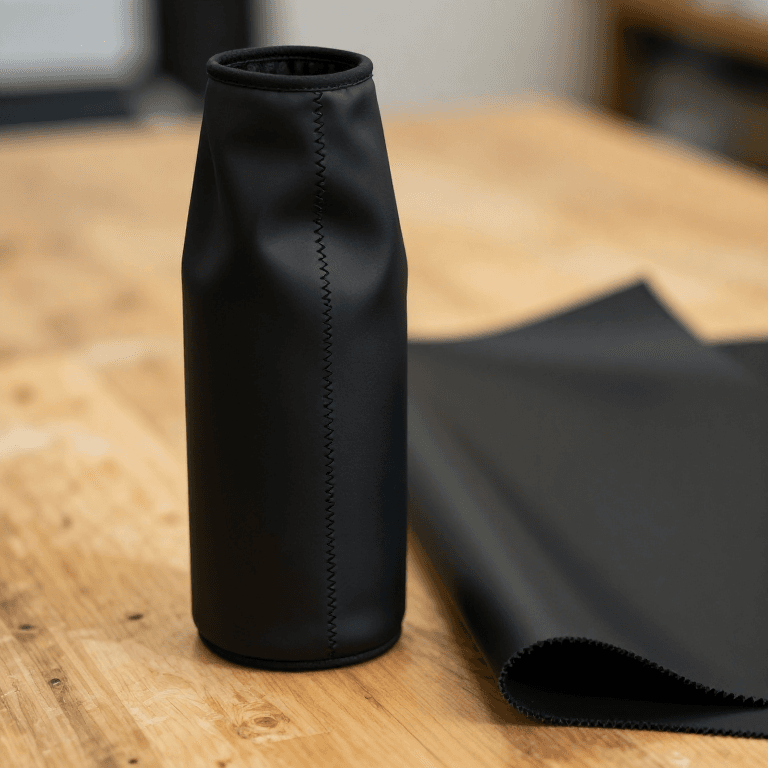

CC0 Kamu Malı
Bu plan CC0 lisansıyla yayınlanmıştır. İzin almadan kopyalayabilir, değiştirebilir, dağıtabilir ve herhangi bir amaçla kullanabilirsiniz.
Planı üzerinden ürün satın alarak Maker'ı destekleyin, böylece Maker Komisyonu Satıcılar tarafından belirlenen komisyonu kazanırlar veya bu Planın yeni bir versiyonunu oluşturun ve gelir paylaşımı için kendi Planınıza bağlantı olarak ekleyin.