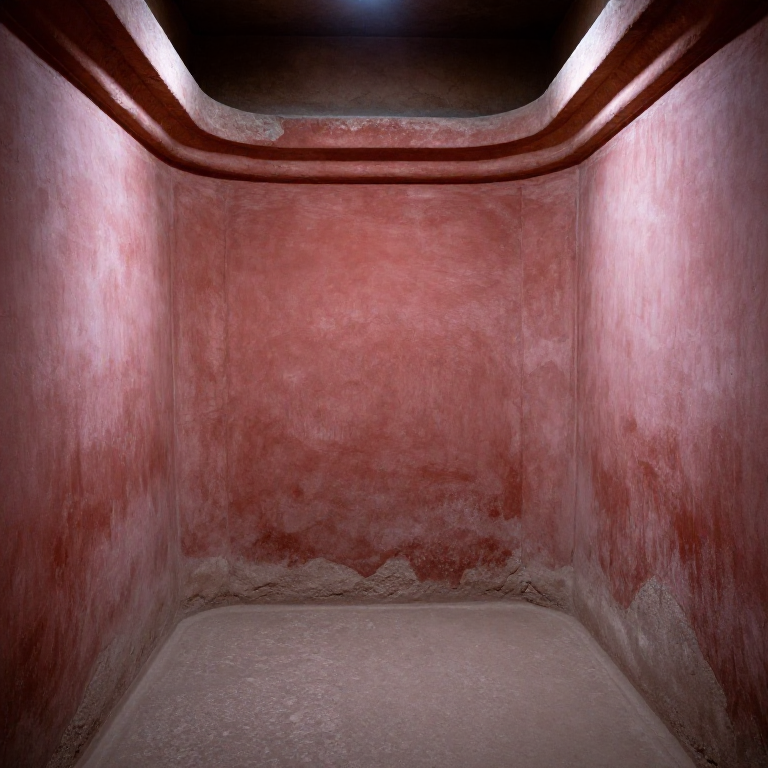


Waterproofing Cisterns with Opus Signinum — Roman Hydraulic Cement
Talimatlar
Prepare the Cistern Substrate
Prepare the Cistern Substrate
The interior stone or brick walls and floor of the cistern must be thoroughly cleaned and dampened before applying opus signinum. Remove all dust, loose mortar, and any organic material. Rake out mortar joints to a depth of approximately 10 mm to provide a mechanical key for the waterproof lining. Saturate the masonry with water by sponging or spraying — the stones must be evenly damp throughout, as dry masonry will absorb water from the plaster and cause it to dry too fast, weakening the pozzolanic reaction. If the cistern has been previously coated, any loose or delaminated areas must be chipped away completely down to solid stone. The substrate should be rough — smooth surfaces should be scored with a chisel to improve adhesion.
Bu adım için malzemeler:
 Sönmüş Kireç (Kalsiyum Hidroksit)10 kg kg
 Öğütülmüş pişmiş toprak20 kg kgSönmüş Kireç (Kalsiyum Hidroksit)10 kg kg
 Suas needed adet
Gerekli aletler:
 Düz Taş (Mala / Biçimlendirme Aleti)
 Ahşap Tokmak
 Taş
Taş Harç karıştırma çapası
 Oluk profil rendesi
 Deri Eldiven
Mix and Apply the Base Coat
Mix and Apply the Base Coat
Mix one part slaked lime putty with two parts coarse crushed terracotta (cocciopesto) in the mixing trough. Add water sparingly until the mortar reaches a stiff, buttery consistency. Apply this base coat to the cistern walls and floor with a flat trowel, pressing firmly to ensure complete contact with the stone. The base coat should be approximately 15 to 20 mm thick. Work from the bottom up on the walls. Score the surface of the base coat with crosshatch marks while still soft to key the finishing coat. The terracotta particles must be from pottery or brick fired above 600 degrees Celsius to be pozzolanic — the reactive silica and alumina in the fired clay react with the calcium hydroxide in the lime to form waterproof calcium silicate hydrate and calcium aluminate hydrate crystals.
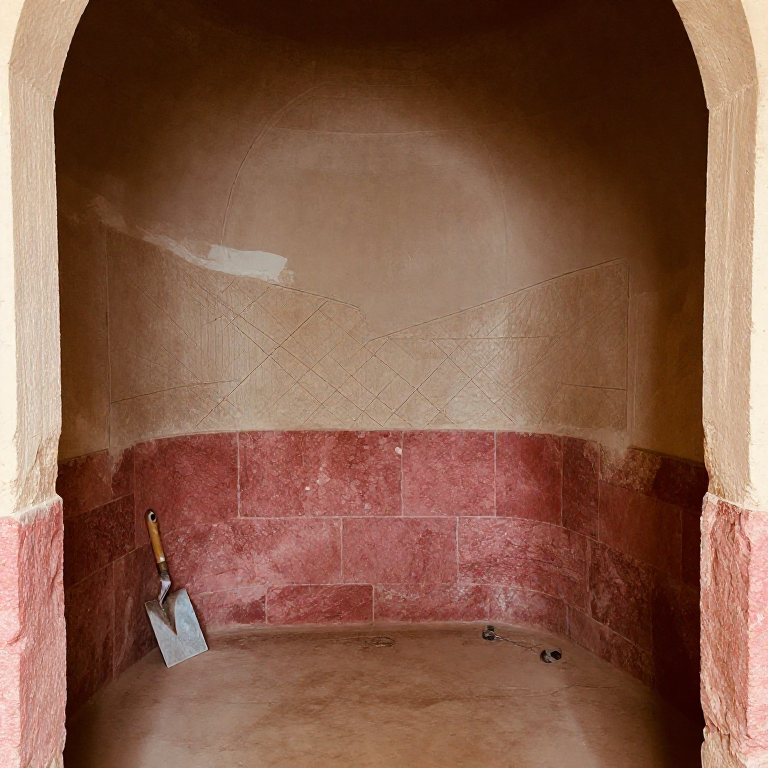
Form Cove Mouldings at All Joints
Form Cove Mouldings at All Joints
Before the base coat stiffens, form concave cove mouldings (quarter-round fillets) at every junction where the floor meets the walls and where walls meet each other. Use a cove moulding tool (a trowel with a convex profile) to press a smooth, curved fillet of opus signinum mortar into each internal corner. These coves are typically 3 to 5 cm radius and serve a critical engineering function — they eliminate the sharp internal angles where hydrostatic pressure would concentrate stress and force water through the lining. Every surviving Roman cistern shows these coves, and their absence is the most common cause of failure in waterproof linings. The cove should blend smoothly into both the wall and floor surfaces with no sharp transitions or voids behind the curved surface.
Apply the Finishing Coat
Apply the Finishing Coat
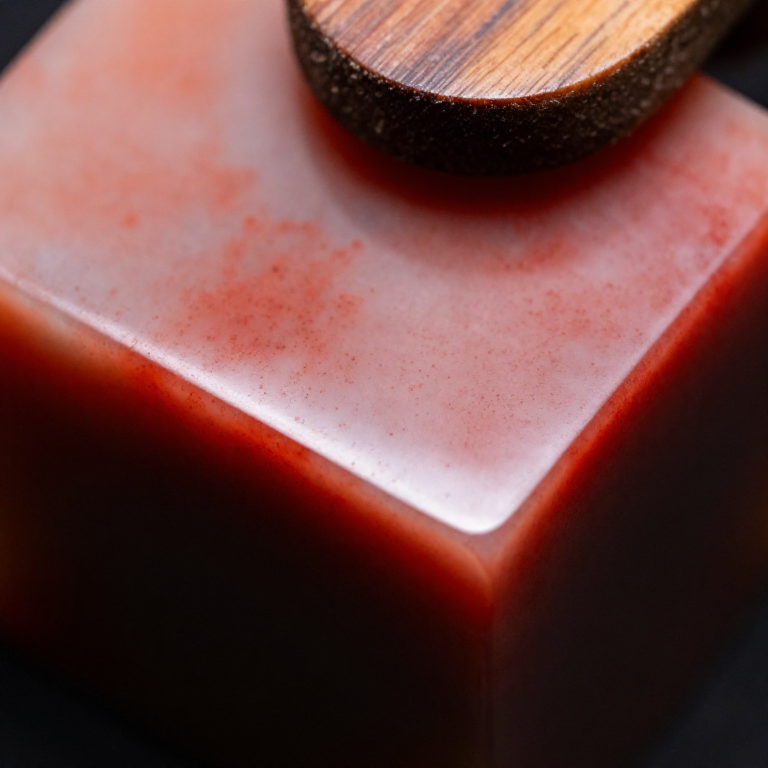
After the base coat has stiffened but not fully dried (typically 12 to 24 hours), apply a finishing coat of fine opus signinum — one part lime putty to one or two parts fine terracotta powder. This coat should be 5 to 8 mm thick and applied with a flat trowel, then polished with a wooden float using firm circular strokes. The polishing compresses the surface layer and brings lime to the exterior, creating a dense, smooth skin that is the primary water barrier. Multiple thin finishing coats (each 3 to 4 mm) are more effective than one thick coat, as each layer adds an additional waterproof membrane. Allow each coat to stiffen before applying the next. The final surface should be smooth, uniform in colour (a characteristic pinkish-red), and free of cracks or pinholes.
Cure and Test for Water-Tightness
Cure and Test for Water-Tightness
Cure the completed opus signinum lining by keeping it damp for a minimum of 14 days — the pozzolanic reaction between lime and terracotta is slower than the carbonation reaction in ordinary lime plaster and requires sustained moisture to develop full strength and impermeability. Cover the interior with wet cloths or periodically spray with water. After two weeks, fill the cistern slowly with water to test for leaks. Mark the water level and check after 24 hours — any drop in level indicates a leak that must be found and patched with fresh opus signinum. A properly executed opus signinum lining will hold water indefinitely. Roman cisterns in North Africa, the Middle East, and across the Mediterranean still hold water after two thousand years, demonstrating the extraordinary longevity of this material when properly applied and cured.
Malzemeler
5- Yer Tutucu
- 20 kg kgYer Tutucu
- as needed adetYer Tutucu
- 20 kg adetYer Tutucu
- 10 kg adetYer Tutucu
Gerekli Aletler
10- Yer Tutucu
- Yer Tutucu
- Yer Tutucu
- Yer Tutucu
- Yer Tutucu
- Yer Tutucu
- Yer Tutucu
- Yer Tutucu
- Yer Tutucu
- Yer Tutucu
CC0 Kamu Malı
Bu plan CC0 lisansıyla yayınlanmıştır. İzin almadan kopyalayabilir, değiştirebilir, dağıtabilir ve herhangi bir amaçla kullanabilirsiniz.
Planı üzerinden ürün satın alarak Maker'ı destekleyin, böylece Maker Komisyonu Satıcılar tarafından belirlenen komisyonu kazanırlar veya bu Planın yeni bir versiyonunu oluşturun ve gelir paylaşımı için kendi Planınıza bağlantı olarak ekleyin.