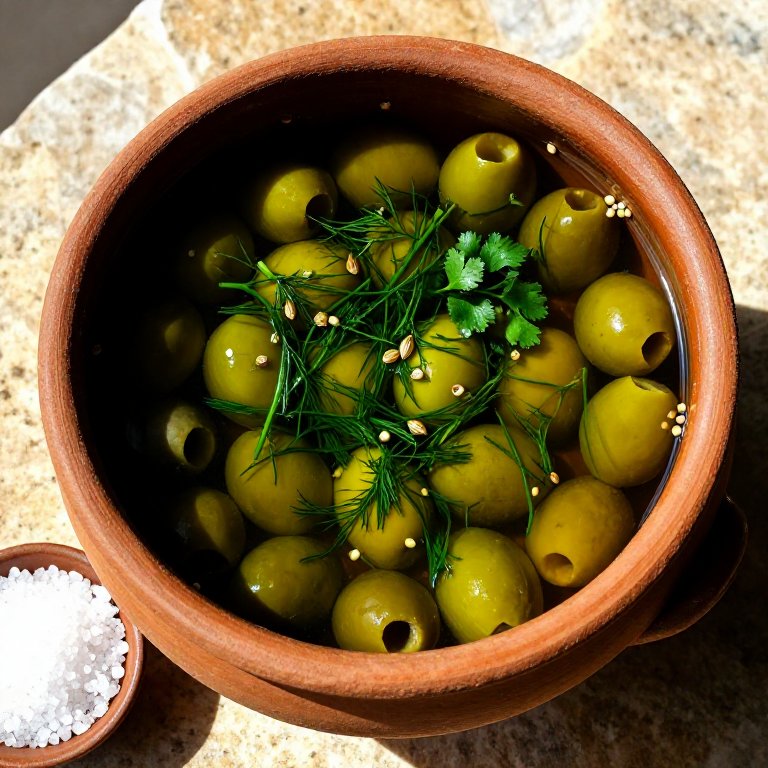


Curing Olives in Brine and Herbs — Roman Olive Preservation
Talimatlar
Select and Prepare the Olives
Select and Prepare the Olives
Select firm, unblemished olives — bruised or damaged fruit will become soft and mushy during the long fermentation. Green olives (harvested before ripening) produce a firmer, more bitter result that requires longer curing, while olives harvested at the turning stage (green to purple) cure faster and develop a milder flavour. Rinse the olives thoroughly in clean water. Some Roman authors recommend lightly cracking each olive with a stone or wooden mallet to speed brine penetration — Columella describes this method for making a quick-cure olive called colymbades. If cracking, strike just hard enough to split the skin and slightly crush the flesh without breaking the pit.
Bu adım için malzemeler:
 Yeşil zeytin (taze)1 kg kg
 İri Deniz Tuzu100 grams per litre of water (10% brine) adet
 Su1.5 litres adet
 Rezene tohumu2-3 stalks or 1 tablespoon seeds adet
 Kişniş tohumu1 tablespoon adet
 Şarap sirkesi50-100 ml ml
Gerekli aletler:
 Seramik küp (geniş ağızlı)
 Zeytinleri batık tutan ağırlık
 Bez (Süzme İçin)
Prepare the Brine
Prepare the Brine
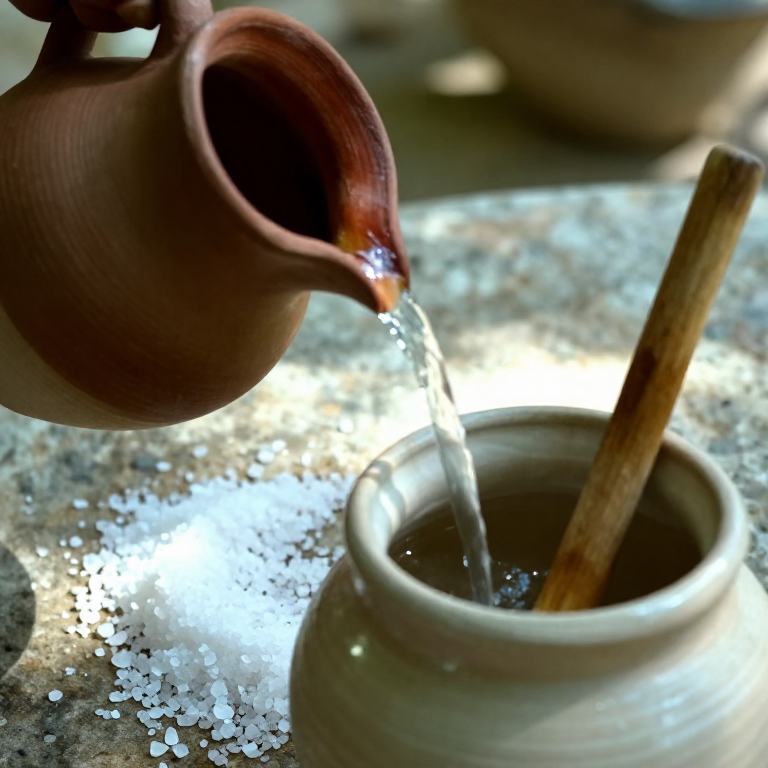
Dissolve coarse sea salt in water at a concentration of approximately 8 to 10 percent by weight — roughly 100 grams of salt per litre of water. Stir until fully dissolved. Test the brine strength by floating a fresh egg: at 10 percent salinity, the egg should float with a small area above the surface. This salt concentration is high enough to suppress harmful bacteria while allowing beneficial lactic acid bacteria (primarily Lactobacillus plantarum and Lactobacillus pentosus) to thrive. Columella specifies that the brine should be strong enough to float an egg — the same test used by olive curers for millennia. Use non-chlorinated water, as chlorine inhibits the fermentation bacteria.
Pack Olives in Brine with Herbs
Pack Olives in Brine with Herbs
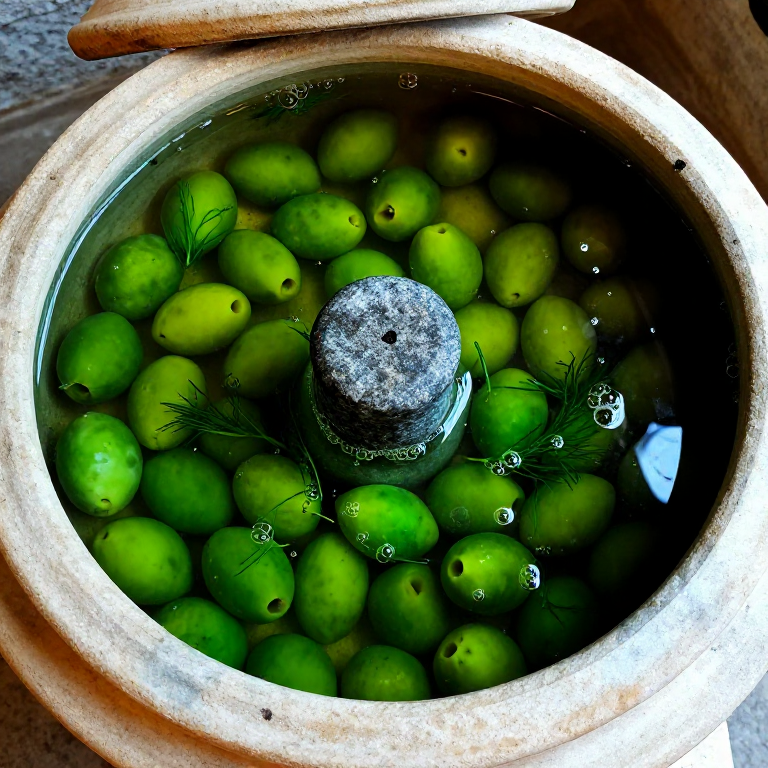
Place the olives in the ceramic crock and pour the brine over them until fully submerged with at least 2 cm of brine above the topmost olive. Add fennel stalks or seeds and coriander seeds if desired — Columella recommends fennel as an aromatic addition to brined olives. Place a clean weight (a stone, a water-filled glass jar, or a ceramic plate) on top of the olives to keep them submerged. Olives that float above the brine will be exposed to air and develop mould. Cover the crock with a cloth to keep dust and insects out while allowing gases from fermentation to escape. Store in a cool, shaded location at approximately 18-22 degrees Celsius.
Monitor and Maintain the Fermentation
Monitor and Maintain the Fermentation
Check the olives every two to three days. Within the first week, bubbles will appear as lactic acid bacteria begin producing carbon dioxide. A thin white film (kahm yeast) may form on the surface — this is harmless but should be skimmed off to prevent off-flavours. If the brine level drops below the olives, top up with fresh brine of the same concentration. Taste an olive after two weeks — it will still be quite bitter. The oleuropein is slowly broken down by enzymatic hydrolysis and the acidifying action of the lactic fermentation, which typically lowers the brine pH from approximately 6.5 to 4.0-4.5 over the curing period. Green olives may require 45 to 60 days; turning-colour olives typically cure in 30 to 45 days.
Finish and Store
Finish and Store
When the olives taste pleasantly briny with only mild residual bitterness, the curing is complete. Drain the olives and rinse lightly. For storage, pack them in a fresh, lighter brine (5 percent salt) with a splash of wine vinegar, which lowers the pH further and extends shelf life. Columella also describes finishing olives by draining and dressing them with olive oil, crushed fennel, and mastic resin. Stored in sealed jars in a cool place, brine-cured olives will keep for many months. The Romans consumed olives at every meal — as a gustatio (appetiser), as a cooking ingredient, and pressed into olive oil, which was used for cooking, lighting, bathing, and as a base for perfumes and medicines.
Malzemeler
7- 1 kg kgYer Tutucu
- 100 grams per litre of water (10% brine) adetYer Tutucu
- 1.5 litres adetYer Tutucu
- 2-3 stalks or 1 tablespoon seeds adetYer Tutucu
- 1 tablespoon adetYer Tutucu
- 2-3 stalks or 1 tablespoon seeds adetYer Tutucu
- 50-100 ml adetYer Tutucu
Gerekli Aletler
4- Yer Tutucu
- Yer Tutucu
- Yer Tutucu
- Yer Tutucu
CC0 Kamu Malı
Bu plan CC0 lisansıyla yayınlanmıştır. İzin almadan kopyalayabilir, değiştirebilir, dağıtabilir ve herhangi bir amaçla kullanabilirsiniz.
Planı üzerinden ürün satın alarak Maker'ı destekleyin, böylece Maker Komisyonu Satıcılar tarafından belirlenen komisyonu kazanırlar veya bu Planın yeni bir versiyonunu oluşturun ve gelir paylaşımı için kendi Planınıza bağlantı olarak ekleyin.