SANAT
GÜZELLİK & SAĞLIK
ZANAAT
KÜLTÜR & TARİH
EĞLENCE
ÇEVRE
YİYECEK & İÇECEK
TERS MÜHENDİSLİK
BİLİMLER
SPOR
TEKNOLOJİ
GİYİLEBİLİR ÜRÜNLER
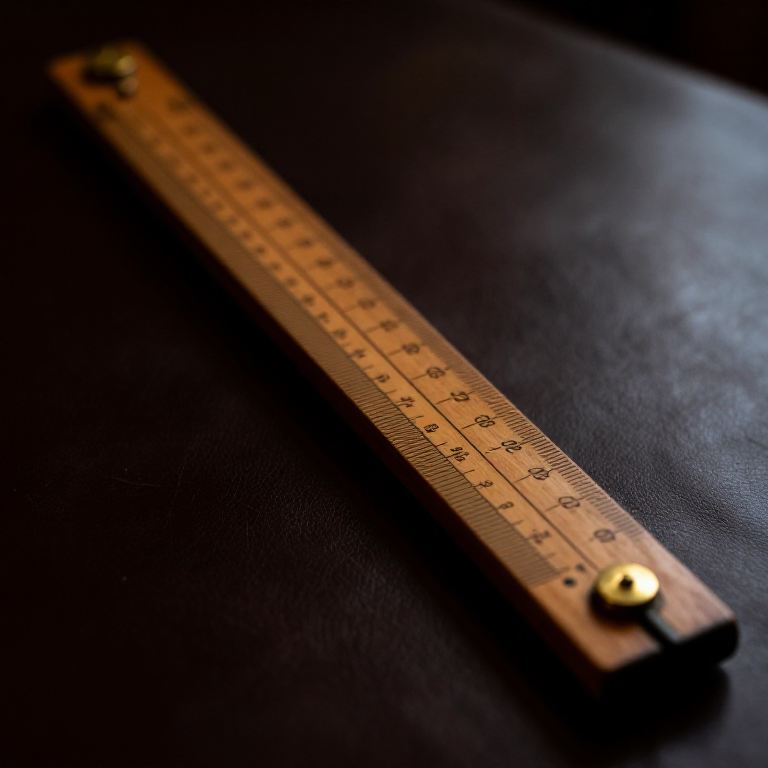


Napier's Logarithms — Build a Paper Slide Rule and Multiply by Sliding
A hands-on maths project: make a slide rule from two paper strips marked with a logarithmic scale, then multiply numbers just by sliding them -- because logarithms turn multiplication into addition. A Python cell shows the log trick, and a compendium covers 300 years of computing before the calculator.
Başlangıç
30 minutes
Talimatlar
1
1
Turning times into plus
Turning times into plus
In 1614 John Napier published logarithms, which turn hard multiplication into easy addition. The slide rule mechanised the trick and did the world's calculating for 300 years. You will build one from paper.
2
2
Make two logarithmic strips
Make two logarithmic strips
Cut two identical strips of card. On each, mark 1 at the left and 10 at the right, but space the numbers so that 2 sits about 30% along, 3 about 48%, 5 about 70% -- these positions are the logarithms. (Mark 1,2,3,...,10 at the log positions; a printed log scale helps.) These uneven marks are the secret.
Bu adım için malzemeler:
 Karışık Renk Bristol Karton Paketi1 adet
Gerekli aletler:
 Cetvel
 Makas
Makas Grafit Kalem Takımı
3
3
Multiply by sliding
Multiply by sliding
To multiply, say, 2 by 3: slide the 1 of the top strip to sit above the 2 on the bottom strip. Now look above the 3 on the top strip -- it points at 6 on the bottom. You just multiplied by ADDING two lengths. Try 2 by 4, or 3 by 3. Sliding adds the log-distances, and adding logs multiplies the numbers.
4
4
See the log trick in numbers
See the log trick in numbers
Jupyter defteri yükleniyor…
Gerekli aletler:
 Masaüstü Bilgisayar
 Hesap Makinesi
5
5
Compendium: three centuries of computing
Compendium: three centuries of computing
What your slide rule teaches. (1) A logarithm answers 'what power of 10 gives this number?', and the one law log(a times b) equals log(a) plus log(b) is why sliding (adding lengths) multiplies. (2) Equal MULTIPLES sit at equal DISTANCES on a log scale -- that is why the marks bunch up toward 10. (3) From Kepler's orbits to the Apollo programme, science ran on log tables and slide rules until electronic calculators retired them in the 1970s. (4) Logarithms never left: they measure sound in decibels, acidity in pH, earthquakes on the Richter scale and information in bits.
Malzemeler
2- Yer Tutucu
- 1 yaprakYer Tutucu
Gerekli Aletler
5- Yer Tutucu
- Yer Tutucu
- Yer Tutucu
- Yer Tutucu
- Yer Tutucu
İlgili Blueprint'ler
Bu blueprint'ler bilgi paylaşır — teknikler, malzemeler veya ilkeler

CC0 Kamu Malı
Bu plan CC0 lisansıyla yayınlanmıştır. İzin almadan kopyalayabilir, değiştirebilir, dağıtabilir ve herhangi bir amaçla kullanabilirsiniz.
Planı üzerinden ürün satın alarak Maker'ı destekleyin, böylece Maker Komisyonu Satıcılar tarafından belirlenen komisyonu kazanırlar veya bu Planın yeni bir versiyonunu oluşturun ve gelir paylaşımı için kendi Planınıza bağlantı olarak ekleyin.