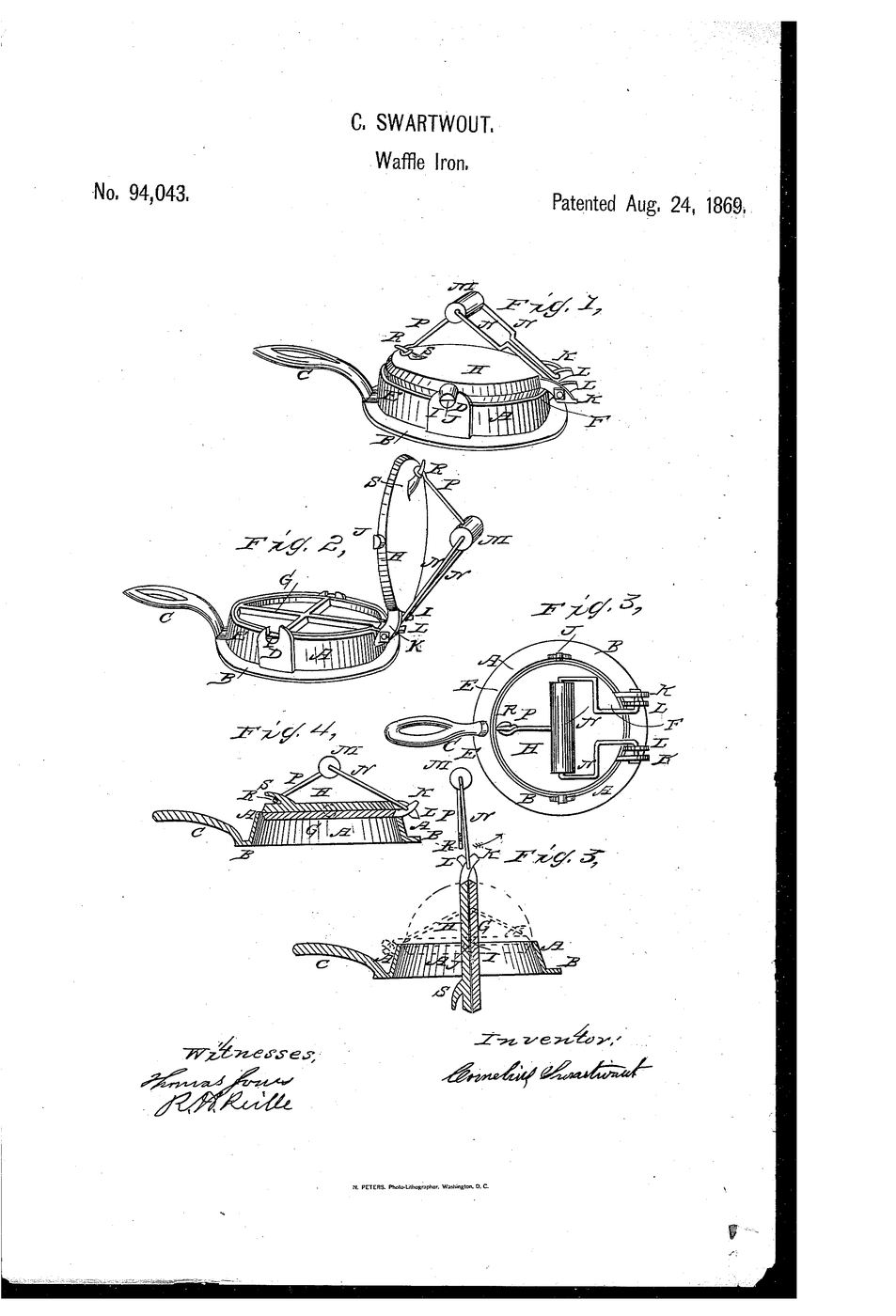


Waffle Iron
A pancake cooks on one side at a time on a flat griddle: you must watch it, flip it, and it browns unevenly. A waffle batter is thicker and richer — cook it flat and the middle stays raw while the edges burn.
Swartwout's waffle iron is two patterned plates on a hinge, with a long handle. You pour batter into the hot bottom plate, close the top plate down onto it, and the batter is gripped between two hot surfaces at once — cooked top and bottom together, and pressed into the deep square pockets moulded in the plates.
The hinge and the long handle are the clever part: they let you FLIP the whole closed iron over on the stove so both faces get equal heat, and lift it clear of the fire without burning your hand — then swing open to release a crisp, deep-pocketed waffle.
US Patent 94,043, "Waffle-Iron", granted 24 August 1869 to Cornelius Swartwout of Troy, New York.
Talimatlar
Read the claim: two hinged plates, one handle
Read the claim: two hinged plates, one handle
Swartwout claims two patterned plates joined by a hinge, with a long handle so the closed iron can be flipped and lifted on the stove. Note the hinge and the handle.
Cut two matching plates
Cut two matching plates
Cut two equal squares from aluminium sheet — these are the two faces of the iron.
Bu adım için malzemeler:
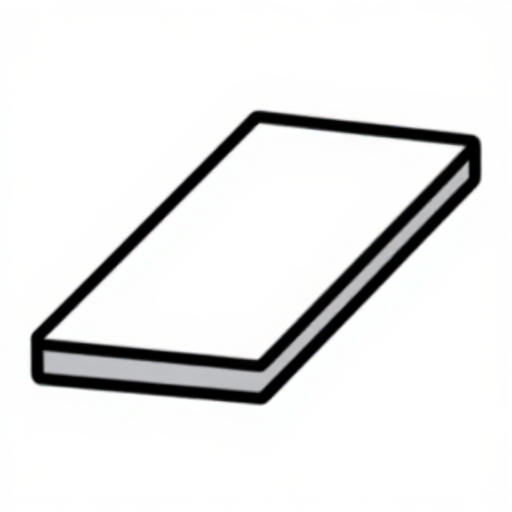 Alüminyum levha1 yaprak
Gerekli aletler:
 Maket Bıçağı
Press a grid pattern into each plate
Press a grid pattern into each plate
Emboss a grid of ridges and square pockets into both plates (press over a mesh). This waffle pattern is what deepens and shapes the batter.
Join the plates with a hinge
Join the plates with a hinge
Fix a hinge along one edge so the plates open and close like a book, patterns facing.
Bu adım için malzemeler:
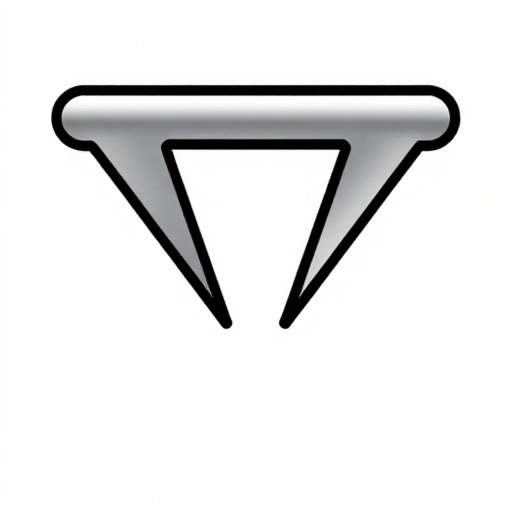 Yaylı menteşe 3-1/2"1 adet
Add a long handle
Add a long handle
Fasten a long dowel handle so you can hold, close, flip and lift the iron from a safe distance.
Bu adım için malzemeler:
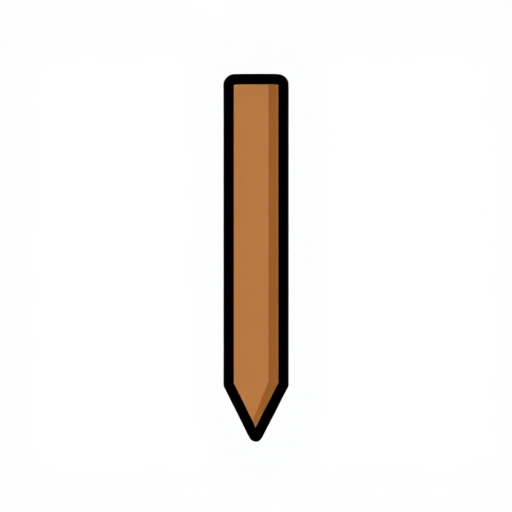 Ahşap Kavela Çubuğu1 adet
Mix a simple batter
Mix a simple batter
Whisk flour with milk (and an egg and a little oil) to a thick pourable batter. Thicker than pancake batter — a waffle needs body to hold the pockets.
Bu adım için malzemeler:
 Çok amaçlı un200 g
 Tam yağlı süt200 ml
Grease and fill the bottom plate
Grease and fill the bottom plate
Lightly oil the pattern and pour batter into the pockets of the bottom plate — not too much, it will spread when pressed.
Close and press
Close and press
Swing the top plate down and press. The batter is squeezed into the grid, filling every pocket and touching both hot faces at once.
Cook both sides — flip on the hinge (adult help, stove)
Cook both sides — flip on the hinge (adult help, stove)
On a stove with an adult, heat one face, then flip the whole closed iron using the hinge and handle to heat the other. Both faces cook evenly — the hinge is what makes flipping possible.
Open and release the waffle
Open and release the waffle
Swing the iron open. Out comes a deep, square-pocketed waffle, browned top and bottom. The pattern is a perfect print of the plates.
Compare with a flat griddle
Compare with a flat griddle
Cook the same batter flat on a pan. It browns one side at a time and stays thin — no pockets, uneven cook. The two-sided pressed iron beats it.
See why the pockets matter
See why the pockets matter
The deep grid gives a waffle far more surface for its size — crisper edges, faster cooking, and little wells that hold butter and syrup. Form doing a job.
History & Context — the hinged iron that shaped a breakfast
History & Context — the hinged iron that shaped a breakfast
The patent. US 94,043, "Waffle-Iron", granted 24 August 1869 to Cornelius Swartwout of Troy, New York. Waffles themselves are far older — Dutch and Belgian cooks pressed batter between two long-handled hinged plates held over an open fire for centuries. Swartwout's patent is an American stovetop waffle iron: designed to sit on the cast-iron cook stove that was replacing the open hearth, with a hinge, a handle, and a collar that let it turn on the stove lid. (24 August is now marked as "National Waffle Day" in the US for this patent.)
The mechanism is two hot surfaces and a flip. A thick batter cooked flat conducts heat slowly and cooks unevenly; pressing it thin between two hot plates cooks it from both sides at once, fast and evenly (steps 8-11). The moulded grid does two things: it presses the batter into a thin, quick-cooking layer folded into deep pockets, and it multiplies the surface area for crispness and for holding syrup (step 12). The whole design turns on the hinge and handle — without them you could not close the plates together under pressure, flip the closed iron to cook the second face, or lift it off a hot stove without burning yourself (step 9). It is a small, elegant piece of mechanism doing a cooking job.
Where it sits. The stovetop hinged waffle iron ruled American and European kitchens until the electric waffle iron of the 1910s-1930s put the heat inside the plates and added a thermostat — but the geometry never changed: two patterned plates on a hinge, closing on a batter, cooked both sides. The clever, humble hinge you built here is the entire idea, and it is still the reason a waffle is a waffle and not a pancake.
Malzemeler
5- 1 yaprakYer Tutucu
- 1 adetYer Tutucu
- 1 adetYer Tutucu
- 200 gYer Tutucu
- 200 mlYer Tutucu
Gerekli Aletler
1- Yer Tutucu
CC0 Kamu Malı
Bu plan CC0 lisansıyla yayınlanmıştır. İzin almadan kopyalayabilir, değiştirebilir, dağıtabilir ve herhangi bir amaçla kullanabilirsiniz.
Planı üzerinden ürün satın alarak Maker'ı destekleyin, böylece Maker Komisyonu Satıcılar tarafından belirlenen komisyonu kazanırlar veya bu Planın yeni bir versiyonunu oluşturun ve gelir paylaşımı için kendi Planınıza bağlantı olarak ekleyin.