SANAT
GÜZELLİK & SAĞLIK
ZANAAT
KÜLTÜR & TARİH
EĞLENCE
ÇEVRE
YİYECEK & İÇECEK
TERS MÜHENDİSLİK
BİLİMLER
SPOR
TEKNOLOJİ
GİYİLEBİLİR ÜRÜNLER
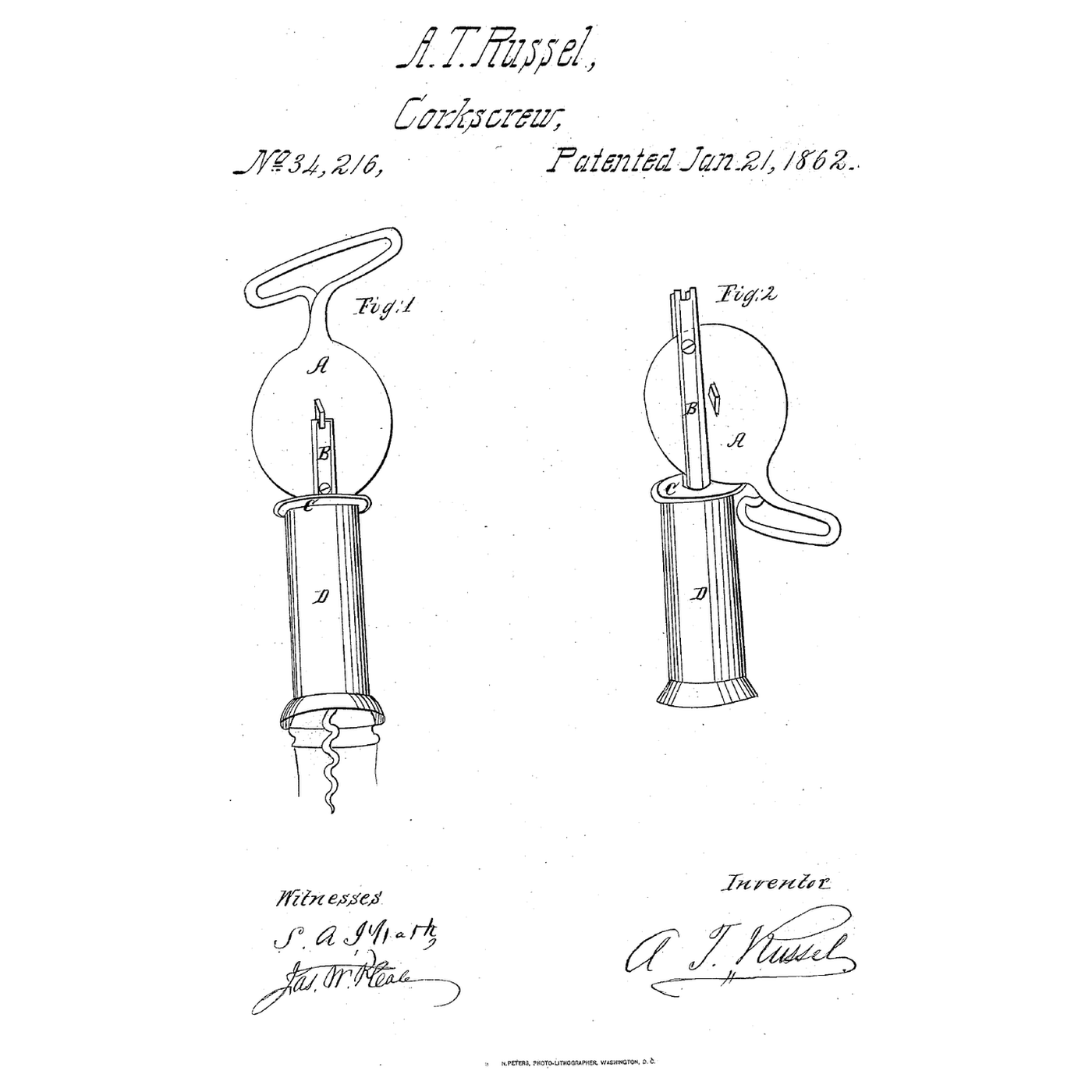

The Cam-Lever Corkscrew: Half a Turn of an Eccentric Lifts the Cork
Drawing a tight cork with a plain corkscrew takes a hard, steady pull with the bottle held between the knees.
Abraham T. Russel of New York received US 34,216, dated 21 January 1862, for a "Machine for Raising or Drawing Corks from Bottles": a cylinder whose head carries a piston, with a corkscrew fixed to the piston's lower end and a cam or eccentric pinned through the piston's slit top. The cylinder stands on the bottle, the screw is turned into the cork by the handle, and "By a half or part revolution of cam or eccentric the piston is raised with the corkscrew."
This rung works out the average lift of the cam, with a work check, then makes the cylinder, piston and eccentric and draws corks with it.
İleri
About 5 hours
Talimatlar
1
1
The eccentric's lift
The eccentric's lift
Jupyter defteri yükleniyor…
2
2
A corkscrew before it
A corkscrew before it
The embedded blueprint draws a cork with a strong screw and a T handle, by the arm's pull. Russel keeps a screw but lifts it with a cam, the cylinder bearing on the bottle.
3
3
Read US 34,216
Read US 34,216
"The machine is constructed of a cylinder with a head or cap through which passes a piston, to the lower end of which is secured a corkscrew. The upper end of the piston passes above the head or cap of the cylinder and is left free to turn and play up and down. To the upper part of piston is attached a cam or eccentric, which works through the upper part of said piston (being slit) resting on the cylinder head or cap, which is the bearing."
"It is operated by placing the lower end of the cylinder on the mouth of the bottle. The screw is then turned into the cork by the handle attached to the cam or eccentric, observing that the catch drops into the slots on the end of piston. The cam or eccentric is then turned with handle down, as in Fig. 2, which lifts or draws the cork out of the bottle."
4
4
Make the cam corkscrew and draw corks
Make the cam corkscrew and draw corks
**Cylinder.** Cut 12 cm of 30 mm aluminium tube and file its lower end to sit square on a bottle's mouth. Cut a hardwood disc to fit its top as the head, drill it for the piston and glue it in.
**Piston.** Cut 15 cm of 8 mm mild steel rod. Saw a 5 mm slit 3 cm deep into its top end and drill across the slit for the cam's pin.
**Screw.** Wind 2 mm steel wire into an open helix round a 6 mm rod, file its end to a point, and silver-solder its straight end into a hole drilled in the piston's lower end.
**Cam.** Cut a 5 mm disc of mild steel flat bar about 40 mm across, drill it 15 mm off centre for the pin, and rivet a flat-bar handle to its edge. Set it in the slit on a bolt, so its rim rests on the cylinder's head.
**Test.** Cork several bottles of water with the corking kit. Stand the cylinder on a bottle, turn the screw into the cork by the handle, then swing the handle down through half a turn, reading your push with the spring scale. Draw another cork with a plain corkscrew and the spring scale and compare.
Bu adım için malzemeler:
 Alüminyum boru0.12 metre
 Sert Ahşap Blok1 adet
 Ahşap Tutkalı1 adet
 Yumuşak Çelik Çubuk0.15 metre
 Çelik tel0.4 metre
 Gümüş kaynak seti (yumuşak/orta/sert)1 adet
 Dekapan1 adet
 Yumuşak Çelik Lama0.2 metre
 Altıköşe cıvata takımı1 adet
 Altıgen Somun2 adet
 Cam şişe (renksiz)4 adet
 Mantar tıpalar4 adet
 Su3 litre
Gerekli aletler:
 Demir Testeresi
 Eğeler (El Eğesi)
 Tezgah Mengenesi
 Propan Pürmüz
 Kablosuz Matkap
 Matkap Ucu Takımı
 Çekiç
Çekiç Yuvarlak uçlu pense
 Şarap şişesi mantarlama seti
 Kuvvet Ölçer (Yaylı Terazi)
 Şeffaf Koruyucu Gözlük
 Deri İş Eldiveni
5
5
A cam corkscrew that jams, slips or lifts too little
A cam corkscrew that jams, slips or lifts too little
Cam-lever corkscrew troubleshooting.
Flow
Loading...
6
6
History and honest limits
History and honest limits
**Abraham T. Russel** of New York, New York, received US 34,216, dated 21 January 1862. His cam A worked in the slit top of the piston B, resting on the head C of the cylinder D, and a catch dropping into slots on the piston's end let the handle turn the screw in before the lift. His claim is the cam or eccentric and piston applied as leverage to corkscrews.
**Honest limits.** Aluminium tube, a steel rod and a flat-bar eccentric stand in for his made-up cylinder, piston and cam, and the catch is left out, so the pin turns the screw in. The notebook gives the average lift without friction; its forces and lengths are examples. Your drawn corks are the result.
Malzemeler
13- 0.12 metreYer Tutucu
- 1 adetYer Tutucu
- 1 adetYer Tutucu
- 0.15 metreYer Tutucu
- 0.4 metreYer Tutucu
- Yer Tutucu
- 1 adetYer Tutucu
- 0.2 metreYer Tutucu
- 1 adetYer Tutucu
- 2 adetYer Tutucu
- 4 adetYer Tutucu
- 4 adetYer Tutucu
- 3 litreYer Tutucu
Gerekli Aletler
12- Yer Tutucu
- Yer Tutucu
- Yer Tutucu
- Yer Tutucu
- 1 vendor sell this, none ship to you yetYer Tutucu
- Yer Tutucu
- Yer Tutucu
- Yer Tutucu
- Yer Tutucu
- Yer Tutucu
- Yer Tutucu
- Yer Tutucu
İlgili Blueprint'ler
Bu blueprint'ler bilgi paylaşır — teknikler, malzemeler veya ilkeler
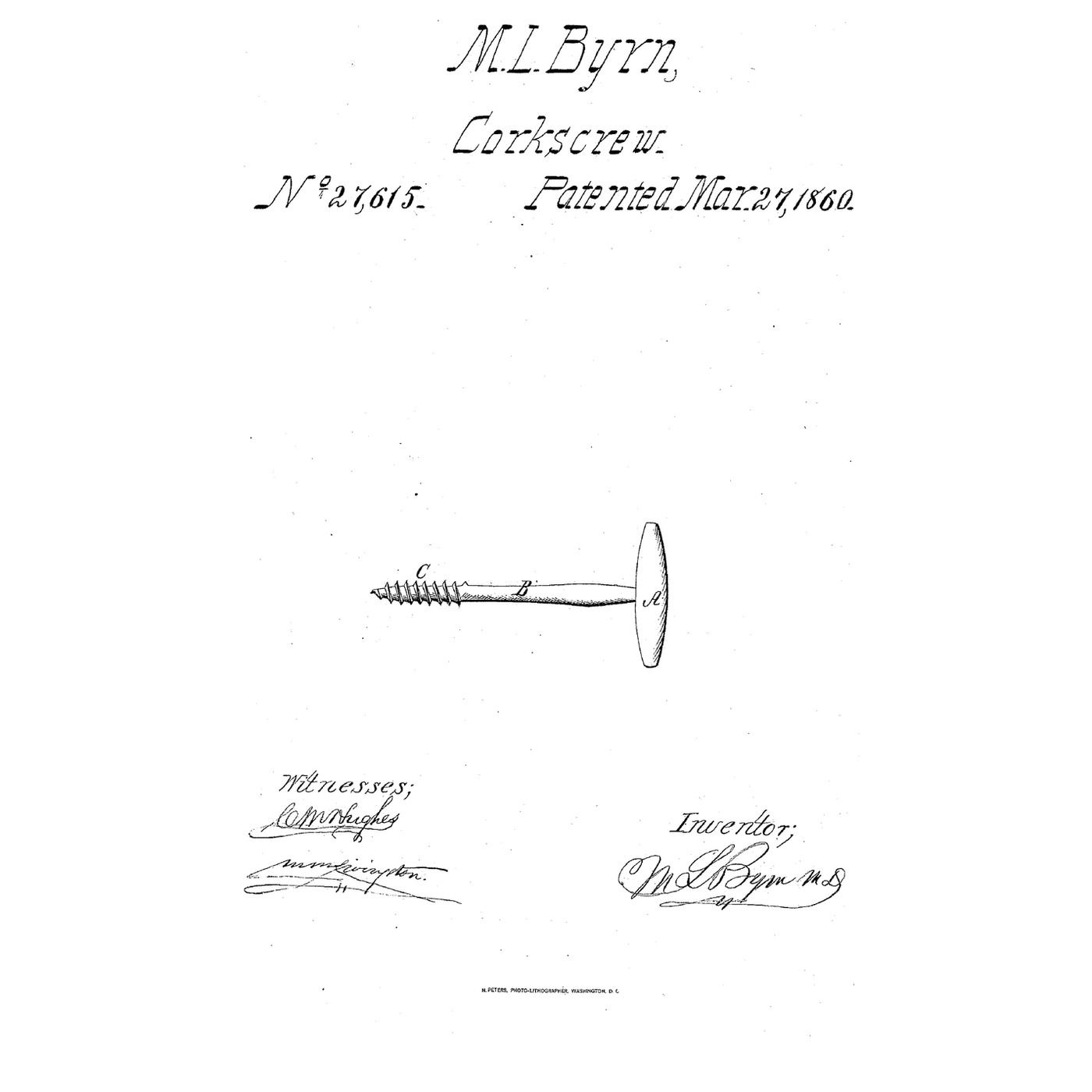
The Gimlet Corkscrew: A Coarse Screw on a Solid Stem With a T Handle
Forge tarafından
Metal işleme
16
0
0
0
0
0
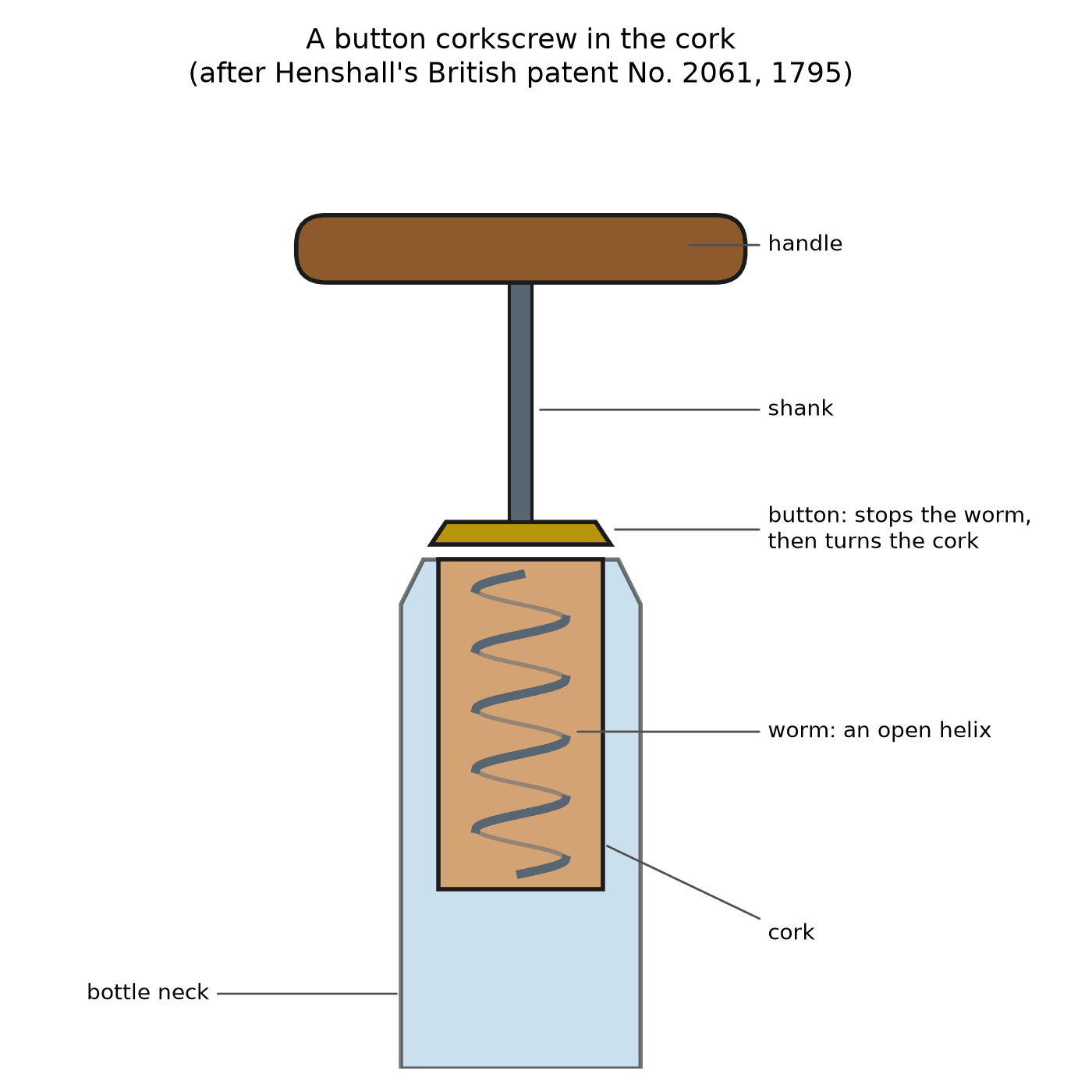
The Button Corkscrew: A Helix That Grips and a Disc That Stops It
YourGrandma tarafından
YİYECEK & İÇECEK
15
0
0
0
0
0

The Law of the Lever — Archimedes' Balance of Weight and Distance
Martin tarafından
Fizik
60
0
0
0
1
0
CC0 Kamu Malı
Bu plan CC0 lisansıyla yayınlanmıştır. İzin almadan kopyalayabilir, değiştirebilir, dağıtabilir ve herhangi bir amaçla kullanabilirsiniz.
Planı üzerinden ürün satın alarak Maker'ı destekleyin, böylece Maker Komisyonu Satıcılar tarafından belirlenen komisyonu kazanırlar veya bu Planın yeni bir versiyonunu oluşturun ve gelir paylaşımı için kendi Planınıza bağlantı olarak ekleyin.