SANAT
GÜZELLİK & SAĞLIK
ZANAAT
KÜLTÜR & TARİH
EĞLENCE
ÇEVRE
YİYECEK & İÇECEK
TERS MÜHENDİSLİK
BİLİMLER
SPOR
TEKNOLOJİ
GİYİLEBİLİR ÜRÜNLER


The Snap-Action Switch: A Spring That Jumps Past Its Own Centre
A contact that opens slowly draws an arc that eats it away; one that wavers at the edge chatters. A snap-action switch cannot do either: its contact is held by springs arranged over-centre, so a small, slow push on the plunger builds up to a point and then the contact jumps from one stop to the other in a few milliseconds.
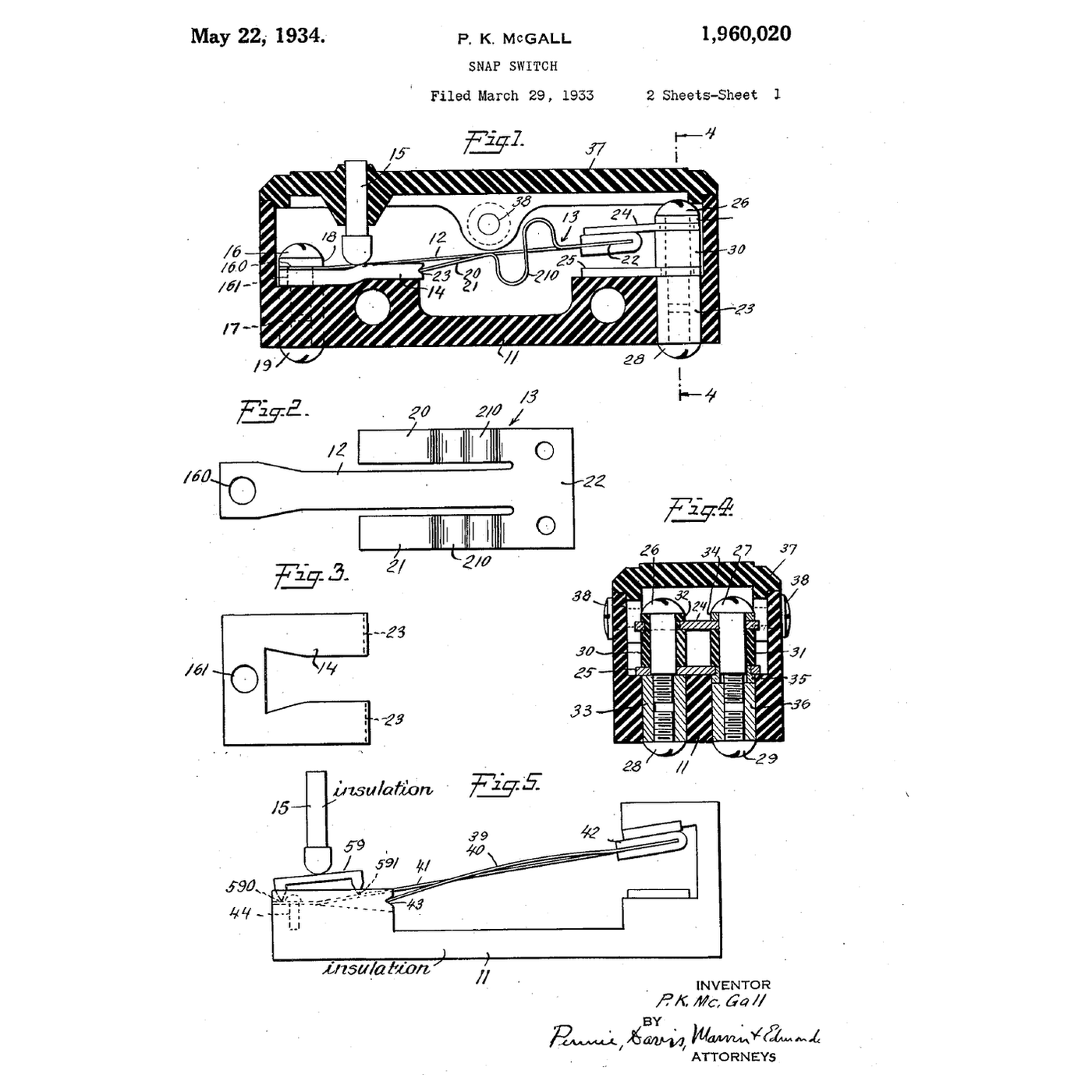
Philip Kenneth McGall of Orange, New Jersey, working for C. F. Burgess Laboratories, filed US 1,960,020, *Snap Switch*, on 29 March 1933; it was granted 22 May 1934. A thin beryllium-copper leaf spring is held in tension by two side strips in compression, pivoted near the middle of the leaf; silver contacts at the free end move between two stops. It became the "micro switch" found in machines, appliances and mice.
This rung models the snap-through force, shows why the lower stop sits above dead centre, and makes a snap switch from spring steel.
Orta
About 3 hours
Talimatlar
1
1
The drooping force and the speed of the snap
The drooping force and the speed of the snap
Jupyter defteri yükleniyor…
2
2
Read McGall's switch
Read McGall's switch
Fig. 1 of US 1,960,020 shows the switch in section: a base 11 of wood, hard rubber or Bakelite; the thin leaf spring 12 bolted at one end over a thick metal shim 14; two parallel spring strips 20 and 21, joined to the leaf's free end by a U-shaped stirrup 22 and pivoted in notches in the shim; and a plunger 15 pressing the leaf near its anchored end.
What the specification specifies: the leaf "preferably is a thin beryllium copper strip" (or phosphor bronze); the strips are in longitudinal compression, putting the leaf in tension; contacts "preferably made of silver … which minimizes the damage resulting from arcing"; "the bottom contact 25 is placed above the neutral or dead-center position" so the arm returns when released; and the leaf is widened ahead of its anchorage so it does not fatigue there.
3
3
Make a snap switch from spring steel
Make a snap switch from spring steel
Cut a strip of thin spring steel 60 mm long and 12 mm wide. Cut a slot 3 mm wide down its middle for 40 mm, leaving the two outer legs and a solid end. Bend the centre tongue slightly so that, when you clamp the solid end and push the tongue's tip back into line with the legs, the legs bow — now they are in compression and the tongue is in tension, as in McGall's switch.
Clamp the solid end to a plywood base with a machine screw. Set two machine-screw stops either side of the free end, the lower one just above the point where the strip flips over, and solder a wire to the strip and to each stop.
Press slowly near the clamped end with a spring scale: the force rises, then the free end jumps to the lower stop with a click. Release it and it jumps back. Wire the lower stop through a buzzer: it sounds cleanly, with no chatter, however slowly you press. Note the operating force and compare with the notebook's curve.
Bu adım için malzemeler:
 Yay çeliği şeridi1 adet
 Kontrplak levha1 adet
 Makine vidaları4 adet
 Piezo buzer1 adet
 Kalay-kurşun lehim1 adet
 Mikroanahtar (kollu)1 adet
Gerekli aletler:
 Havya
Havya Kuvvet Ölçer (Yaylı Terazi)
 Tezgah Mengenesi
 Deri İş Eldiveni
 Doğru akım güç kaynağı
4
4
A switch that chatters or will not reset
A switch that chatters or will not reset
Snap switch faults.
Flow
Loading...
5
5
History and honest limits
History and honest limits
**Philip Kenneth McGall** filed **US 1,960,020** on 29 March 1933, assigned to C. F. Burgess Laboratories of Madison, Wisconsin; it was granted 22 May 1934. The company Micro Switch was formed later in the 1930s, and the name came to stand for the small snap-action switch itself.
**Honest limits.** The notebook's two-spring model shows the snap-through and the role of the stops; McGall's real geometry, with a leaf in tension and strips pivoted near its middle, has a different force curve with the same character. Spring steel strip has sharp edges: wear gloves when cutting and bending it.
Malzemeler
6- 1 adetYer Tutucu
- 1 adetYer Tutucu
- 4 adetYer Tutucu
- 1 adetYer Tutucu
- 1 adetYer Tutucu
- 1 adetYer Tutucu
Gerekli Aletler
5- Yer Tutucu
- Yer Tutucu
- Yer Tutucu
- Yer Tutucu
İlgili Blueprint'ler
Bu blueprint'ler bilgi paylaşır — teknikler, malzemeler veya ilkeler
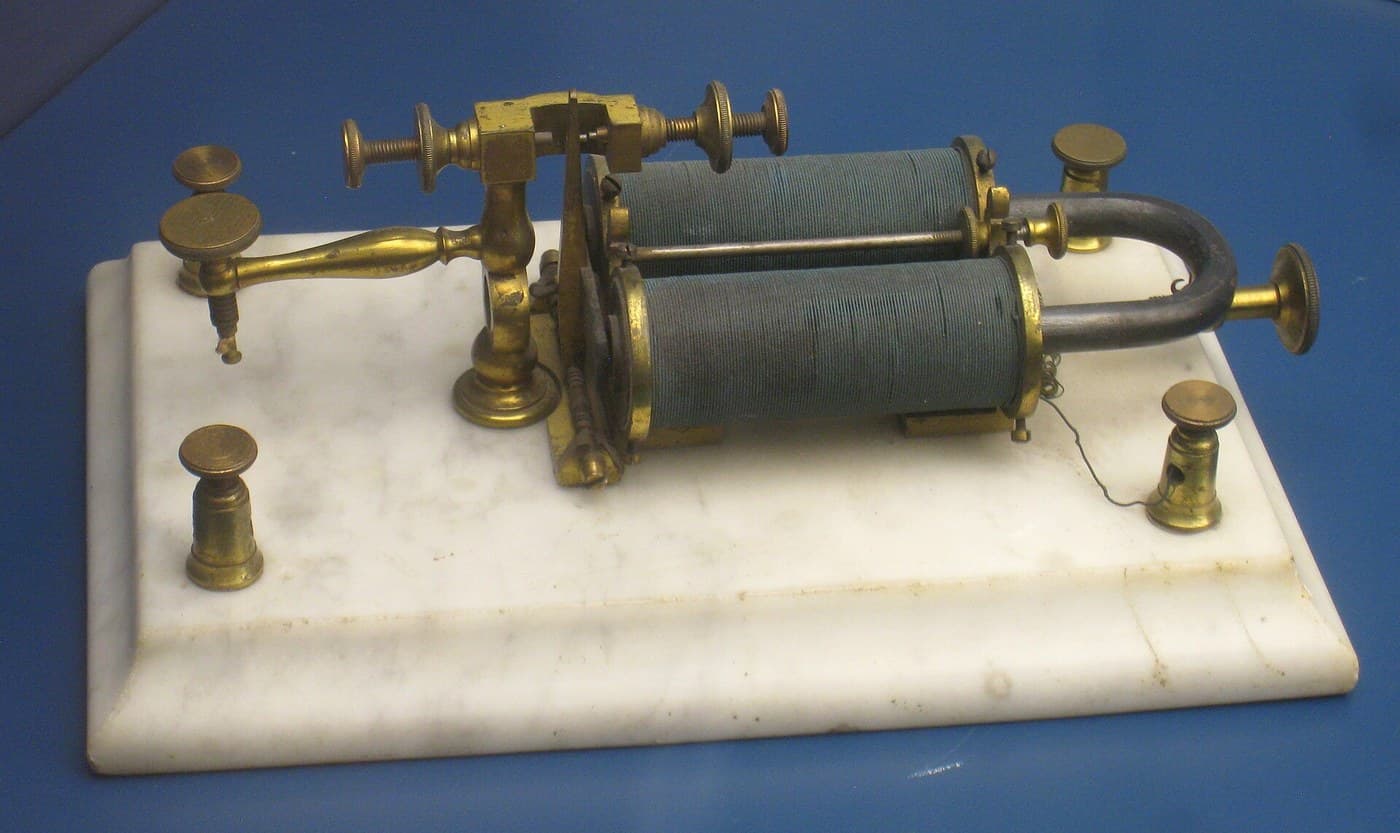


CC0 Kamu Malı
Bu plan CC0 lisansıyla yayınlanmıştır. İzin almadan kopyalayabilir, değiştirebilir, dağıtabilir ve herhangi bir amaçla kullanabilirsiniz.
Planı üzerinden ürün satın alarak Maker'ı destekleyin, böylece Maker Komisyonu Satıcılar tarafından belirlenen komisyonu kazanırlar veya bu Planın yeni bir versiyonunu oluşturun ve gelir paylaşımı için kendi Planınıza bağlantı olarak ekleyin.