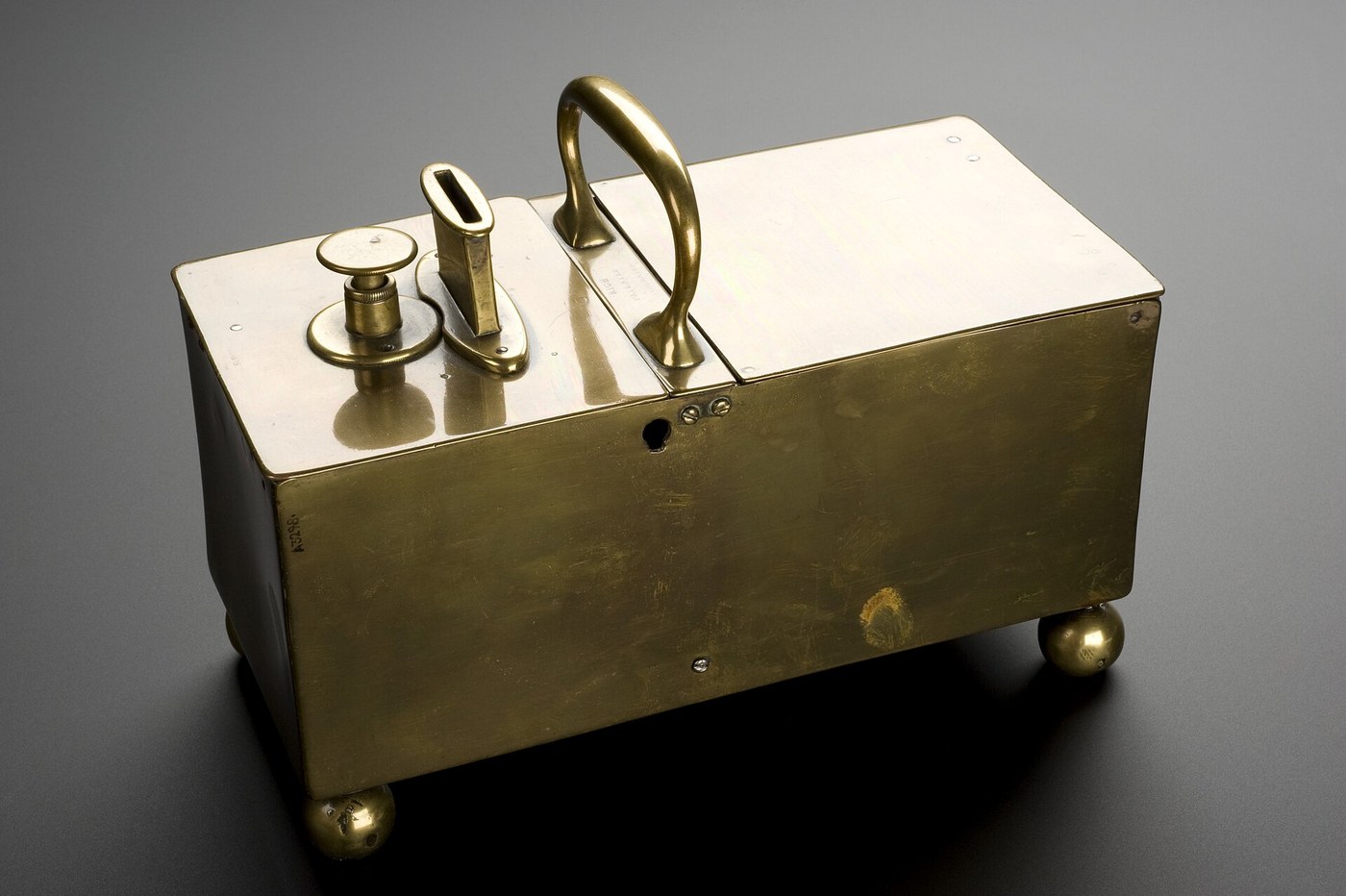


Vending Machine
Talimatlar
Make a coin do work
Make a coin do work
The coin is not a token in this machine — it is the actuator.
- Balance a light lever on a pivot.
- Drop a coin onto the long end.
- Set the counterweight so the lever only tips for a coin of the right mass.
Bu adım için malzemeler:
 Baltık Huş Kontrplak1 paket
 Dijital Mutfak Terazisi1 adet
Add a size gate
Add a size gate
Mass alone is easy to fake. Test the shape as well.
- Cut a slot that admits only the correct diameter and thickness.
- Put it before the lever so wrong coins never reach it.
- Add a fall-through for anything too small.
Bu adım için malzemeler:
 Cetvel1 adet
Link the coin to the release
Link the coin to the release
The tipping lever must free the delivery mechanism and nothing else.
- Hold the goods behind a catch.
- Connect the lever so tipping withdraws the catch.
- Let one item fall, then let the catch return.
Try to cheat your own machine
Try to cheat your own machine
Attack it deliberately. This is the actual engineering.
- Try a washer of similar size, a slug, a coin on a string.
- Try jiggling, tipping and shaking the machine.
- Fix each hole you find and re-test.
History and context
History and context
Hero of Alexandria described the ancestor in the first century AD: a coin dropped into a slot fell on a pan, whose weight opened a valve releasing a fixed measure of holy water until the coin slid off. Everything essential is already there — payment actuating a mechanism that dispenses a measured amount.
Percival Everitt's 1883 patent brought the idea into the industrial age, and his machines appeared on British railway platforms selling postcards, envelopes and notepaper. Within a decade coin-operated machines were selling stamps, sweets, cigarettes and access to weighing scales.
Coin fraud shaped the whole design lineage. Slugs of the right size were the constant problem, and the answers accumulated: weight tests, size gates, then in the twentieth century magnetic tests using eddy currents — a rolling coin passing a magnet is slowed by an amount that depends on its alloy, so a steel washer and a bronze penny behave differently. Modern validators measure electromagnetic signature and optical properties, and still get defeated regularly.
An honest note about what it changed: the vending machine is one of the first pieces of routine automation people met in daily life. It removed a small job — the counter clerk selling a postcard — and it also put goods on sale at times and places no shop would staff. Both effects are real, and every automation argument since has been some version of the same trade.
Malzemeler
3- 1 paketYer Tutucu
- 1 adetYer Tutucu
- 1 adetYer Tutucu
CC0 Kamu Malı
Bu plan CC0 lisansıyla yayınlanmıştır. İzin almadan kopyalayabilir, değiştirebilir, dağıtabilir ve herhangi bir amaçla kullanabilirsiniz.
Planı üzerinden ürün satın alarak Maker'ı destekleyin, böylece Maker Komisyonu Satıcılar tarafından belirlenen komisyonu kazanırlar veya bu Planın yeni bir versiyonunu oluşturun ve gelir paylaşımı için kendi Planınıza bağlantı olarak ekleyin.